
- China fines 5 companies for monopoly on drug sales (fiercepharmaasia.com)

China's National Development and Reform Commission has imposed fines totaling $608,000 on 5 mainland drugmakers and distributors for price-fixing of allopurinol, which is considered an essential medicine in China and is widely used to treat gout and hyperuricemia...The NDRC fined drugmakers Chongqing Qingyang, Jiangsu Shimaotianjie, and Shanghai Xinyi, which have been the only three domestic producers of the tablets since 2014, according to the reports. They also fined distributors Chongqing Datong and Shangqiu Huajie..."Five companies have been fined for colluding to manipulate pricing and dividing the market of a common tablet," said...deputy inspector of the Price Supervision and Anti-Monopoly Bureau..."Even though the fine is not the largest issued since the NDRC began bringing actions against pricing collusion, it is significant."
- We Can Beat Zika And Malaria–If The FDA Allows (forbes.com)The Emerging Zika PandemicEnhancing Preparedness (jama.jamanetwork.com)

Zika virus infection, the scary new disease for which there is no vaccine or treatment, is “spreading explosively” from Africa and Southeast Asia...The United States and 20 other countries...have reported cases of the virus since Brazil reported the first cases of local transmission last May. Delivered by varieties of mosquitoes...it has boosted interest in mosquito-borne diseases...What’s needed is...modern genetic engineering techniques to more effectively prevent mosquitoes from delivering the viruses and parasites that cause disease….The FDA has long delayed the approval of a November 2011 application for a field trial to test a new biological control agent for the mosquito species Aedes aegypti. Although that field trial is concerned specifically with dengue fever, A. aegypti...also transmits Zika...Oxitec has created a new way to control Aedes aegypti. Male mosquitoes are bred in the laboratory with a specific genetic mutation that, in the absence of a certain chemical, causes their offspring to die before reaching maturity...This safe and effective control technique has been approved in Brazil and open field trials of these mosquitoes have been conducted in Brazil, the Cayman Islands, Panama and Malaysia...Eight months have passed since FDA promised last May to publish for public comment a routine environmental assessment of the Oxitec field trial in Florida. Only after FDA reviews the comments will FDA consider whether to grant approval. This delay is unnecessary and unconscionable.
- Surgeon Receives 78 Months in Prison for Distributing Oxycodone (dea.gov)

Jeffrey Gundel...an orthopedic surgeon from Gansevoort, New York, was sentenced today to 78 months in prison for illegally authorizing the distribution of tens of thousands of oxycodone pills...Gundel pleaded guilty to one count of unlawful distribution of oxycodone...admitted that...he wrote over 200 prescriptions authorizing the dispensation of at least 59,520 30-milligram oxycodone tablets for no legitimate medical purpose. Gundel also admitted that he received cash kickbacks after co-conspirators filled the prescriptions and sold the oxycodone pills on the black market...
- Pharma tracks consumer lawsuit in Arizona for clues to future liability (statnews.com)

In a split decision for the pharmaceutical industry, the Arizona Supreme Court issued an opinion that has drug makers both encouraged and worried as they track the progress of a case that may have an outsized impact on consumer lawsuits filed in the state...The case was brought by Amanda Watts, a young woman who claimed she developed lupus and hepatitis after taking an acne treatment made by Medicis Pharmaceutical...She contended the company failed to provide proper side effect warnings. A state appeals court sided with Watts, which prompted Medicis to try to have the decision overturned...Watts has argued over two points that alarm drug makers...The loss of uniformity in liability standards for prescription medicines will subject pharmaceutical manufacturers to fundamentally different standards of liability in each state...(1) A key argument Watts made is that a long-standing industry defense against consumer lawsuits conflicted with another state law about deciding who may be at fault when there is harm. Known as the learned intermediary, this defense says drug makers cannot be held liable if a consumer suffers harm from a medicine — so long as all risk information was appropriately conveyed to the patient’s physician...The state Supreme Court gave drug makers a lift by deciding that the learned intermediary is a legitimate defense...(2) Meanwhile, the pharmaceutical industry will be watching whether Watts wins her argument over consumer fraud violations. Although drug makers argue their customers are actually physicians, the state Supreme Court opined that a direct transaction between a drug maker and a patient is not required for a consumer to claim fraud in the event that misrepresentation resulted in injury...It could be a game changer...
- Changes Coming To State Health Insurance Enrollment Program (kolotv.com)
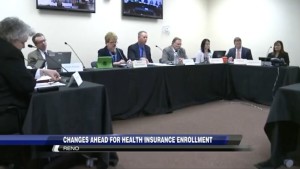
If you were around three years ago when health care enrollment got underway in Nevada or better yet, tried to enroll, you know the problems that persisted for more than a year. At that time Nevada had contracted Xerox to run the system and it was a disaster...Now the state is faced with finding another entity to perform the task, and officials here say they are determined to not make the same mistakes...The (Silver State Health Insurance Exchange Board) dropped Xerox and went with the federal system to enroll residents in fall of 2014. But now comes word the feds want to charge our state for using their system..."They want to charge us 3% above the cost now; that could translate into $9,000,000," says Bruce Gilbert, Executive Director of the Silver State Health Insurance Exchange..."We are not talking about building something from scratch. We are talking to other states that have a state-based market place that are successful,"...Gilbert says nothing is set in stone yet. They don’t know what the actual price the feds will be charging to use their program...When that does happen...the board will seriously be looking at other options and bids to run the state’s health insurance enrollment plan.
- Pharmacy Week in Review: January 29, 2016 (pharmacytimes.com)

Mike Glaicar, Business Development: Pharmacy Times...(PTNN) This weekly video program provides our readers with an in-depth review of the latest news, product approvals, FDA rulings and more.
- AG calls on Gilead to lower price of hepatitis C medicines (bostonglobe.com)Does it break the law to charge a lot for a cure? (theincidentaleconomist.com)
Massachusetts Attorney General...opening a new front in the push to boost access to life-saving drugs, has warned the country’s biggest biotech company that it faces possible legal action unless it lowers the price of two popular hepatitis C medicines...In a letter to Gilead Sciences Inc., made public Wednesday, the attorney general wrote that the high price of the company’s Sovaldi drug, which costs $84,000 for a full 12-week course of treatment, and its Harvoni regimen, at $94,500, "may constitute an unfair trade practice in violation of Massachusetts law" because they are too expensive for many patients...While other state attorneys general have sued drug makers seeking larger Medicaid rebates or discounts, her office is believed to be the first to consider using a state consumer protection law to charge a company with overpricing its products...
- Washington’s Prescription For Cheaper, And Unregulated, Medicines (forbes.com)
In 2011, in an effort to bring a lower-cost drug to the market, the Food and Drug Administration was forced to accept the widespread compounding of a specialty drugs...The agency’s submission involved an old, and previously cheap, generic medicine that had secured some renewed exclusivity, and was being sold as a higher-priced specialty drug. But the FDA’s move deliberately undermined the agency’s own approval requirements...It sent an unambiguous message that FDA wouldn’t try to enforce its already weakened authority over compounding–so long as the price of the knock-off drug was right...The compounding of drugs grew precipitously over the next few years...the passage of the 2013 Drug Quality and Security Act...closed loopholes that allowed compounding outfits to operate beyond the bounds envisioned when the local practice of pharmacy was carved out from typical FDA oversight...some are seeking to co-opt some key provisions in that law as a way to once again expand compounding well beyond the practices’ historical concept. Once again, these efforts are being insincerely waged in the name of increasing drug competition and lowering costs…The co-opting of the practice of pharmacy compounding in this manner also puts the entire practice of pharmacy at risk. Compounding remains an important pharmacy activity...But each time outfits try to exploit the practice simply as a way to evade traditional regulation of drug manufacturers; they create risks and bad outcomes that ultimately lead to new restrictions. That was the legacy of the 2013 passage of the DQSA. Now some who instigated that law want to do it all over again.
- FDA finds Indian drug maker Wockhardt hid failed tests (reuters.com)

Indian drugmaker Wockhardt hid the results of failed tests and deleted data from its systems at a plant in western India, according to a report by the U.S. Food and Drug Administration...Issues around "data integrity", maintaining accurate and consistent databases, are key to the U.S. watchdog, which regulates the world's largest market for generics producers...Wockhardt is the latest of several major players in the $15 billion Indian drugs industry to be hit by U.S. regulatory action over the past few months...It makes around a fifth of its $670 million in annual revenues from the United States...FDA inspectors also reported finding pharmaceutical ingredients that were not stored or labeled properly. A rejected drug batch was stored in the "approved material" area, and some batches did not carry expiry dates, the report said.
- US insurers dragging feet on covering new drugs, Novartis says (reuters.com)

Getting U.S. government and commercial insurers to cover new medicines can now take longer than in Europe, Swiss drugmaker Novartis said on Wednesday, blaming U.S. delays for weaker than expected sales of a key heart failure treatment...Novartis said poor sales of one of those new drugs, its heart failure treatment Entresto - just $5 million for the fourth quarter, well off expectations of analysts as well as the company - resulted from delays in making new medicines available to insured patients...European insurers and governments were now faster to reimburse for medicines such as Entresto and Novartis's new psoriasis and arthritis drug Cosentyx than those across the Atlantic...They (in the U.S.) have really developed their tools extensively around introduction of new drugs, which creates a period of time where access is difficult...And that period of time is now longer than it is in Europe...