
- Prices are skyrocketing for skin creams and pills (statnews.com)Changes in Retail Prices of Prescription Dermatologic Drugs From 2009 to 2015 (archderm.jamanetwork.com)
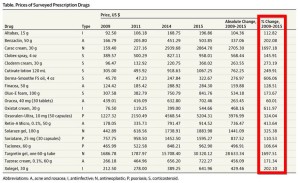
You may need a thick skin to withstand the rising cost of some dermatology medicines…A new study finds that prices of some widely prescribed creams and pills for skin conditions rose rapidly between 2009 and 2015. Of the 19 brand-name medicines analyzed, the retail prices of seven more than quadrupled…Prices for some generic drugs also rose considerably. Between 2011 and 2014, there was a mean increase of 279 percent, although prices for a few drugs remained largely unchanged…“The prices have skyrocketed with no justification,”…“This is a manifestation of anarchy pricing, which is what you get when you don’t have a competitive free market or competent government actions to protect patients,”...
- Obamacare to blame for soaring drug costs: AEI (cnbc.com)
Americans concerned about not being able to afford life-saving treatments should not blame drug companies for high prices…Dr. Scott Gottlieb…told CNBC's "Squawk Box" there's not really a drug cost problem in the U.S., except for a small subset of specialty drugs that cost a lot but are providing a lot of benefit…"What we have is an under-insurance problem," he said. "People are now under-insured, especially for catastrophic drugs if they get a disease like cancer or something like that because of these new [narrow] formulary designs…popularized by the Affordable Care Act."..."If the drug is not on your [Obamacare] formulary list, you have no co-insurance. You're completely on your own,"…"Since these plans are the predominant structures in Obamacare, they're starting to migrate into commercial plans" in the workplace…
- Junior doctors’ strike: what should patients do? (telegraph.co.uk)Doctors 'naive' to think no harm will come to patients during strikes, says Harvard (telegraph.co.uk)Imposition threat must be removed to defer juniors' action, says BMA (bma.org.uk)
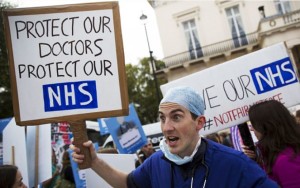
Junior doctors are due to start a series of strikes starting on December 1st, with two days of full walk-out on December 8 and December 15th… December could see the first ever full walk-outs by doctors in the history of the NHS…Following a ballot by the British Medical Association, junior doctors will provide "emergency care only" action for 24 hours on December 1, followed by a full walk out from 8am to 5pm on December 8 and December 16…Hospitals will be forced to cancel most planned operations and outpatients appointments, and to roster as many senior doctors as possible to cover emergency care. On Wednesday, the Health Secretary agreed to send health officials into talks via Acas, which the BMA welcomed - raising the prospect that the strikes could be called off…the union said it would not call off three days of strikes - due to start on December 1 - unless the Government went further, removing threats to impose a new contract on junior doctors if agreement cannot be reached.
- New Jersey Legislation Permits Substitution With Interchangeable Biological Products (nabp.net)New Jersey Governor Christie Signs Bill Ensuring Patient Access to Interchangeable Biologic Medicines (businesswire.com)A2477 Eatablishes requirements for pharmacists to dispense biological products (njleg.state.nj.us)
In New Jersey, a bill (A2477) authorizing pharmacists filling a prescription for a biological medication to select an interchangeable biological product, was signed into law…A substitution cannot be made if the prescriber indicates that there shall be no substitution. The law requires the New Jersey State Board of Pharmacy to maintain a link on its website to FDA’s current list of interchangeable biological products. Further, the law requires a pharmacist or designee to notify the prescriber of the biological product dispensed, including the name of the product and the manufacturer, within five days…The pharmacist is also required to record on the prescription label, and record of dispensing, the product name of the interchangeable biological product, followed by the words “Substituted for” and the name of the biological medication for which the prescription was written, and the manufacturer of the interchangeable biological product.
- Data: Tax inversions still going strong as M&A weakens (cnbc.com)
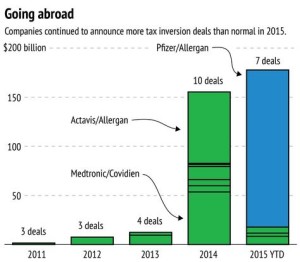
Pfizer's record-setting proposed purchase of Allergan for about $160 billion will not only be the biggest health-care sector deal ever, it will also be one of the largest tax inversions in recent history…Tax inversions...are frowned upon by politicians and the Treasury Department. But efforts to penalize companies for making such deals seem to be falling flat…Tax inversions are a better deal for companies that already have substantial sales abroad, or (like pharmaceuticals) rely on high-margin businesses based on intellectual property…while inversions have continued at an unusually high rate, overall merger and acquisition activity has been slowing…By value, U.S. inversion deals accounted for about 4 percent of global M&A activity in 2014 and 2015 — up from 2 percent or less in the three years before that…It remains to be seen whether Treasury Department rules meant to prevent tax inversions will have an impact. The regulations do not apply to the Pfizer deal, which will result in a company with about 56 percent ownership in the U.S. — the rules only apply to companies with 60 percent or higher.
- One in Four Americans Has Been Addicted to Painkillers or Is Close to an Addict (bloomberg.com)
New data show the staggering reach of the prescription drug epidemic...Doctors wrote 259 million opioid prescriptions for Americans in 2012, enough to medicate every adult in the country. Drug overdoses are eclipsing car crashes as a leading cause of accidental death for American adults…A poll out today from the Kaiser Family Foundation adds a troubling new number to the accounting: 27 percent of Americans report that they either have been addicted to prescription painkillers or have a family member or close friend who has…That's roughly 66 million U.S. adults for whom the opioid crisis has become intensely personal…Prescription drug addiction and a related heroin epidemic have proven a stubborn public health crisis since painkiller abuse began rising more than a decade ago…Kaiser's poll found strong majorities in support of policy solutions, including drug treatment, tighter scrutiny of prescribers, and "good samaritan" laws that protect drug users from being charged if they call for help when addicts overdose.
- Amid Growing Rx Costs, No Consensus on Addressing Access (realclearhealth.com)
…stakeholders gathered at HHS' Pharmaceutical Forum…CMS Acting Administrator Andy Slavitt said millions of Medicare and Medicaid beneficiaries, as well as individuals enrolled in the Children's Health Insurance Program or health plans through the Affordable Care Act's insurance exchanges, "rely on prescription medications to manage chronic illnesses and treat acute conditions." However, surveys have shown "that as costs go up, so does everyone's anxiety about their continued access to their prescription medicine," he said…"As we encourage the development of new generations of highly targeted, personalized therapies, we need strategies for ensuring access to these innovations."
Laying Out the Problem
What's Been Proposed?
Negotiating Drug Prices, Increasing Rebates in Medicare
Cost-Sharing Caps
Expediting Drug Approval
Reforming Specialty Drug Reimbursements
No Consensus on Which Plan To Choose
- CDC calls for increased PrEP awareness for high-risk patients (drugstorenews.com)Daily Pill Can Prevent HIV (cdc.gov)
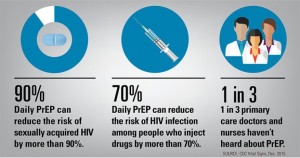
New data from the Centers for Disease Control and Prevention has the organization urging providers to education themselves about the potential of pre-exposure prophylaxis drugs (PrEP) that can significantly reduce the risk of contracting HIV…Though the once-daily pill —which was approved by the Food and Drug Administration in 2013 and marketed as Truvada (tenofovir/embtricitabine) — can reduce risk of HIV transmission through sexual contact by 90% and the risk among injected drug users by 70%, new information shows that one-in-three primary care doctors and nurses haven’t heard of PrEP…“PrEP isn’t reaching many people who could benefit from it, and many providers remain unaware…“With about 40,000 HIV infections newly diagnosed each year in the U.S., we need to use all available prevention strategies.”
- U.K. to Give `Tampon Tax’ to Women’s Cancer and Abuse Charities (bloomberg.com)

U.K. will give taxes raised from the sale of tampons and sanitary towels to women’s charities, Chancellor of the Exchequer George Osborne announced…Money raised from the 5 percent value-added tax on sanitary products will go to cancer charities The Eve Appeal and The Haven and to SafeLives and Women’s Aid, which are dedicated to ending domestic abuse,...Britain will negotiate with the European Union to scrap the tax…“We already charge the lowest 5 percent rate allowable under European law and we’re committed to getting the EU rules changed,” Osborne said in his Autumn Statement to Parliament in London Wednesday. “Until that happens, I’m going to use the 15 million pounds a year raised from the tampon tax to fund women’s health and support charities.”…More than 270,000 people have signed a petition calling for the tax to be removed. It is imposed because the products are defined as “non-essential luxury items” and, while it was reduced to 5 percent...EU law currently prohibits a zero rating.
- Are providers in for a rude awakening about ICD-10? (revenuecycleinsights.com)ICD-10 problems persist for some healthcare providers (revenuecycleinsights.com)

It’s far too early to declare with certainty the impact of the ICD-10 transition on healthcare revenue cycles and productivity…Initial data shows the apocalyptic warnings about ICD-10 immediately leading to claims rejection chaos were misplaced. The Centers for Medicare and Medicaid Services late last month said invalid ICD-10 codes comprised only 0.09% of error-based denials from October 1 through October 27…While CMS said it was “pleased to report that claims are processing normally,” it’s worth keeping in mind that the government agency has taken several temporary steps to smooth the transition to ICD-10 which may be masking problems that could manifest themselves down the road, including a claims denial amnesty for 12 months and advance payments to physicians in the event of processing problems related to ICD-10… Providers that considered themselves unprepared for ICD-10 as October 1 approached shouldn’t assume their currently low claims rejection rates mean their self-assessment was overly pessimistic. If they felt they were unprepared, they probably were. And if they were unprepared for ICD-10 on October 1, they probably still are…To avoid an unpleasant reality check down the road, providers with any doubts about their ICD-10 readiness should continue training and testing.