
- Reimbursement Policy for Biosimilars Will Have Negative Consequences for Patients (americanactionforum.org)

Centers for Medicare and Medicaid Services have finalized a rule regarding the Medicare reimbursement methodology for biosimilar products. Biosimilars…approved …as being “highly similar” to a specific biologic medication…patients may respond differently to the reference product and the biosimilars...there is now a debate as to whether or not biosimilars should be paid with a single billing code based on the ASP (Average Sales Price) of all biosimilars for a single reference product, as has been finalized by CMS, or the ASP for each individual biosimilar, separately from any other biosimilar of the same reference product…Economic arguments and patient safety concerns may support the latter, though the statutory text regarding this matter is somewhat ambiguous…the decision over how biosimilars…should be reimbursed…should be determined by economic principles based on the value of the medication to patients and without putting patient safety and access to such products at risk. If the statutory text does not clearly provide for the favorable regulatory outcome of these factors, it should be amended.
- Expensive new Hep C drugs may be cost-effective even for early disease (reuters.com)
Treating hepatitis C with expensive new medicines at the earliest signs of liver damage improves patients' health and is also cost-effective, a new computer simulation suggests…"Going into this, I expected to find it did make sense to wait until there was a limited amount of liver disease, but what we found to our surprise is that it makes sense to start treatment at the earliest change in the liver,"…researchers created a simulated model to study the cost-effectiveness of a medicine…The imaginary subjects…of varying ages and with various stages of liver damage… While treating all stages of liver disease was cost-effective, the up-front cost is substantial. Treating half of those with hepatitis C would cost about $53 billion. That cost can be brought down if the price of the drug also decreases, the researchers write…"I think a key policy point here is that cost-effectiveness is important and this study shows that, but a next and important step is...to address the cost of the drug,"
- Dr Reddy’s sues AstraZeneca over purple colour of Nexium generic (economictimes.indiatimes.com)Despite Legal Troubles, Is Dr. Reddy's a Buy? (thestreet.com)

Hyderabad-based drug maker Dr Reddy's has filed a lawsuit in a US court against Anglo-Swedish drug giant AstraZeneca alleging material breach of a settlement agreement that had released the company from any liability in connection with generic versions of Nexium (esomeprazole)…Last week, AstraZeneca as part of a lawsuit against Dr Reddy's moved in a Delaware Court obtained a temporary restraining order preventing the Indian firm from selling copies of Nexium on grounds of trademark infringement for using the colour purple, which was similar to the original brand.
- Sanofi whistleblower lawsuit kicks into higher gear (cnbc.com)

A whistleblowing former paralegal at drug giant Sanofi is now claiming she was aware of "many instances" where Sanofi lawyers destroyed documents to avoid turning them over to opponents in prior legal cases…Ex-Sanofi paralegal Diane Ponte's new allegation comes in an affidavit she filed in her pending lawsuit against the company...claims she learned of an alleged scheme at Sanofi to pay more than $30 million in kickbacks to promote the company's diabetes drugs. The suit came a year after the France-based drug company already agreed to pay more than $100 million to the U.S. federal government to settle other claims related to alleged kickbacks to doctors, and seven months after Sanofi agreed to pay a nearly $40 million fine in Germany in connection with two employees who were convicted there of paying bribes to boost drug sales.
- FDA says Novartis plant in India backdated data and withheld info (statnews.com)Regulating India's Generic Drug Industry (podcast 13:46) (soundcloud.com)

Last month, Novartis disclosed that it received a warning letter from the Food and Drug Administration about manufacturing issues at two facilities in India that are operated by its Sandoz generic drug unit…At the time, the company noted it was working closely with the FDA to resolve the problems. But Novartis never actually specified what bothered the agency. Now, the warning letter has been posted on the FDA website, and the infractions are concerning, especially given that the plants are run by one of the world’s largest suppliers of generic medicines…The disclosure comes amid ongoing FDA scrutiny of overseas manufacturing plants, particularly in India, where a string of drug makers has failed inspections and had products banned from the US. The Indian pharmaceutical industry is furious that the agency appears to be singling out its ranks for infractions; however the Sandoz letter indicates the FDA is not confining its reviews to India’s domestic drug makers…A key issue that alarmed the agency during its August 2014 inspections was the integrity of the data Sandoz was collecting…“Backdating … records is unacceptable,” the FDA wrote in its Oct. 22 warning letter. The agency also expressed concern that Sandoz failed to demonstrate the extent to which such practices may be widespread and — this is significant — whether previous data is even reliable.
- Manhattan U.S. Attorney Announces $370 Million Civil Fraud Settlement Against Novartis Pharmaceuticals for Kickback Scheme Involving High-Priced Prescription Drugs…Exjade and Myfortic (fbi.gov)

..FBI…announced a $390 million settlement against NOVARTIS...in a civil fraud lawsuit based on claims that NOVARTIS gave kickbacks to specialty pharmacies in return for recommending two of its drugs, Exjade (deferasirox) and Myfortic (mycophenolic acid)…two specialty pharmacies, Bioscrip, Inc. and Accredo Health Group, agreed to pay a total of $75 million to resolve federal and state claims against them based on the same allegations...today’s settlement, the federal and state governments will recover $465 million in total based on the kickback allegations in this lawsuit…a whistleblower, and asserted that NOVARTIS violated the False Claims Act and the Anti-Kickback Statute…by giving kickbacks to specialty pharmacies in return for recommending Exjade…and Myfortic…With respect to Exjade, the Government alleged that NOVARTIS gave kickbacks in the form of patient referrals and rebates to Bioscrip and Accredo to induce those pharmacies to recommend Exjade refills…the Government alleged that, to increase Exjade sales, Novartis incentivized and pressured the pharmacies to emphasize Exjade’s benefits to patients while understating the drug’s serious, potentially life-threatening, side effects. With respect to Myfortic, the Government alleged that NOVARTIS gave rebate contracts to specialty pharmacies to induce the pharmacies to recommend to doctors that they switch patients to Myfortic from competitor drugs.
- White House reaction to AGN/PFE deal (video.cnbc.com)Pfizer's 'holiday' gift (video.cnbc.com)Pfizer to buy Allergan for $363 per share (video.cnbc.com)Pfizer and Allergan to create the world’s largest drug maker (statnews.com)Pfizer-Allergan deal: A boon to shareholders, a blow to R&D (statnews.com)Inside Pfizer's $160B Allergan Merger (forbes.com)With veteran job-choppers Pfizer and Allergan joining hands, how many layoffs are in the cards? (fiercepharma.com)
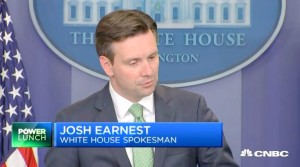
CNBC's Eamon Javers reports on the White House and Democratic Presidential Candidate Hillary Clinton's reaction to the Pfizer-Allergan deal.
- California, Oregon pharmacists to be allowed to prescribe birth control (seattletimes.com)
California and Oregon…will soon make access to birth control easier for millions of women by allowing them to obtain contraceptives from pharmacists without a doctor’s prescription…Most Western countries require a doctor’s prescription for hormonal contraceptives…but starting sometime in the next few months, women in California and Oregon will be able to obtain these types of birth control by getting a prescription directly from the pharmacist who dispenses them, a more convenient and potentially less expensive option than going to the doctor…Pharmacists will be authorized to prescribe contraceptives after a quick screening process in which women fill out a questionnaire about their health and medical histories…pharmacists’ organizations, plan to lobby for it across the country…One unanswered question, however, is whether insurers will pay for the time pharmacists spend reviewing women’s questionnaires or helping evaluate options. To cover that cost, some pharmacists may charge fees...The laws in Oregon and California differ in some ways. California’s has no age restriction; the Oregon law requires that teenagers under 18 obtain their first contraceptive prescription from a doctor. In California, pharmacists will also most likely have to take women’s blood pressure for contraceptives containing estrogen.
- Las Vegas woman in middle of brain death battle (reviewjournal.com)Supreme Court orders Vegas woman to be kept on life support (reviewjournal.com)

The battle over maintaining life support for a 20-year-old Las Vegas woman continues this week in Reno. It focuses on the question of when is a person considered dead…The unknown is whether doctors for Saint Mary's Regional Medical Center in Reno will continue to try to pull the plug on Aden Hailu, who sought treatment for abdominal pain in April and suffered catastrophic lack of oxygen and brain damage during an exploratory surgery…An attorney for Hailu's family said the next step must be to develop a plan of care…"There is hope that she will regain consciousness," said David O'Mara, the…attorney representing, Hailu's father…The state Supreme Court ruled last week that the standards used by the hospital to make a determination of brain death might not satisfy state law. Hailu was declared brain dead at the hospital May 28 after doctors concluded that she was unresponsive, lacked brain activity as determined by reflexes and eye movement, and could not breathe on her own.
- Experts foresee big premium increases for Medicare drug plan (hosted.ap.org)

…many seniors are facing sharply higher premiums for Medicare's popular prescription drug program (Part D). The reason: rising drug costs have overtaken a long stretch of stable premiums…"Premiums are going up. Deductibles are going up,"…Government spending on the program also has risen significantly, driven by pricey new drugs, notably for hepatitis C infection. The cost for the hepatitis drugs in the Medicare program is expected to be $9.2 billion this year, a near doubling from 2014. Because of the prescription program's financial structure, taxpayers cover most of the cost for expensive medications. Three out of four adults infected with hepatitis C are baby boomers…Indicators signal rising costs across the program. Among them:
- independent estimates…show increasing premiums for stand-alone drug plans. The average premium will rise from $36.68 to $41.46 per month next year, or 13 percent…biggest increase since 2009.
- maximum deductible for prescription coverage will rise by $40, to $360…biggest increase in the deductible since the inception of Part D in 2006.
- taxpayer expenditures for the "catastrophic" portion of the benefit - in which beneficiaries with high drug bills pay only 5 percent of the cost - will rise by $4.5 billion in 2016, an increase of more than 14 percent. Spending for catastrophic coverage has doubled in just a short time, from $15.5 billion in 2012 to an estimated $31.2 billion this year.
The analyses...seemingly at odds with the message coming from the Obama administration, which estimates that drug premiums will remain stable in 2016, averaging $32.50 a month.