
- A Head Fake From the Taxman (bloomberg.com)
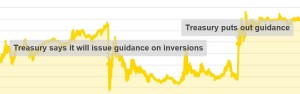
Allergan shareholders got all riled up for nothing…Shares of the Botox maker sank 2.8 percent on Thursday as fears that the U.S. Treasury Department was about to get tougher on inversions outweighed the news that Pfizer was preparing a nearly $200 billion bid for the company. The department's new guidelines -- announced after the market close -- turned out not to be such a body blow after all…the proposed changes just fine tune the steps already taken by the Treasury last year to make it harder and less appealing for companies to use acquisitions that move their legal address abroad for tax benefits. There was nothing groundbreaking -- and most importantly, nothing that should significantly derail a Pfizer inversion…Cue Allergan shares making up their losses and then some on Friday…The latest guidelines do make it incrementally harder to structure inversions and remove some economic benefits, but the handicaps only apply to transactions in which the U.S. company's investors wind up with between 60 percent and 80 percent of the combined entity. Pfizer already knew that was dangerous territory; those were the types of inversions targeted by the Treasury last year. By structuring its Allergan purchase as an all-stock deal with a high premium, Pfizer could be able to skirt the tougher rules.
- Nevada issues health guidelines for cryotherapy (hosted.ap.org)Cryotherapy spa reopens; new guidelines revealed (reviewjournal.com)Division of Public and Behavioral Health Cryogenic Chamber Therapy Recommendations (dpbh.nv.gov)
Nevada has created health guidelines for cryotherapy after a Las Vegas spa worker was found dead in a tank that subjects users to subzero temperatures, a treatment that experts say has been growing in popularity but is largely unregulated and whose benefits are not proven…Dr. Tracey Green, the state's chief medical officer, said Friday that the guidelines from the state health department recommend that the machines not be used by minors under 18, those under 5 feet tall and anyone with certain health conditions, such as a history of stroke, high blood pressure, seizures and infections, as well as people who are pregnant or have pacemakers or claustrophobia…The state said it will work with businesses to implement its "expected standards" but there won't be penalties and this doesn't amount to law. Still to be determined is how oversight measures will be carried out to ensure the guidelines will be implemented. The health department has said it will work with other agencies that regulate and license such businesses, including the Nevada Occupational Safety and Health Administration…"We will go back and assist them," Green said of the businesses. "There's not a penalty. It's really about public safety."…The new guidelines ask cryotherapy centers to have nitrogen monitors in the rooms and emergency kits and defibrillators on site. Signs and user waivers that clearly state that the treatment cannot treat illnesses or be used for medical purposes and outline the service's procedures and risks should also be provided…
- UnitedHealth Considers Reversing Course on Obamacare (bloomberg.com)UnitedHealth Lowers Forecast, Blaming Affordable Care Act (nytimes.com)
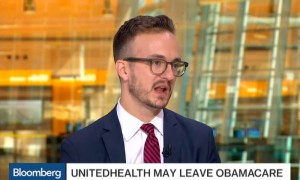
UnitedHealth, the biggest health insurer in the United States, is considering quitting offering coverage under Obamacare, just one month after discussing expanding coverage in 11 new markets. Bloomberg's Drew Armstrong examines the move and how it may impact the insurance industry and the future of the Affordable Care Act. He speaks on "Bloomberg Markets."
- EPA Seeks Input on Drug Flushing Ban (hhnmag.com)

All health care facilities would be banned from flushing drugs among other changes in a proposed rule…Stop flushing pills down the toilet…That’s the message behind a proposed rule from the Environmental Protection Agency that would ban health care facilities from disposing of hazardous pharmaceuticals by flushing them…significant changes may be required if the rule is enacted…The EPA estimates that the proposal is projected to prevent the flushing of more than 6,400 tons of hazardous waste pharmaceuticals annually…The rule would fall under the Resource Conservation and Recovery Act, and is open for comment from the public until Dec. 24.
- Treasury steps up attack on corporate tax inversions (usatoday.com)
Obama administration stepped up its attack on corporate tax inversions…announcing new rules designed to block U.S. firms from trying to cut their tax bills by reincorporating overseas…Treasury Secretary Jacob Lew, whose agency imposed initial rules restricting inversions last year, said tougher restrictions were needed because U.S. firms "are taking advantage of an environment that allows them to move their tax residence overseas in order to avoid paying taxes in the United States without making significant changes in the nature of their overall business operations."..The new restrictions will:
- Limit the ability of U.S. companies to combine with foreign firms when the new overseas parent is a tax resident of a third country.
- Restrict U.S. firms from inflating the size of the new foreign corporate parent, and thereby avoid the current rule that requires the former owners of the U.S. firm to own less than 80% of the newly combined entity.
- Strengthen the current law that enables U.S. companies to complete inversions if, after the transaction, at least 25% of the combined new entity's business activity occurs in the country where that company has tax residency. The change would block inversions unless the new foreign parent is a tax resident of the overseas country where it was created or organized.
The three changes apply to inversion deals closed Thursday and in the future.
- Hospitals Feel Pain as UnitedHealth Eyes Obamacare Exit Door (bloomberg.com)Deep Dive: Health-Care Stocks Take a Hit (bloomberg.com)
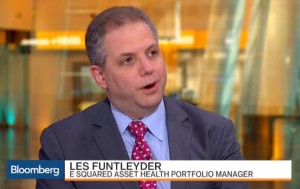
The possible departure of insurance leader UnitedHealth Group Inc. from Obamacare signals worsening prospects for hospitals already facing a slowdown in gains from the program…UnitedHealth said…it expects to lose as much as $500 million next year selling coverage under the Patient Protection and Affordable Care Act…The ACA boosted hospital earnings before interest, taxes, depreciation and amortization by an average of 9 percent this year, and half of that came from patient enrollment through insurance exchanges created by the act…disturbance in these trends. Uninsured admissions at HCA rose 14 percent in the third quarter from a year earlier…many patients may have left their insurer because they haven’t been able to pay their premiums… saw an increase in the number of people previously registered as insured that were converted to self-pay…many with “insurance in name only” -- cheap plans that become unaffordable for expensive hospitalizations…“If you can’t afford your premium and co-pay and deductible, then ..“Having insurance and getting care are two very different things.”…With or without insurance, patients continue to pile into hospital emergency rooms, where care is most expensive…
- Nepal facing medicine shortages due to fuel crisis, blockade (hosted.ap.org)

Shortages of life-saving medicine because of political protests in Nepal that have blocked key roads could lead to a crisis, as hospitals have started to cut services…Hospitals are rescheduling surgeries by weeks, and patients are finding it difficult to get to medical facilities due to fuel shortages…Truckloads of medicine have been blocked at the main border crossing with India for the last few months by Nepal's Madhesi ethnic protesters…adding that Indian authorities were also not allowing the shipments across even at points where there are no protests…The...Madhesis have been protesting Nepal's new constitution, demanding to be given greater autonomy over local matters…Nepal imports about 60 percent of its medicine from India. The remaining locally made drugs also get most of the raw material and packaging from India.
- Judge: Centennial Hills Hospital hid evidence in civil case (reviewjournal.com)

A judge has imposed severe sanctions on Centennial Hills Hospital Medical Center for intentionally concealing evidence in a civil case filed by a patient who was sexually assaulted at the Las Vegas hospital in 2008…"Centennial failed to disclose relevant evidence that it knew it had a duty to disclose, caused extensive time to pass, and caused memories to fade," District Judge Richard Scotti wrote in a 39-page order…strikes Centennial's answer in the case — a move that establishes liability against the hospital. When the case goes to trial Jan. 4, Centennial will be allowed to defend itself only on the question of damages…"A party who engages in misconduct must suffer reasonable consequences," the judge wrote. "No party should be allowed to conceal evidence, and then suffer merely a monetary sanction, while being allowed to reap the tactical benefit of the loss of that evidence."…The plaintiff, who filed the case in 2009 as Jane Doe, was one of five female patients who were victimized by certified nursing assistant Steven Farmer.
- Pharmacies Settle with Feds for Narcotics Mishandling (pharmacytimes.com)
A group of San Diego, California, pharmacies and their owners have paid $750,000 to the federal government to resolve drug diversion claims…pharmacies had been accused of mishandling prescription narcotics and ephedrine/pseudoephedrine products…The settlement was with Park Medical Pharmacy Inc…and owners Joseph Grasela and John Grasela…Drug Enforcement Administration alleged that the pharmacies had violated the Controlled Substances Act by diverting a “significant” amount of controlled substances, not taking adequate inventory of controlled substances, and not maintaining records of the pharmacies’ distribution of products.
- French proposal for ‘Made in EU’ labels threatens to divide drug industry (statnews.com)Decree on the specification of the place of manufacture on the external packaging of pharmaceutical products (ec.europa.eu)

Increasing public confidence?
In a controversial move, France has asked the European Commission to allow new labeling on medicines that would indicate whether products and ingredients come from Europe or elsewhere. But the effort is likely to divide drug makers amid concerns about the quality of prescription drugs…The stated reason for the request is to bolster transparency, because French consumers may have “doubts” about their medicines, according to the filing by the French government. And the notice singled out generic medicines, in particular…The filing also follows the recent suspension of some 700 mostly generic drugs by the European Union. The EU acted after French regulators questioned the reliability of clinical trial data generated by GVK Biosciences, a contract research organization in India that conducts studies for drug makers.