
- Many medications actually became cheaper this year — but that doesn’t mean Americans are paying less overall (washingtonpost.com)
Skyrocketing drug costs became the stuff of congressional hearings and presidential campaign speeches in 2015...The federal government announced this month that prescription drug spending hit $297.7 billion last year -- up more than 12 percent...A new generation of specialized drugs and price hikes on existing medications helped to drive that spike...If there's a bright spot amid the troubling rise in the cost of prescription drugs, perhaps it is this: Many of the most widely used generic drugs actually were cheaper at the end of 2015 than when the year began, according to an analysis released...by...GoodRx...The reality is that about 85 percent of drugs taken in this country are generic...Those are surprisingly inexpensive and getting less expensive, in many cases...For [many] generic drugs, there's a lot of competition...while the retail price of some drugs decreased by 30 percent or more, some generic drug products had...extraordinary, price increases...the rate of generic price declines has been slowing for the past decade, indicating that the era of consistent generic drug price decreases may be coming to an end...it's a complicated...exercise to determine what any person, company or insurer pays for a particular drug...The system is opaque...Between changing insurance premiums, greater overall health-care costs, the arrival of new high-priced therapies and the ongoing possibility of price spikes in once-cheap drugs, many patients can count on continuing worries about the impact on their pocketbooks.
- Think different? Pharma turns to tech partnerships for beyond-the-pill moves (fiercepharma.com)
Beyond the pill. It's a catchphrase that cropped up a few years ago, when pharma's patent-cliff suffering was intense, drug development lagged and, facing budget constraints, payers in various countries were putting the screws to pharma prices. The idea was--and is--that drugmakers would need to move beyond pushing products to delivering outcomes...There's not going to be a beyond-the-pill revolution in 2016. Frankly, pharma doesn't yet have the technology to upend the status quo. But drugmakers are teaming up with major technology players like Google and IBM Watson Health--Novartis, Sanofi and Novo Nordisk among them--in deals that marry Big Data record-sifting with cutting-edge patient-monitoring gadgetry, and that's the kind of infrastructure necessary for big moves beyond the pill...Pharma has realized that if it doesn't hook up with giants like Google, Apple, IBM and others, those companies will innovate right past drugmakers. Turf that pharma might otherwise claim would be ceded to the tech industry. With the pace of tech developments ramping up, pharma's work will, too.
- Outcome-based healthcare needs outcome-based marketing (fiercepharmamarketing.com)
Pharma can no longer put off the inevitable when it comes to outcome-based models in healthcare. In 2016, drugmakers will begin to engage more not only when it comes to pricing models, but also when it comes to marketing...But what is outcome-based marketing? In mainstream marketing, it usually refers to linking ad campaigns to quantifiable results. Did the ads or marketing draw more customers or an increase in web traffic?...pharma companies are largely already doing that...We're taking a broader view of the outcome model...and looking for outcome marketing that aligns with outcome pricing models. That is, creating advertising, promotions and lifestyle tool communications that clearly relay to patients, caregivers, doctors and healthcare providers exactly what they get for their money...While widespread changes may take years to play out, we think that with some drugmakers already on board, this year could be a bellwether for even more transparent and direct communications, along with the chance for more and better customer connections.
- Headaches for Reckitt over charges of misleading claims for OTC painkillers (fiercepharmamarketing.com)
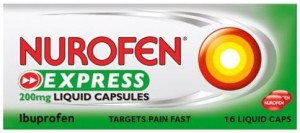
Reckitt Benckiser executives may need some of the company's own pain meds this week. First in Australia and now in the U.K., the drugmaker is being taken to task over misleading claims for its painkiller Nurofen...Australia, a judge ordered four "different" kinds of Nurofen pulled from store shelves. While each product has a different name targeting a different pain--Nurofen Back Pain, Nurofen Period Pain, Nurofen Migraine Pain and Nurofen Tension Headache--each had the exact same active ingredient and at the same strength, 342 mg of ibuprofen lysine...Meanwhile, in the U.K., Reckitt is under investigation for TV advertising for its Nurofen Express, charged with making inaccurate claims that "the product directly targets muscles in the head," and that it works more quickly than standard ibuprofen...This is not the first time Reckitt has been charged with making misleading Nurofen claims; in 2012, the Australian government ordered one of its TV ads withdrawn. The ad included the "misleading" claim that Nurofen "goes straight to the pain" together with "imagery of the medicine ascending from the neck to the head," according to the filed complaint.
- The Most Profitable Industries In 2016 (forbes.com)
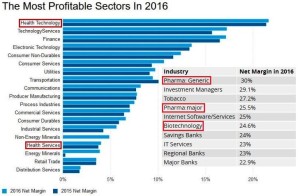
Health technology is projected to be the most profitable sector in 2016 again with a 21.6% net profit margin.If you drill down within the more granular categories within the broad sectors listed above, healthcare, tech and finance still stand out. Biotech, generic and major pharmaceutical companies rank among top 10 – same with major banks and investment managers. ...Here are the top 10 most profitable industries according to Factset:
- The biosimilars are coming. But how long will it be till they can make their mark? (fiercepharma.com)
Biosimilars have made a splash in Europe, Australia and India, and now they're gaining steam stateside. That's sure to continue, with Citigroup analysts estimating innovative biologics will lose $110 billion in sales to copycats by 2025. And with one biosim already on the U.S. market, and more poised for a 2016 liftoff, next year will give drugmakers and payers a taste of the biosim contest to come...One question for next year is pricing. For years, experts have suggested that biosimilars would sell for a modest discount to the original med, but in Europe, Remicade knockoffs have been undercutting Merck & Co.'s branded version by 40% or more, and gaining big market share in the process...Another question: How quickly will doctors flock to biosimilars once they launch? Some research suggests that initially, it won't be fast at all. U.S. doctors don't know much about biosimilars...Plus, doctors may be reluctant to prescribe without flawless data on biosims….
- Big Pharma gets data for discounts (politico.com)
Attention patients! The side effects of your discounted drugs may include drowsiness, nausea — and a loss of privacy...Drug companies are increasingly offering price discounts and subsidies to patients in exchange for their medical data. The details of that exchange can be easy to miss: They're in the fine print...As the frequency of such arrangements grows, along with the price of certain drugs, the deals are causing discomfort about the uses of intimate health details by drug companies...Such programs are part of a growing appetite for patient data in the health care sphere among pharmacies, pharmacy benefit managers, app makers and others. Walgreens and CVS both have begun offering customer goodies in exchange for personal data...Pharmacies across the US are dangling perks to coax their customers to relinquish all sorts of personal data about their health...Companies use data to understand how a drug is performing across a population, but also to gain insight for marketing to, or communicating with individual patients...
- Pharma marketers steer through changing tides (fiercepharmamarketing.com)

In some ways, the more pharma marketing changes, the more it stays the still rule in sales. Despite significant growth in pharma's digital advertising, television captures the lion's share of ad spending, and that's not likely to change soon...And those forward-looking folks frustrated with the industry's reluctance to take big risks or break new ground--they're likely to remain frustrated in 2016, too...Payer pressure is forcing drugmakers to rethink their pricing and negotiation strategies, and though some attempts at performance-based payments fell flat in 2015, we'll see marketers reorienting toward outcomes, services and payer relationships...Technology is spurring pharma marketers toward new ventures, too...Marketing intelligence and patient engagement are part of that, and more pharma-plus-tech teams will form...data-gathering and data-crunching and predictive modeling will remake pharma marketing just as it's remaking R&D...drug industry's reputation has taken a major hit this year, as a couple of high-profile pricing scandals spawned questions for all drugmakers...Is 2016 the year that drugmakers get jiggy with their advertising and marketing?...AstraZeneca became the first drugmaker to actually win a Health Lion at Cannes in 2015...Finally, we have a fairly long list of inescapable, no-doubt-about it shifts in pharma marketing for 2016, in the form of new drug approvals and launches…
- Price and reputation are indubitably, inexorably intertwined (fiercepharmamarketing.com)In a riff on the old real estate adage of "location, location, location," we'd like to offer a pharma trend for 2016 that's all about "reputation, reputation, reputation."...With proper credit to former Turing CEO Martin Shkreli and Valeant Pharmaceuticals for price hikes and poorly managed "secret" relationships that put pharma in the headlines and onto politicians' radar, we're also quite confident the pharma reputation onslaught will continue--whether the gripes are legitimate or not...What's a pharma to do?
- Step one, don't panic. Pharma's reputation had actually stabilized before the Turing scandal and political one-upmanship began...While that has likely changed by now, thoughtful response is always better than knee-jerk reactions.
- ...the next step should be to address it. Big Pharma held back in the fall as the bad news swelled, but saying nothing was the wrong approach…The problem is that silence gives consent...Staying silent looks like you're OK with it...more CEOs have stepped up since then to denounce Shkreli's antics...pharma needs to keep reminding consumers and physicians about the good things they like about the industry...
- ...third step...Patient advocacy groups and communities sponsored by pharma aren't new, but going directly to individual e-patients for advice, engagement and conversation is becoming more common...Take a page from the consumer marketing where word of mouth is one of the best sources for awareness, referrals and reputation.
- 3 people to watch in biotech and drug pricing in 2016 (statnews.com)

Big valuations, big investments, and big price tags drove lots of the news in health care in 2015 — and you can bet they’ll do the same in the new year. For signs of where things are headed, keep an eye on these three influencers:
- Jeffrey Marrazzo, chief executive of Spark Therapeutics - Can gene therapy work — and can the system afford to pay for it?...The idea that a one-time treatment could replace a broken gene has generated plenty of scientific and commercial interest.
- Deborah DiSanzo, general manager of Watson Health - IBM’s big bet on health care analytics...use high-powered computing to sift through massive amounts of data to find useful and cost-saving nuggets for medical researchers, doctors, and insurers.
- Vivek Ramaswamy, chief executive of Axovant Sciences - has recruited some top Alzheimer’s researchers to join his...company...they initiated a late-stage clinical trial testing the GSK reject in combination with another Alzheimer’s drug.