
- The untold story of TV’s first prescription drug ad (statnews.com)
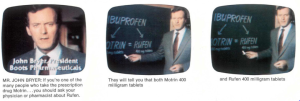
On May 19, 1983, Boots aired the first broadcast television commercial in the United States for a prescription drug, the pain reliever Rufen...Within 48 hours of the ad’s airing, the federal government told the company to take it down. And more than 30 years later, the fight over marketing prescription drugs directly to the public is still raging...Now, the American Medical Association, the largest doctors group in the United States, wants to stop direct-to-consumer advertising for prescription drugs in the belief that the ads encourage patients to seek medicines unnecessarily. But the effort to have drug ads banned alongside tobacco ads will face plenty of obstacles, none bigger than the First Amendment. Perhaps the most unusual thing about this decades-long saga is that it’s an issue at all...The United States is one of only two countries in the world to allow these ads. How did this little-noted example of American exceptionalism come to be?...It started with Boots.
- Facing an anti-venom shortage, WHO tries to mobilise new suppliers (in-pharmatechnologist.com)

Sanofi said earlier this year...would stop making one of the most effective treatments for snakebite - FAV-Afrique - claiming low-cost alternatives from producers in India, Brazil and Mexico had made the product unprofitable...FAV-Afrique is a polyvalent product that counters the toxins of some of the world's most deadly venomous snakes...The WHO says that the prospect of FAV-Afrique stocks running out in 2016 is causing "dismay" among public health experts and advocates..,A recent editorial in the British Medical Journal...took a slightly different tack, however, saying that FAV-Afrique's withdrawal from the market will make little difference to most people in Africa...The high cost of the drug - around $540 per four vial treatment - meant that "the product simply never reached them in the first place", leaving many people in Africa reliant on treatment from traditional healers...Compounding the issue is that unscrupulous individuals have taken advantage of poor regulatory oversight in some countries and introduced unapproved and counterfeit anti-venoms into the market - with data...indicating that fatality rates rose after the use of these products...gaps in the supply of anti-venoms in the last few decades has "cumulatively cost millions of lives, maimed millions more, and contributed to the burden of poverty and disenfranchisement that lingers heavily.
- Senate investigates high drug prices (video.cnbc.com)Harms of Price Hikes for Old Drugs Detailed at Senate Panel (bloomberg.com)
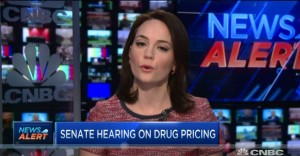
CNBC's Meg Tirrell reports on the hearing on drug pricing focusing on older drugs.
- ManKind Pharma plans to set up manufacturing facilities in Northeast India to bring production in-house and cut its tax bill. (in-pharmatechnologist.com)

Mt Everest
The Delhi company, which is not to be confused with US inhaled insulin developer MannKind Corporation, will spend INR2bn ($30m) on new manufacturing facilities in India… One of the new plants – which will make finished dosage forms for the Indian market – will be constructed at an as yet unchosen site in Sikkim, a mountainous State in the North West of the country that borders Nepal and Tibet…Sikkim is popular with drugmakers despite the logistical challenges associated with running facilities in the Himalayas…Under State law, manufacturers that set up in the region before April 2017 will not have to pay taxes on revenues generated by products made there for 10 consecutive years…ManKind’s plant is scheduled to be operational next March. The firm will join Cipla, Sun Pharma, Zydus Cadila, Alembic, IPCA, Alkem Lab, Intas Pharma, Torrent Pharma and Unichem which all have manufacturing operations in the State.
- Drug approvals top 2014 high but R&D returns still struggle (reuters.com)
The number of new drugs approved in the United States this year has already topped last year's 18-year high, yet large pharmaceutical companies are still struggling to get a decent return on their research dollars...returns on research and development spending by the world’s top drugmakers have fallen to just 4.2 percent, or less than half the 10.1 percent recorded in 2010...The mismatch between the rising number of drug approvals and falling returns reflects the fact that each new medicine is expected to yield significantly lower average sales, while costs are continuing to rise...We are now seeing a trend for companies to return more money to shareholders through dividends and share buybacks than they are investing in the future through R&D, licensing and acquisitions...Many...new treatments...are targeted at niche patient populations and are designed for treating rare diseases or very specific sub-types of cancer, limiting their sales potential...the rapid pace of new drug launches is forecast to continue, with 225 new drugs expected to be approved between 2016 and 2020...
- Drug maker challenges tribal court’s right to hear lawsuit (statnews.com)
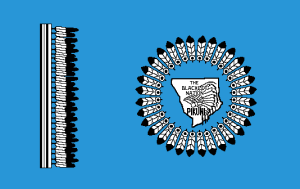
Blackfeet Nation Flag
In an unusual move, Takeda Pharmaceuticals asked a federal appeals court to rule that a Native American tribal court does not have jurisdiction over a lawsuit which could expose the company to enormous liability...The effort marks the first time that a drug maker has taken such a step...underscores the risks facing the pharmaceutical industry amid a proliferation of lawsuits filed by patients who claim they were harmed by medicines...The case against...Takeda...was filed...by a member of the Blackfeet tribe who claims he developed bladder cancer after taking the Actos diabetes drug for several years...At issue is whether Native American tribal courts have jurisdiction over civil lawsuits filed against those who are not Native American. This matters to Takeda because in the US state and federal court system, a company that loses a case has the right to seek an appeal. But if a company loses a case in tribal court, it cannot appeal to a federal court. In other words, Takeda has no recourse if it loses the case…Indian tribes are independent sovereigns and not subject to federal court review, except on the huge question of whether they have legal jurisdiction in the first place...
- How Pfizer set the cost of its new drug at $9,850 a month (beta.finance.yahoo.com)
Days before Pfizer Inc. was to set the price for a new breast-cancer drug called Ibrance (palbociclib), it got a surprise: A competitor raised the monthly cost of a rival treatment by nearly a thousand dollars… After carefully calibrating the price to be close to rivals and to keep doctors and insurers happy, Pfizer was left wondering if its list price of $9,850 a month for the pills was too low…Three years of market research—a stretch that started almost as soon as the new treatment showed promise in the laboratory—was suddenly in doubt. After carefully calibrating the price to be close to rivals and to keep doctors and insurers happy, Pfizer was left wondering if its list price of $9,850 a month for the pills was too low…Yet Pfizer knew setting a price too high for Ibrance might backfire…Pfizer’s multistep pricing process shows drugmakers don’t just pick a lofty figure out of the air. At the same time, its process yielded a price that bore little relation to the drug industry’s oft-cited justification for its prices, the cost of research and development…the price that emerged was largely based on a complex analysis of the need for a new drug with this one’s particular set of benefits and risks, potential competing drugs, the sentiments of cancer doctors and a shrewd assessment of how health plans were likely to treat the product.
- 7 key ingredients in Celgene’s recipe for biopharma dealmaking (medcitynews.com)
Over the past seven years, Celgene has emerged as one of the most active and creative deal-makers in the biopharma industry...The Boston Consulting Group’s Biopharma Partnering Survey and Benchmarking analysis examines BD activity and perceptions across the industry...Celgene scored as the best partner on 78% of the partnering and culture metrics (7/9), as perceived by the sell-side biotechs...here are the “seven habits”, or more aptly just attributes, of Celgene’s...successful external R&D strategy, spanning their...leadership context and...culture:
- Exhibiting more David, less Goliath.
- Starting with a clean sheet of paper.
- Embracing risk, empowerment, and trust.
- Governing with unconventional out-of-the-box leadership.
- Inverting and resizing the talent model.
- Learning at every opportunity.
- Living better through (personal) chemistry.
- CEO Behind ‘Female Viagra’ Leaves Company After Valeant Purchase (fortune.com)

Cindy Whitehead, CEO of Sprout Pharmaceuticals
Cindy Whitehead, CEO of Sprout Pharmaceuticals, the maker of the recently approved “female Viagra” drug Addyi (flibanserin), is leaving her post only months after Valeant bought the company…Whitehead was instrumental in bringing Addyi to market. She fought through two Food and Drug Administration rejections of the drug in 2010 and 2013, pushing forward until it was finally approved in August. That effort included purchasing the drug rights herself and forming Sprout after Boehringer Ingelheim dropped it following the first rejection by the FDA…Valeant quickly bought the privately-held company for $1 billion in August after Addyi’s final FDA approval. Though, blockbuster sales have so far eluded the drug. From its launch on Oct. 17 until Nov. 6, only 227 prescriptions were written for the drug…For comparison, Viagra notched more than half a million prescriptions in its first month…Now, Valeant…is opting to switch up Sprout’s leadership…“Having built a team to take Addyi to market, we mutually agreed that it was the right time to transition to new leadership for the next phase of global commercialization.”
- 300 million child-friendly antimalarial treatments supplied without profit by Novartis (malaria.novartis.com)
Novartis announced today that it has reached a delivery milestone of 300 million pediatric antimalarial treatments supplied without profit since 2009, helping to reduce the disease burden for children in more than 30 malaria-endemic countries. Coartem® Dispersible is the first artemisinin-combination therapy developed by Novartis in collaboration with Medicines for Malaria Venture specifically to meet the needs of children. Never before have so many pediatric treatments been distributed in such a short timeframe to children suffering from malaria…"This milestone underscores our long-standing commitment to the fight against malaria and to the children who are most at risk from the disease…"We are proud of the part we have played in helping to reduce childhood deaths from malaria. And we continue to provide medicine at no profit to people who need it, contributing to the goal of a world free from the disease."