
- Drugmaker Settles Free Speech Dispute as FDA Agrees on Label (bloomberg.com)

U.S. regulators have backed off an attempt to limit Pacira Pharmaceuticals Inc.’s promotion of its pain drug, striking an agreement that’s likely to fan the flames of debate over free speech and drug marketing...After the drugmaker filed suit citing its constitutional rights to free speech, the Food and Drug Administration agreed to let Pacira broadly promote the medication Exparel (bupivacaine), rather than limiting its sales team to talking only about its use after bunion and hemorrhoid surgeries...The painkiller, a non-narcotic shot, hadn’t been studied for use with other surgeries, such as dental or orthopedic procedures. While its FDA-approved label notes that fact, it doesn’t explicitly say the medication can only be used for surgeries that have been studied. Pacira argued that meant it could market the treatment for broader use...FDA has faced difficulty in its efforts to police drug marketing. In August, a court ruled the agency couldn’t bar Amarin Corp. from talking to doctors about unapproved uses of its fish-oil pill. While doctors are already allowed to prescribe drugs off-label, drugmakers have been restricted on promoting such uses...Drugmakers are able to give doctors information about unapproved uses if doctors specifically request it. The Amarin ruling allows pharmaceutical companies to hand out the information more widely without a request…
- Mr. Mucus-repped cough meds get the most positive buzz online (fiercepharmamarketing.com)
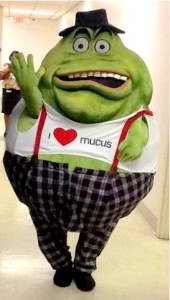
Mr. Mucus
Score one for Mr. Mucus. A new study found that the slimy spokes-character helped propel Reckitt Benckiser's family of Mucinex brands to three of the top four slots on a new list of preferred OTC cough-and-cold medicines. Treato, the online data-analysis company, created the list by analyzing findings from more than 5 million patient-written online posts and reviews...Mucinex D was No. 1, earning 4.6 (5-point satisfaction scale), followed by Delsym, which is also a Reckitt brand. Mucinex and Mucinex DM ranked Nos. 3 and 4, with Pfizer's Robitussin DM and Dimetapp brands tied at No. 5...Reckitt Benckiser's investment in DTC advertising is clearly paying off as consumers are disproportionately discussing their brands online...
- What’s next for Valeant? (video.cnbc.com)Valeant in new distribution deal with Walgreens (modernhealthcare.com)Walgreens and Valeant Devise a New Twist on Preferred Pharmacy Networks (drugchannels.net)
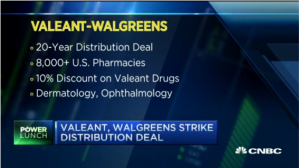
CNBC's Meg Tirrell talks to Valeant CEO J. Michael Pearson about the company's new distribution deal with Walgreens...
- 2015’s Worst Clinical Failures (nasdaq.com)

It's always disappointing when drugmakers' best efforts fall short and, unfortunately, it happens far too often. Historically, 90% of drugs entering human clinical trials end up in the laboratory dustbin rather than on pharmacy shelves, so while disappointing, it's probably not too surprising that these high-profile medicines flopped in 2016.
- Marijuana can't conquer cancer pain...Sadly, patients with cancer continue to suffer from significant pain and efforts by GW Pharmaceuticals and its partner Otsuka to scientifically prove marijuana can help many of these patients fell flat in 2016.
- A high-cholesterol treatment trips on its way to the finish line...Despite statins being widely used in tens of millions of patients to lower bad cholesterol levels, more than 600,000 Americans still die from heart disease every year and that's got big pharmaceutical companies, such as Eli Lilly , plowing hundreds of millions of dollars into the development of next-generation cholesterol busters that work differently than statins..
- Doubts emerge for NASH treatment...Nonalcoholic steatohepatitis is a fast-growing cause of liver failure that is estimated to occur in 5% of patients and it could become the leading cause of liver transplant by 2020. In a bid to keep that from happening, Intercept Pharmaceuticals is developing obeticholic acid...but enthusiasm for NASH therapy has faded since...Intercept reported...that a phase 2 study of obeticholic acid...failed...
The sheer number of trial failures makes drugmakers some of the riskiest stocks to buy. Risk of trial failure can be lowered by diversifying across stocks and focusing on drugmakers with late-stage clinical trials underway, but...there's no guarantee or magic formula for success...Investors must be willing to accept the risk that is inherent in this industry if they want to benefit from potential rewards associated with successful, game-changing medicines.
- Two serialization companies team up to tackle counterfeit pharmaceuticals (americanpharmacynews.com)Prohibition on proactive serialization for the EU FMD (securingindustry.com)
Systech International and Servicepoint recently joined forces to provide serialization and automation solutions to the pharmaceutical manufacturing industry...Internationalization, outsourcing, e-tailing and the expansion of international trade zones have created enormous complexities throughout the supply chain and product life cycle...This has resulted in a rapid escalation of global counterfeiting issues, threatening consumer safety like never before...Systech is known to have pioneered serialization and is becoming a model for the future of authentication. It unifies and protects the supply chain through...authentication and track and trace technologies that ensure regulatory compliance and reduce risks. These technologies have been used not only in the pharmaceutical industry, but also in industries, such as life science and consumer packaged goods...As part of a regulation adopted by the European Commission in October, the serialization of prescription medicine packages will be mandatory in all European Union countries by 2019. There are currently 15,000 prescription medicine production lines in Europe, and some may have to be either replaced or automated in order to put serialization into effect.
- Nonprofit vows to lower generic drug costs (bostonglobe.com)
...in this Central Massachusetts town (Blackstone Valley), a small team of drug industry veterans has launched a startup (Drew Quality Group) to counter...price gougers by making affordable generic medicines to treat critical diseases. And they’re doing it as a nonprofit...We want to create a competitor to stabilize the prices...When you end up with a single-source manufacturer, they can charge any price they want...typically have only a single producer, are in short supply either because their manufacturer is grappling with safety problems or there is no domestic supplier and an overseas producer no longer finds it profitable to make drugs to treat small numbers of patients...By operating as a nonprofit, Drew Quality won’t have to pay the same taxes a drug company does. Nor will it have to focus on cost-cutting by sending work overseas...The group wants to employ people close to home and make sure patients get access to therapies they need without being squeezed financially...And while it plans to underprice companies that have boosted prices substantially, Drew Quality will still charge enough to pay its employees and plow some money back into the business...the cost of its generic drugs will be closer to the discounted prices that were charged before companies pushed them higher.
- Hospitals launch specialty pharmacies to curb drug costs (modernhealthcare.com)
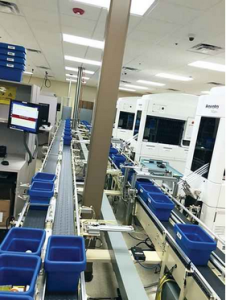
Banner Health spent $1 million on a drug-dispensing robot for its specialty pharmacy's home-delivery service.
With specialty drug spending soaring 60% in the past five years, large health systems have jumped into the specialty pharmacy business to assert some control over those costs by dispensing the drugs to their patients and covered employees...Health systems say those pharmacies help them better manage outpatient drug costs. A growing number of insurance contracts and Medicare initiatives tie payments to quality metrics that reach beyond hospital stays to hold providers accountable for patients' total medical costs, including drugs...Phoenix-based Banner Health started its own specialty pharmacy last year...hired three clinical pharmacists, three patient advocates and three staff members to support operations. The system also spent $1 million on a drug-dispensing robot for the specialty pharmacy's new home-delivery service...In the first year, Banner shaved about 1% off its specialty drug spending for about 1,200 workers and their families covered by the system's employee health plan...Health systems that own specialty pharmacies argue they can do a better job overseeing the use of the drugs they dispense. That's because their pharmacies can easily access medical records, laboratory results and physician notes, allowing pharmacists to closely monitor the effectiveness of the drugs prescribed and react quickly when something goes wrong or patients need help...They know if the patient is getting the value for the high-cost drug...Launching a specialty pharmacy does not require significant capital investment, and the high prices of the drugs—even sold at slim margins—make it possible to quickly see a return on that investment.
- SEC, in complaint against Shkreli, alleges ‘widespread’ fraud over nearly 5 years (cnbc.com)Shkreli, CEO Reviled for Drug Price Gouging, Arrested on Securities Fraud Charges (bloomberg.com)
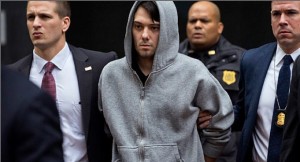
Martin Shkreli...was arrested by the FBI...after a federal investigation involving his former hedge fund and a pharmaceutical company he previously headed...The securities fraud probe of Shkreli, who is now chief executive officer of Turing Pharmaceuticals and KaloBios Pharmaceuticals, stems from his time as manager of hedge fund MSMB Capital Management and CEO of biopharmaceutical company Retrophin...SEC alleged that Shkreli engaged in "widespread fraudulent conduct" from at least October 2009 to March 2014... "made material misrepresentations and omissions to investors and prospective investors,"...once Shkreli took Retrophin public, he "fraudulently induced" the company to fund settlements with individuals who had claims against Shkreli from their investments in his hedge funds...
- It’s official: FDA shoots past 2014’s new drugs record with Roche lung cancer med nod (biopharmadive.com)
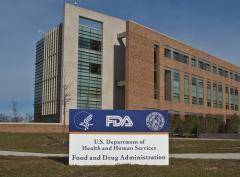
FDA last Friday approved Alecensa (alectinib) for the treatment of ALK-positive non-small cell lung cancer for patients with the disease refractory to therapy with Xalkori (crizotinib). The approval comes well before the drug's March 2016 PDUFA date...This marks the agency's 42nd newly approved medication this year, topping a banner 2014 that saw 41 new drug approvals...there will be a continuing flurry of drug approvals over the next four years (225, to be exact, and most of them in cancer-related therapeutic spaces).
- Icahn: Change the international tax code, and Pfizer will drop its ‘travesty’ of a merger (fiercepharma.com)How to Stop Turning U.S. Corporations Into Tax Exiles (nytimes.com)
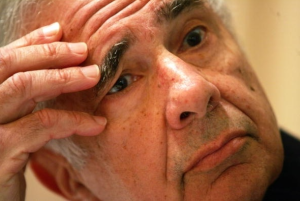
Carl C. Icahn is the chairman of Icahn Enterprises.
The tax benefits of buying Allergan are Pfizer's No. 1 reason for doing the $160 billion deal. In fact, some analysts see the $2 billion in potential tax savings as the merger's only substantial advantage...Activist investor Carl Icahn is one of those detractors, and on Monday, he amped up the criticism..."The Pfizer-Allergan deal is a travesty," Icahn wrote in a New York Times op-ed. "The point isn't to find corporate synergy. It is to leave behind our uncompetitive international tax system."...But what if those tax savings were moot?