
- Obamacare to blame for soaring drug costs: AEI (cnbc.com)
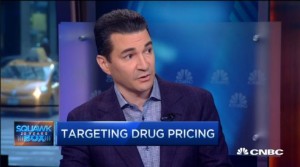
Americans concerned about not being able to afford life-saving treatments should not blame drug companies for high prices…Dr. Scott Gottlieb…told CNBC's "Squawk Box" there's not really a drug cost problem in the U.S., except for a small subset of specialty drugs that cost a lot but are providing a lot of benefit…"What we have is an under-insurance problem," he said. "People are now under-insured, especially for catastrophic drugs if they get a disease like cancer or something like that because of these new [narrow] formulary designs…popularized by the Affordable Care Act."..."If the drug is not on your [Obamacare] formulary list, you have no co-insurance. You're completely on your own,"…"Since these plans are the predominant structures in Obamacare, they're starting to migrate into commercial plans" in the workplace…
- Reimbursement Policy for Biosimilars Will Have Negative Consequences for Patients (americanactionforum.org)

Centers for Medicare and Medicaid Services have finalized a rule regarding the Medicare reimbursement methodology for biosimilar products. Biosimilars…approved …as being “highly similar” to a specific biologic medication…patients may respond differently to the reference product and the biosimilars...there is now a debate as to whether or not biosimilars should be paid with a single billing code based on the ASP (Average Sales Price) of all biosimilars for a single reference product, as has been finalized by CMS, or the ASP for each individual biosimilar, separately from any other biosimilar of the same reference product…Economic arguments and patient safety concerns may support the latter, though the statutory text regarding this matter is somewhat ambiguous…the decision over how biosimilars…should be reimbursed…should be determined by economic principles based on the value of the medication to patients and without putting patient safety and access to such products at risk. If the statutory text does not clearly provide for the favorable regulatory outcome of these factors, it should be amended.
- Expensive new Hep C drugs may be cost-effective even for early disease (reuters.com)
Treating hepatitis C with expensive new medicines at the earliest signs of liver damage improves patients' health and is also cost-effective, a new computer simulation suggests…"Going into this, I expected to find it did make sense to wait until there was a limited amount of liver disease, but what we found to our surprise is that it makes sense to start treatment at the earliest change in the liver,"…researchers created a simulated model to study the cost-effectiveness of a medicine…The imaginary subjects…of varying ages and with various stages of liver damage… While treating all stages of liver disease was cost-effective, the up-front cost is substantial. Treating half of those with hepatitis C would cost about $53 billion. That cost can be brought down if the price of the drug also decreases, the researchers write…"I think a key policy point here is that cost-effectiveness is important and this study shows that, but a next and important step is...to address the cost of the drug,"
- White House reaction to AGN/PFE deal (video.cnbc.com)Pfizer's 'holiday' gift (video.cnbc.com)Pfizer to buy Allergan for $363 per share (video.cnbc.com)Pfizer and Allergan to create the world’s largest drug maker (statnews.com)Pfizer-Allergan deal: A boon to shareholders, a blow to R&D (statnews.com)Inside Pfizer's $160B Allergan Merger (forbes.com)With veteran job-choppers Pfizer and Allergan joining hands, how many layoffs are in the cards? (fiercepharma.com)
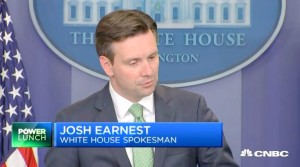
CNBC's Eamon Javers reports on the White House and Democratic Presidential Candidate Hillary Clinton's reaction to the Pfizer-Allergan deal.
- Healthcare industry says it struggles to define value (mmm-online.com)

Value-based care represents a new set of strategies that aim to reduce wasteful healthcare spending. It includes replacing branded drugs with cheaper generics, using financial incentives to encourage the use of certain drugs on a payer's formulary and insurers electing to cover certain prescription drugs at a lower co-pay…value-based approaches to addressing rising drugs are a possible lever for reducing wasteful healthcare spending—but defining value for payers, drugmakers and patients remains a serious obstacle to adoption…“We don't have a common definition of ‘value-based.' Every other industry has figured out how to do this in a free-market system…Drug pricing has hit an inflection point...There has been new scrutiny from lawmakers and presidential candidates over how drugmakers price their medicines…Some pharma companies have started to publicly discuss new strategies such as risk-sharing or value-based pricing that would support giving high prices for innovative new therapies…pharma needs to show leadership in moderating the prices of established products.
- Drug Makers, Insurers Eye an Alliance on Prices (statnews.com)
With rising drug prices such a hot topic here, drug makers and health insurers are both coming under heavy fire…So much fire that they’re considering a radical response: working together…After years of relentlessly attacking one another, leaders of the pharmaceutical industry and the health insurance lobby are considering — warily — cooperating to shape any federal legislation that emerges from the public outrage at the high cost of medications…The two powerful lobbies remain fundamentally at odds in their agendas: In the most basic terms, drug makers want to make as much money as they can for their medicines, and insurance companies want to pay as little as possible…both are under a lot of pressure from Congress and the Obama administration to figure out a unified response to high drug prices...Here’s a guide to the key players — and their agendas.
- Health insurers…want to work with drug makers, but they expect major concessions.
- Drug makers…“Medicines that truly represent value should merit a larger price.”
- So what now?
Old habits die hard, though. Even as leaders in both lobbies talk about a kumbaya moment, shots are still being fired. Earlier this month, a drug industry-backed group put out a report accusing health insurers of “hiding profits to justify raising prices.”...Just a few hours later, Tavenner’s group (health insurers)released a report of its own, asserting that drug companies “continue to demand a blank check, driving up costs across the board for everyone.”
- Dr Reddy’s sues AstraZeneca over purple colour of Nexium generic (economictimes.indiatimes.com)Despite Legal Troubles, Is Dr. Reddy's a Buy? (thestreet.com)

Hyderabad-based drug maker Dr Reddy's has filed a lawsuit in a US court against Anglo-Swedish drug giant AstraZeneca alleging material breach of a settlement agreement that had released the company from any liability in connection with generic versions of Nexium (esomeprazole)…Last week, AstraZeneca as part of a lawsuit against Dr Reddy's moved in a Delaware Court obtained a temporary restraining order preventing the Indian firm from selling copies of Nexium on grounds of trademark infringement for using the colour purple, which was similar to the original brand.
- New Jersey Legislation Permits Substitution With Interchangeable Biological Products (nabp.net)New Jersey Governor Christie Signs Bill Ensuring Patient Access to Interchangeable Biologic Medicines (businesswire.com)A2477 Eatablishes requirements for pharmacists to dispense biological products (njleg.state.nj.us)
In New Jersey, a bill (A2477) authorizing pharmacists filling a prescription for a biological medication to select an interchangeable biological product, was signed into law…A substitution cannot be made if the prescriber indicates that there shall be no substitution. The law requires the New Jersey State Board of Pharmacy to maintain a link on its website to FDA’s current list of interchangeable biological products. Further, the law requires a pharmacist or designee to notify the prescriber of the biological product dispensed, including the name of the product and the manufacturer, within five days…The pharmacist is also required to record on the prescription label, and record of dispensing, the product name of the interchangeable biological product, followed by the words “Substituted for” and the name of the biological medication for which the prescription was written, and the manufacturer of the interchangeable biological product.
- The Medicines Patent Pool Signs Licence with Bristol-Myers Squibb to Increase Access to Hepatitis C Medicine Daclatasvir (medicinespatentpool.org)

Medicines Patent Pool…announced its first licence for a hepatitis C medicine, signing an agreement with Bristol-Myers Squibb for daclatasvir, a novel direct-acting antiviral that is proven to help cure multiple genotypes of the HCV virus. The royalty-free licence will enable generic manufacture of daclatasvir for sale in 112 low- and middle-income countries (LMICs)...Nearly two-thirds of all patients living with hepatitis C in the LMICs reside in the territory covered by this agreement…Hepatitis C is a major public health threat affecting up to 150 million people globally, with the vast majority living in low- and middle-income countries. Earlier this year the World Health Organization added several new hepatitis C treatments, including daclatasvir, to its Essential Medicines List, underscoring the urgent need to promote equitable access to innovative medicines.
- These 10 S&P 500 Health Care Companies Are the Most Shareholder Friendly (thestreet.com)
Which health care companies have traditionally been the most shareholder friendly? Turns out Pfizer…is one of them. But what about the rest of the sector?...Health care companies have been actively returning capital to shareholders over the past 10 years, but not all of its sub-industries were active participants. However, that may change, particularly as several biotech companies start to mature…"Biotech has been increasingly active in repurchasing shares during the past five years,"…."We expect these trends to continue in the next several years, and we anticipate that more biotech companies will engage in similar capital deployment activities in the future as their businesses mature and they begin generating steady cash flows. Although we do not anticipate biotech to overtake the pharmaceutical industry."…So which health care companies have led the way with the most returned capital to shareholders over the past 10 years? Here's the list..
- Pfizer Inc.; Pharmaceuticals; YTD return: 3.3%; TRC 2005-2014: $127.37 billion
- Johnson & Johnson; Pharmaceuticals; YTD return: -2%; TRC 2005-2014: $108.4 billion
- Merck & Co. Inc.; Pharmaceuticals; YTD return: -4.7%; TRC 2005-2014: $68.1 billion
- Amgen Inc.; Biotech; YTD return: 0.39%; TRC 2005-2014: $39.56 billion
- United Health Group Inc.; Managed Health Care; YTD return: 11.7%; TRC 2005-2014: $36.27 billion
- HCA Holdings Inc.; Health Care Facilities; YTD return: -8.1%; TRC 2005-2014: $33.54 billion
- Abbott Laboratories; Health Care Equip ; YTD return: 2.2%; TRC 2005-2014: $33.16 billion
- Anthem Inc.; Managed Health Care; YTD return: 4.5%; TRC 2005-2014: $33.11 billion
- Bristol-Myers Squibb Co.; Pharmaceuticals; YTD return: 14.9%; TRC 2005-2014: $27.6 billion
- Medtronic Plc ; Health Care Equip ; YTD return: 4.7%; TRC 2005-2014: $24.4 billion