
- Supreme Court asked to review Namenda product switching case (pharmalot.com)

…Supreme Court is weighing a request from Allergan to rule on whether drug companies can pull a medication from the market as generic competition looms in order to force patients to switch to new versions of the drug…The move, which may hinge on antitrust laws, will be closely watched by the pharmaceutical industry…. Allergan signaled plans to end sales of its twice-a-day Namenda IR tablet for Alzheimer’s disease. The drug maker wanted to pull its drug from the market several months before the patent on the medication was set to expire— and before it faced any competition from generics…plan was to push its newer, once-daily Namenda XR, which has patent protection until 2025.
- Myths And Facts About Specialty Drugs (forbes.com)
The ongoing debate over specialty drugs — reflecting conflicting motives of buyers and sellers — neglects important insights about the impact of these new technologies, their value to society, and the economics of medical R&D. We here disentangle the facts from the myths surrounding these products…“Specialty drugs” is a term that has entered common vocabulary to categorize a class of drugs that are clinically unrelated, but are increasingly grouped together due to their high cost. They have come under scrutiny lately from payers, policymakers, and physicians and exemplify the most significant, recurring challenge in modern health care: how to balance effective innovation with fiscally viable pricing. Unfortunately, solutions are elusive because of pervasive myths about these products...Below we debunk the most serious myths impeding an effective policy response..
- Myth: Growth in Specialty Drug Spending Will Bankrupt Health Care
- Myth: Specialty Drugs Offer Only Incremental Value
- Myth: Profits from Specialty Drugs Sales are Excessive
- Myth: The U.S. Would Benefit from European-style Price Controls
- Myth: High Prices are the Sole Source of Financial Hardship on Patients
- What’s the Bottom Line?
- Pharmacies Face Financial Hardship with Rising DIR Fees (specialtypharmacytimes.com)
Direct and indirect remuneration fees rise from preferred network drug plans offered by insurers and pharmacy benefit managers…fees…are causing financial hardship for many pharmacies…These fees may encompass “pay-to-play” fees for network participation, periodic reimbursement reconciliations, or non-compliance with quality measures…Many pharmacists feel that there is a lack of transparency regarding how DIR fees are calculated…the fees are retroactive, which can make it hard for pharmacy owners to run a business…Originally, DIRs were established to allow PBMs and Medicare to share in rebates that the insurers received from drug manufacturers under Medicare Part D coverage…cost imposed by the PBM on pharmacies that is not necessarily disclosed to Medicare officials…the financial realities associated with very high DIR may force many pharmacies to withdraw from networks…CMS has said in the past that the fees distort the real price of prescription drugs in the market.
- Bartell Drugs maintains ‘hyper-local’ focus with latest store opening (drugstorenews.com)
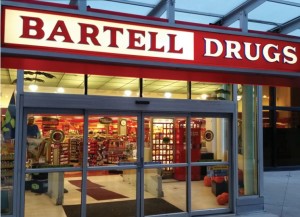
Bartell Drugs will unveil the largest of its 64 locations at Bellevue Village (Bellevue, WA)…with the completion of a major 5,500-square-foot expansion and remodel…In keeping with Bartell Drugs' “hyper-local” focus, the store includes an array of new features and product areas spotlighting local partners, including the “Bellevue Fountain” offering in-store barista services with fresh-brewed coffee and espresso drinks from Seattle’s Caffe Vita and scooped servings of Bartell Drugs’ own Emerald & Spruce premium ice cream in partnership with local Snoqualmie Ice Cream. And then there's the Bellevue introduction of Bartells’ “Growler Station” with nine local craft beers on tap for take-home.
- After big spending and hard lobbying, Pfizer eyes new tax home (finance.yahoo.com)Pfizer-Allergan deal would set up U.S. company for a split (finance.yahoo.com)

Pfizer Chief Executive Ian Read, who has been lobbying Congress regularly for a corporate tax cut, is trying for the second time in as many years to do a deal with a foreign company that could produce the savings he has been unable to extract from Washington…Pfizer Inc, which is pursuing a deal for Dublin-based Allergan Plc, was one of the top spenders among pharmaceutical companies lobbying the…government…Pfizer spent $9.49 million on lobbying in 2014 and $10.1 million on lobbying in 2013…Pfizer appears to have stopped waiting for Congress to act."I don't think they are giving up, I think they are just dealing with the world as it is...Investment in cures and patients don't follow a political calendar, they follow a scientific calendar,"…
- The Impact of Primary Medication Nonadherence in Specialty Pharmacy (specialtypharmacytimes.com)
Nonadherence carries significant implications for stakeholders throughout the specialty space…There is not a lot of information about primary medication nonadherence, but it could have a huge impact on patients…if the patient doesn’t start on medication … well, the outcome is going to be very poor in those circumstances…reasons for PMN:
- Cost of the drug
- Concern for side effects
- Treatment change
- Perceived need
- Patient forgot or didn’t know
There are also issues that are specific to specialty pharmacy…why patients might delay treatment:
- Cost and copay/co-insurance
- Patient perceptions: they don’t believe the disease is severe enough or they don’t believe in the efficacy of the drug
- Fear of side effects or a fear of injections
- Valeant CEO Michael Pearson Sells 1.3 Million Shares After Margin Call On $100 Million Loan (forbes.com)
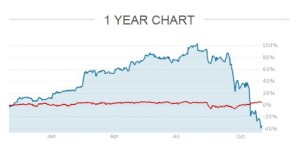
J. Michael Pearson, the embattled CEO of Valeant Pharmaceuticals , came under a different kind of pressure Thursday after weeks of battling allegations of accounting impropriety and usurious business practices. Pearson was forced to sell 1.3 million Valeant shares yesterday after facing a margin call from Goldman Sachs on a $100 million loan…The margin call stems from a sharp plunge in the value of Valeant shares over the past three months as the company faced scrutiny from lawmakers into its drug pricing practices, and surprised investors by disclosing a web of consolidated specialty pharmacies it uses to distribute drugs. Valeant’s shares were battered a week ago after large pharmacy benefit managers refused to accept orders from its specialty pharmacies, and Pearson had no choice but to cut ties with the operations…The plunge, it turns out, only added to the company’s woe.
- Final text of TPP fails to allay critics of drug agreement (fiercepharmaasia.com)The Trans-Pacific Partnership (text) (ustr.gov)
Thousands of pages of the final text of the 12-nation Trans-Pacific Partnership trade deal were released by the White House…in hopes of persuading critics to come out in favor of it. But those hopes were dashed when critics from all walks of the economy in the U.S. and elsewhere criticized the provisions…critics ranged from Ford to environmental groups to U.S. nurses and Malaysian officials concerned about potential cost increases on lifesaving drugs that will affect patients who could suffer when lower-cost generics take years longer to come on to the market…National Nurses United union said in a statement that the TPP "is even worse than prior reports had predicted" and said monopoly pricing protections for pharmaceutical companies "could be a death sentence for countless patients in need of affordable medications around the world."...
- Drug Disposal Data Raises Questions Over Mail-Order Pharmacies (specialtypharmacytimes.com)
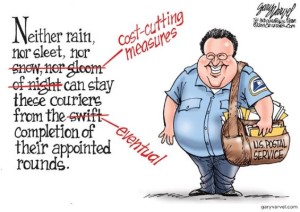
Mail-order disposals involve more expensive brand-name medications than retail disposals…Medication waste may be more likely among patients who use mail-order pharmacies, rather than retail pharmacies…also…mail-order disposals tend to involve more expensive brand-name medications than retail disposals…disposals that had more than 80% of the medication remaining were more likely to be from mail-order pharmacies than retail pharmacies...which raises questions about nonadherence among mail-order patients…patients who disposed 100% of their medication were more likely to have received their medication via mail-order pharmacies…the patient did not take any of it and, likely, the medication was not needed in the first place and should not have been shipped…medication…returned for disposal was more likely to be brand-name medication when it came from mail-order refill patients. Since brand-name medication is typically more expensive, it was money down the drain…
- Pharmacy Week in Review: November 6, 2015 (pharmacytimes.com)

Mike Glaicar, Business Development: Pharmacy Times...(PTNN) This weekly video program highlights the latest in pharmacy news, product news, and more. (video)