
- Known Knowns and Unknowns of U.S. Drug Pricing (blogs.plos.org)
Media scrutiny of high drug costs…spending on drugs represents 10% of overall health care costs. Together, hospital and physician expenditures account for 6 times the spending on drugs. Despite a recent uptick in the rate of drug cost growth, over the past 10 years the pace of hospital and physician expenditures has exceeded prescription drugs…these facts do not make for eye-catching headlines. By contrast, the recent surge in the price of drugs targeting hepatitis C, HIV, and various cancer and orphan diseases, is salient and the focal point of media attention…Here, we unravel several mysteries surrounding drug pricing and alignment of price and value.
- Why is pricing in the U.S. different?
- How are drugs priced in the US?
- What about R&D and its relation to price?
- Then what?
- But, does price = value?
- What are the alternatives?
- Summary
- Big Pharma’s Shoes Don’t Fit Amgen (bloombergview.com)
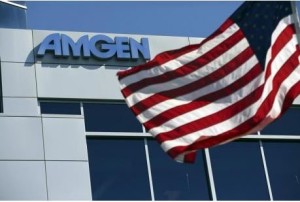
The differences between biotech and pharma have always been a bit arbitrary. They mostly amount to whether the company name has been around for a century or mere decades, and whether there's a "gen" or a "zyne" in there somewhere…One thing investors like about Amgen is its most pharma-like attribute: For years, it was the only biotech to pay a dividend…But the company now risks adapting one of Big Pharma's less-desirable habits: expensive buyouts that risk large chunks of capital and investor goodwill…Amgen would be the latest in a trend of biotechs becoming buyers instead of…targets…Everyone's chasing the same shiny object…The road to every blockbuster drug is a minefield…Amgen's fear of missing out is understandable. But the very fastest way to derail a good thing is through big, bad acquisition. If Amgen wants to keep swinging $10 billion bats, it can't afford to miss.
- Drug industry bemoans Britain’s lack of science skills (reuters.com)Bridging the skills gap in the biopharmaceutical industry (abpi.org.uk)

British pharmaceutical and biotechnology companies face a major skills shortage which threatens future investment and the long-term success of the life sciences sector, according to a new industry report…Association of the British Pharmaceutical Industry said…that firms could increasingly seek workers abroad due to low numbers of good quality candidates, particularly those with appropriate biology and maths skills…The report follows a warning this week from lawmakers on the House of Commons science and technology committee that Britain's position as a "science superpower" would be jeopardized if government spending on science was not protected.
- End of the road for Off-Patent Drugs Bill (pharmatimes.com)

Houses of Parliament
A bill under which the government would have gained responsibility for repurposing off-patent medicines showing promise in unlicensed indications has failed to make it past its second reading in parliament…The …is seeking to make the Secretary of State for Health responsible for securing new licences for unprotected medicines where there is evidence of their effectiveness in new indications…the Bill…could, over time, “revolutionise access to treatments across a whole range of medical conditions”, as currently, there is no incentive for pharmaceutical companies to seek new licenses for old drugs that are no longer patent protected, meaning that in cases where they could be effective against other diseases patients would only get access through off-label prescriptions…the government is instead pursuing a non-legislative solution to the issue of off-patent drugs…
- Pharma cargo thefts jump with $558,000 average losses reported (fiercepharmamanufacturing.com)Pharmaceutical Hijacking Arrest (freightwatchintl.com)

Report says small thefts may indicate syndicates are scoping out targets…Drugmakers have stepped up their game in recent years in protecting their supply chains against cargo theft. But thieves can be resourceful, and a big jump in losses in the third quarter indicates ways in which they have evolved their own techniques…In its Q3 report on U.S. cargo theft, FreightWatch International reported that while cargo thefts across all categories were down 18% and pharma thefts accounted for only 6% of total incidents, the numbers of cargo thefts in the drug industry increased a whopping 125% over the previous quarter and 350% over the same quarter a year ago…The industry continues to work with law enforcement to detect trends, and it has paid off with some arrests and convictions.
- As competition wanes, prices for generics skyrocket (bostonglobe.com)
Concerns about the soaring prices of prescription drugs have focused on new specialty treatments that can cost tens, even hundreds of thousands of dollars per patient. But insurers, health care providers, and industry specialists are now raising alarms about a new source of rising prices: generic drugs…Insurers say they are seeing huge cost increases for some commonly used generic drugs, with prices surging 15, 25, and even 75 times what they were just two years ago…In sheer dollars, the drugs remain cheap and the increases appear modest…Several factors contribute to rising drug costs. Generic drug companies say they sometimes raise prices to offset increasing costs, such as purchasing chemicals and other raw materials. Some drug makers say they hike prices when their competitors do…Industry analysts say rising drug prices are also a result of declining market competition, which can occur when companies stop making drugs or when drug makers merge and consolidate.
- Want to win on pricing? Take a closer look at the numbers (fiercepharmamarketing.com)

Controversy surrounding drug pricing has reached an all-time high…So what's a drugmaker to do? Take a hard look at the data…Higher prices often attract lower-cost competitors and eliminate the short-term price increase benefit…public backlash to price hikes can trigger executive firings and other actions that impact the market…"While price hikes often represent both the recouping of historical investments and funding investments in new research to develop better treatments, companies should not descend into opportunistic 'price gouging,"…Leveraging pricing data can make a big difference in helping drugmakers stay abreast of the competition, especially for companies with off-patent products…Companies can use pricing data to gauge threats from generics or biosimilars, and identify trends in therapeutic areas or even specific indications. They can borrow from rivals' price-negotiation strategies to make the best case for their own meds. "If companies are able to actively and effectively analyze the trends and see how the market reacts, they'll be in a lot better position moving forward,"…
- Pacific trade deal could limit affordable drugs: world health chief (newsdaily.com)The Trans-Pacific Partnership (text) (ustr.gov)

A massive trade pact between 12 Pacific rim countries could limit the availability of affordable medicines, the head of the World Health Organization said…joining a heated debate on the impact of the deal…Margaret Chan told a conference there were “some very serious concerns” about the Trans-Pacific Partnership…trade policy which still needs to be ratified by member governments…“If these agreements open trade yet close the door to affordable medicines we have to ask the question: is this really progress at all,” Chan asked a conference in Geneva…The deal’s backers, including the United States, Canada, Japan and Australia, say it will cut trade barriers and set common standards across 40 percent of the world’s economy…But other bodies, including leaders of India’s $15 billion pharmaceuticals industry, have said it could end up protecting the patents of powerful drugs companies inside the deal area, at the expense of makers of cheaper generic drugs outside.
- Express Scripts cuts off pharmacy that sells drugs for Horizon Pharma (pharmalot.com)
...latest fallout over the role that specialty pharmacies play in boosting prescription drug sales, Express Scripts has ended a contract with a company that is used by Horizon Pharma to distribute some of its medicines…Express Scripts cancelled its contract with Linden Care after determining the mail-order pharmacy was apparently dispensing drugs that are mostly made by Horizon, according to a spokesman. Express Scripts, which is the nation’s largest pharmacy benefits manager, is scrutinizing what it calls captive pharmacies. Those captive pharmacies appear to sell products for mostly one drug maker…In response, Linden filed a lawsuit accusing Express Scripts of making “a trumped-up charge that Linden Care is mailing drugs out of state purportedly in violation of [its] contract.” The pharmacy also maintains Express Scripts failed to provide adequate notice that the contract was ended. Express Scripts sent its termination notice yesterday, Nov. 10.
- Supreme Court asked to review Namenda product switching case (pharmalot.com)

Supreme Court is weighing a request from Allergan to rule on whether drug companies can pull a medication from the market as generic competition looms in order to force patients to switch to new versions of the drug…The move, which may hinge on antitrust laws, will be closely watched by the pharmaceutical industry…Allergan’s request follows a heated battle between the drug maker and New York Attorney General...over a tactic known variously as product-hopping or forced switching, which involves pushing consumers from one product to another (Namenda IR to Namenda XR). A federal appeals court earlier this year ruled that a switch Allergan had planned would harm consumers.