
- Pfizer turns aside yet another case alleging Zoloft caused birth defects (fiercepharma.com)
In what has turned into a legal trifecta for Pfizer, it has won the dismissal of a lawsuit that claimed the use of the antidepressant Zoloft (sertraline) during pregnancy caused birth defects in a child. The decision comes after Pfizer has won two jury verdicts in recent months over the same claims… Philadelphia state court Judge Mark Bernstein…granted a summary judgment…to Pfizer and dismissed the case…The dismissal came as…Bernstein also denied a request by the plaintiffs to add to the testimony of their expert…there is insufficient epidemiological evidence to link the drug to birth defects...FDA recently asked Pfizer to add information about possible links to birth defects to the Zoloft label.
- Walmart plans ‘America’s biggest health fair’ (chaindrugreview.com)

…retail giant…will offer free blood glucose, blood pressure and vision screenings along with product samples and health insurance information at more than 4,400 stores nationwide on Oct. 10… "We expect to set record-breaking numbers during this single day because we will have hundreds of thousands of both screenings and immunizations,"…we believe that during this health fair more than 3,000 Americans will learn that they may have diabetes, and another 7,000 will find out that they have high blood pressure."…."This is a continuation of our commitment to helping our customers live healthier lives,"…"We have a long history of making health care more affordable and accessible…
- U.S. cancer doctors drop pricey drugs with little or no effect (reuters.com)
…oncologists, aware that patients are paying more of the costs of expensive cancer drugs, are increasingly declining to prescribe medicines that have scant or no effect, even as a last resort…At least half a dozen drugs,..aren't worth prices that can exceed $100,000 a year… If specialists do start considering a drug's cost in their prescribing habits, such decisions could dent the multibillion-dollar cancer drug business…Doctors are unimpressed with so-called "me too" drugs developed by companies looking to grab market share from a more established product. "There are drugs that don't make much sense given how much they cost, given their small benefits,"…
- Express Scripts to cover pricey new cholesterol treatments (washingtonpost.com)Pricey new cholesterol Rx covered by big drug plan, but... (cnbc.com)
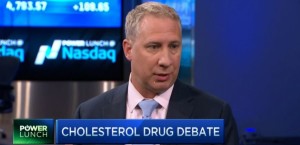
..nation’s biggest pharmacy benefits manager has decided to cover two new drugs that lower…cholesterol but raise concern over prices that can top $14,000 a year…Express Scripts said…that it will pay for prescriptions of…Repatha as well as Praluent…under a few conditions designed to control costs…It will require prior approval…before any prescriptions are filled…will need to see a patient’s cholesterol levels first as well as proof that the older statins failed…is requiring the drugmakers to provide rebates if prices climb more than a set amount each year…Express Scripts also has agreed to cover any costs that exceed a certain amount per person, annually.
- Specialty Pharmaceuticals for Hyperlipidemia — Impact on Insurance Premiums (nejm.org)
PCSK9 inhibitors…offer the promise of reductions in blood cholesterol levels…This broad indication sets the practice of cardiology on a collision course with specialty pharmaceutical pricing models…reserved for drugs that benefited relatively limited patient populations…these therapies may also lead to savings down the road, by reducing rates of cardiovascular events…There will surely be formal economic evaluations of these data, and there are long-term outcome studies under way to elucidate the potential effect of these therapies on cardiovascular event rates…it is apparent that the prices for these drugs will result in net costs to the health care system, even if they may eventually be found to offer good value for the money…expected total annual costs in the billions, it's important to ask who will bear these costs...Pricing pressure on innovative products would drive a fundamental restructuring of the industry and further increase the financial challenges of bringing scientific innovations to the market. It is important that we manage these downside risks carefully as we work toward a more sustainable pricing model in this market..
- Kentucky pharmacy PharMerica agrees to $9.25M settlement (washingtonpost.com)
..Kentucky pharmacy has agreed to pay $9.25 million to settle allegations that it solicited and received kickbacks from a manufacturer in exchange for promoting a drug with nursing home patients,… PharMerica Corp. resolves claims that it received kickbacks from Abbott Laboratories in exchange for recommending that physicians prescribe the Abbott-manufactured drug Depakote. The federal government alleged the kickbacks were disguised as rebates, educational grants and other financial support....
- A New Way to Define Value in Drug Pricing (hbr.org)
Prices for specialty drugs in the United States are out of control, with spending rising much faster than in many other health care domains. Some state Medicaid programs have been driven to the brink by the cost of new drugs for diseases such as hepatitis C, for which 12 weeks of treatment with Sovaldi can cost nearly $100,000…paying for drugs according to how well they actually work…A drug that works is worth something; one that doesn’t is not. If a new drug works no better than an older one, the two have equal worth. If a drug costs a lot, that’s OK only if it makes people so healthy that it reduces their spending on other forms of health care...