
- Pharmacy Week in Review: July 20, 2017 (pharmacytimes.com)
Nicole Crisano, PTNN. This weekly video program provides our readers with an in-depth review of the latest news, product approvals, FDA rulings and more.
- $1.2M from Nevada AG creates OB/GYN program at UNR (reviewjournal.com)
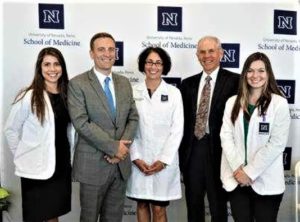
A $1.2 million allocation from the attorney general’s office to the University of Nevada, Reno Medical School should soon begin producing more pediatric doctors for the state...The funding from a settlement between the attorney general’s office and the drug manufacturer Pfizer is creating an OB/GYN department at the medical school...The new department will provide education for medical students in obstetrics and gynecology, as well as training for primary care residents and research...Having a department dedicated to research and the education of students and physicians in their understanding of women’s health ensures we are delivering the best care for patients...
- Big-Data Analysis Points Toward New Drug Discovery Method (technologynetworks.com)Reversal of cancer gene expression correlates with drug efficacy and reveals therapeutic targets (nature.com)
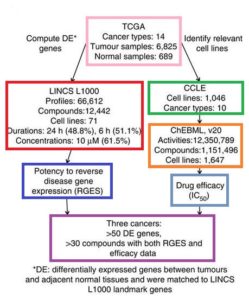
A research team led by scientists at UC San Francisco has developed a computational method to systematically probe massive amounts of open-access data to discover new ways to use drugs, including some that have already been approved for other uses...The method enables scientists to bypass the usual experiments in biological specimens and to instead do computational analyses, using open-access data to match FDA-approved drugs and other existing compounds to the molecular fingerprints of diseases like cancer. The specificity of the links between these drugs and the diseases they are predicted to be able to treat holds the potential to target drugs in ways that minimize side effects, overcome resistance and reveal more clearly how both the drugs and the diseases are working...Our hope is that ultimately our computational approach can be broadly applied, not only to cancer, but also to other diseases where molecular data exist, and that it will speed up drug discovery in diseases with high unmet needs...I’m (Bin Chen, PhD) most excited about the possibilities for applying this approach to individual patients to prescribe the best drug for each...
- This Week in Managed Care: July 14, 2017 (ajmc.com)
Kelly Davio, Welcome to This Week in Managed Care from the Managed Markets News Network
- EU watchdog concerned drug agency EMA may be too close to companies (reuters.com)

The European Medicines Agency, eager to accelerate access to promising new drugs, may be getting too cosy with the pharmaceutical companies it regulates...That is the concern of the watchdog charged with overseeing administrative irregularities in the European Union, which is launching a strategic inquiry to see if early-stage interactions with firms could influence agency approval decisions...The probe by the European Ombudsman will focus on meetings and discussions between drugmakers and agency officials before a new medicine is formally submitted for regulatory approval...Such "pre-submission activities" have grown in importance in recent years as the EMA has sought to fast-track important new treatments through special arrangements designed to streamline the approval process...Some in Europe, however, fear that moves to accelerate marketing authorizations, including by promoting "adaptive pathways" for clinical trials and designating some products as priority medicines, will increase risks. Critics include Germany's IQWiG, which plays a key role in determining the cost-effectiveness of drugs.
- UNLV’s first doctors-to-be begin classes Monday (reviewjournal.com)

UNLV’s inaugural class of medical students won’t be listening to heartbeats quite yet, but the stethoscopes they receive on their first day of studies Monday will be put to good use over the next four years...On a landmark day for the university’s long-planned School of Medicine, the first class of 60 students will be presented with the medical instruments that will be their constant companions while they receive their medical educations and beyond during an afternoon celebration at the UNLV Student Union..."It’s a new day for medical education in Nevada," Jason Geddes, vice chairman of the Nevada Board of Regents, said. "The first class looks terrific. I’m looking forward to them getting on campus and getting started on the program."...The students, who were selected partly for their ties to Nevada and are receiving full-ride scholarships as part of the school’s inaugural class, form a gifted group.
- Study Indicates 75% of Human Genome is Non-functional (technologynetworks.com)

An evolutionary biologist at the University of Houston has published new calculations that indicate no more than 25 percent of the human genome is functional. That is in stark contrast to suggestions by scientists with the ENCODE project that as much as 80 percent of the genome is functional...In work published online in Genome Biology and Evolution, Dan Graur reports the functional portion of the human genome probably falls between 10 percent and 15 percent, with an upper limit of 25 percent. The rest is so-called junk DNA, or useless but harmless DNA…this new study...will help to refocus the science of human genomics...“We need to know the functional fraction of the human genome in order to focus biomedical research on the parts that can be used to prevent and cure disease,” he said. “There is no need to sequence everything under the sun. We need only to sequence the sections we know are functional.”
- Understanding CMS’s Surprising Reimbursement Cut for 340B Hospitals (drugchannels.net)

Centers for Medicare & Medicaid Services shocked everyone with a proposal altering a small part of the 340B Drug Pricing Program. CMS proposed reducing reimbursement for certain Medicare Part B drugs purchased by 340B-eligible hospitals: from Average Sales Price plus 6% to ASP minus 22.5%. Hospitals will also have to identify 340B claims with a new modifier...CMS explains its rationale for reducing reimbursement to hospitals. It references key studies from the Office of Inspector General, the Government Accountability Office, and the Medicare Payment Advisory Commission...The new ASP-22.5% reimbursement figure is based on a MedPAC study. It estimated that hospitals in the 340B program receive a minimum discount of 22.5% of the Average Sales price (ASP) for drugs paid under the outpatient prospective payment system…Three important items to note:
- The proposal would reduce patients’ coinsurance obligations.
- Manufacturers would not gain from this proposal. CMS designed the proposal to be budget neutral.
- The proposal does not address contract pharmacies.
- U.S. Proposes Deep Cuts to Some Drug Payments Under Medicare (bloomberg.com)The Booming 340B Contract Pharmacy Profits of Walgreens, CVS, Rite Aid, and Walmart (drugchannels.net)The 340B Program Hits $16.2 Billion in 2016; Now 5% of U.S. Drug Market (drugchannels.net)What I Told HHS Secretary Tom Price About the 340B Drug Pricing Program (drugchannels.net)
The U.S. Medicare program...proposed deep cuts to how much it reimburses hospitals to buy drugs under a policy that gives some health facilities access to cheaper medicines...The proposal...by the Centers for Medicare and Medicaid Services, would change the rate paid to hospitals for drugs under what’s known as the 340B program. The program gives hospitals who serve many poor patients access to deep discounts on some drugs. The new proposal would significantly cut the payments hospitals receive for those medications...Medicare would essentially be clawing back most of the discount from hospitals, (without any impact to payment made to drug manufacturers)…Medicare would pay hospitals for drugs purchased through the 340B discount program at a price more consistent with the actual cost hospitals and other providers pay to acquire those drugs. Seniors would see those savings passed on to them in the form of lower copays...The changes would cut seniors’ drug costs in Medicare by $180 million a year...Currently, hospitals are reimbursed for the drugs at their average sales price, plus 6 percent. The proposed rule would pay average sales price, minus 22.5 percent. The proposal would selectively hurt hospitals serving the poor, said Tom Nickels, executive vice president of the American Hospital Association.
- Nevada State Board of Pharmacy Newsletter, July 2017 (bop.nv.gov)
- Our Newest Board Member - Melissa Shake
- Prescription Transfers
- National Pharmacy
- WHO Launches Global Patient Safety Challenge on Medication Safety
- Continuous Quality Improvement and Patient Safety Organizations
- NCPDP Releases Guide to Ensure Patients Get Their Medications During a Disaster
- FDA Warns of Illnesses and Deaths in Pets Exposed to Fluorouracil
- FDA Revises Final Guidance Documents on Bulk Drug Substances Used in Compounding
- APhA Resource Guide Applies JCPP Pharmacists’ Patient Care Process to Immunization Services
- CPE Training on Older Adult Fall Prevention Available Online
- New FDA Drug Info Rounds Training Video Addresses the Combat Methamphetamine Epidemic Act
- FDA Presents Series of CE Webinars for Students and Clinicians
- E-Prescribed Faxed Prescriptions