- ‘Unorderly’ Brexit risks shortage of life-saving drugs (pharmaceutical-journal.com)

An ‘unorderly’ Brexit could risk the supply of life-saving medicines to patients because the drugs are held at border checks, piled up in warehouses, or subject to ‘extensive retesting’, the British and European pharmaceutical industries have jointly warned...a disorderly Brexit could result in ‘severe disruption’ of most companies’ supply chains, as the flow of medicines from the UK to the continent and back could stall..."ongoing cooperation" between the UK and EU on medicines as "the best way of ensuring that patients across Europe and the UK are able to continue to access safe and effective medicines and to ensure that there is no adverse impact on public health"...Current European marketing authorisations that apply across the EU, and continued cooperation between national competent authorities that are facilitated by the European Medicines Agency and the European Commission will be important in maintaining effective ties...any changes to the UK–EU trading relationship should not affect the research, development, manufacture and supply of medicines across Europe, including for clinical trials.
- Gilead’s educational campaign boosted HCV diagnosis rates for baby boomers (mmm-online.com)
...Gilead Sciences told investors...that an unbranded campaign encouraging baby boomers to get tested for hepatitis C helped boost screening and diagnosis numbers, which in turn upped sales of its HCV therapies...The drugmaker markets several blockbuster HCV therapies, including Sovaldi and Harvoni. It most recently received FDA approval for Vosevi…About nine million people underwent testing for hepatitis C in 2016, up 15% compared to 2015's testing rates...This led to about 190,000 new diagnoses in 2016, a 32% increase compared to 2015...Gilead's unbranded campaign targeting baby boomers launched in October...We always feel that part of our role in the areas...that we operate is to provide education...Gilead reported that its HCV franchise generated sales of $1.9 billion in the second quarter of 2017, down 17% from the same quarter in 2016. But sales increased over the first quarter of the year, driven partly by patient starts...
- Trump’s FDA Commissioner on Drug Prices, Regulations, Science (bloomberg.com)
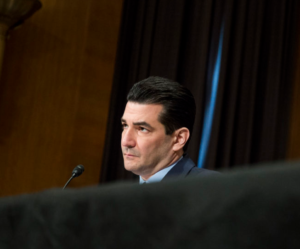
Trump vs. Big Pharma: Can He Bring Drug Prices Down?...U.S. Food and Drug Administration Commissioner Scott Gottlieb spoke with Bloomberg News about drug pricing, new medicine and regulations. This transcript of the interview has been edited for clarity and length.
- What’s the FDA’s role to play in drug pricing and what can the agency do, given that it hasn’t traditionally had a mandate to address the issue?
- Is it just small, opportunistic drug companies that are "gaming" the system, or is this something bigger companies do as well?
- What about the rest of the administration? Trump talked a lot about drug pricing on the campaign trail and after, yet we haven’t seen much action other than yours.
- What about an executive order on drug pricing -- there was talk that Trump was going to come out with something. Is that still being worked on?
- What about drugs like EpiPen, would you come out with new rules there to create more competition? [EpiPen, made by Mylan NV, is what’s known as a drug-device combination, where both the medicine and the device that administers it can have patent protections.
- But is it reasonable to assume you’re looking at doing something like this, on these types of devices?
- One of the things we’ve seen from the administration is, get rid of regulation, get rid of regulation, get rid of regulation. How does your philosophy as a regulator –- one of the biggest regulators in the U.S. government –- how does that line up with what the Trump administration has called for?
- Some of the things you’re doing to create more competition among drugs, people could interpret as a loosening of standards. I wonder if you think that’s the case?
- Through the years we’ve seen the agency go through cycles, of pushing drugs out into the market faster, versus being much more conservative about safety. Is the balance at the FDA changing?
- How broadly can you apply new standards or guidelines for drug approval? There’s been talk about it in cancer, but what about other diseases?
- Big Pharma Share Buybacks Not Impacting R&D Budgets (forbes.com)Big Pharma Spends on Share Buybacks, but R&D? Not So Much (nytimes.com)
In her Sunday business column in the New York Times, Gretchen Morgenson went after Big Pharma and the propensity for companies to buy back shares of their own stocks. Entitled "When Big Pharma Spends, Research Isn’t No. 1," Morgenson focuses on an academic study that concludes that "from 2006 through 2015, the 18 drug companies in the Standard & Poor’s 500 index spent a combined $526 billion on buybacks and dividends"--an amount that exceeded by 11% the companies’ R&D spending of $465 billion during these years...Morgenson further quotes the authors: "But there is really very little drug development going on in companies showing the highest profits and capturing much of the gains." The implication is pretty clear: drug companies blame high drug prices on the high costs of R&D, but this is a canard. They spend more money on buying back their stock. Needless to say, industry critics have seized on this as yet another reason why the biopharmaceutical industry can’t be trusted. Unfortunately, the article is misleading.
- This Week in Managed Care: July 28, 2017 (ajmc.com)
Laura Joszt, assistant managing editor at The American Journal of Managed Care. Welcome to This Week in Managed Care from the Managed Markets News Network
- Many pharma transparency policies are vague, ambiguous, and contradictory (statnews.com)

After several years in which drug makers have been pressured to release clinical trial data, a new analysis finds many companies are still doing an incomplete or inconsistent job of being transparent...95 percent of the 42 companies reviewed – including the 25 largest drug makers, based on sales – had a publicly accessible policy...the specifics often varied wildly in terms of what is disclosed and even how to interpret some of the policies...not every drug maker committed to share results within 12 months of completing a trial...policies were found to be vague, ambiguously worded and internally contradictory...every element of best practice around transparency was committed to by at least one company, [which] strongly suggests that they are all deliverable, and that there are no practical barriers to all companies committing to meet all elements of best practice."...The findings follow years of tussling between drug makers, academics and consumer groups over the issue of transparency. A central concern is the ability for researchers to independently verify study results and, consequently, improve patient treatments that can lead to better health and lower costs...Drug makers, however, are not the only ones to have flaunted transparency...many leading medical research institutions flagrantly violated a federal law requiring public reporting of study results. The violations left gaping holes in a U.S. government database used by millions of patients and medical professionals to compare effectiveness and side effects of treatments.
- A Drug Maker Spends Big in Washington to Make Itself Heard (nytimes.com)Dean Heller-Senate-R-NV : $11,000 (datawrapper.dwcdn.net)
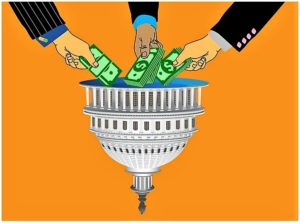
Two federal investigations — were only part of the troubles Mallinckrodt faced as the year began. The stock of the drug maker...was tanking. Wall Street worried that Medicare might reduce the half-billion dollars it was spending yearly on a Mallinckrodt drug with limited evidence of effectiveness...This year, the company left the industry trade group Pharmaceutical Research and Manufacturers of America...after the group threatened to kick out companies that did not spend enough on research...Mallinckrodt, however, has been increasing its spending in another area: It has been writing checks to politicians...After making meager donations in 2015, the company’s political action committee began raising its contributions for congressional campaigns last year. Lawmakers in both the House and Senate collected $44,000 from Mallinckrodt in 2017’s first quarter, nearly nine times what they got from the company in the same period two years ago...Mallinckrodt also spent $610,000 lobbying Congress, triple the amount of 2015’s first quarter...This year, a critical and risky one for drug companies, the industry as a whole is ratcheting up campaign donations and its presence on Capitol Hill...The totals do not include contributions from individual executives and lobbyists, or donations to leadership PACs...Drug companies are hedging their bets, writing checks to individual Democrats and Republicans. With Mr. Trump breaking ranks with Republicans to favor reform, "You can’t tell who’s your friend and who’s not,"…"So you have to go to a ground game — a more one-on-one legislator basis."
- Pharmacy Week in Review: July 28, 2017 (pharmacytimes.com)
Nicole Crisano, PTNN. This weekly video program provides our readers with an in-depth review of the latest news, product approvals, FDA rulings and more.
- As drug prices drop, generics makers fight back with deals (reuters.com)
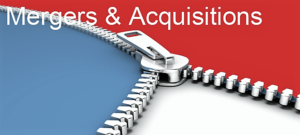
Generic drug makers are turning to M&A to shield themselves against a concerted effort by U.S. regulators to crack down on steep drug prices...Impax Laboratories Inc, Perrigo Company Plc and Alvogen Inc have been talking to advisers about strategic options for their generics businesses, ranging from acquisitions to increase scale to an outright sale of the units...Mallinckrodt Plc, one of the largest producers of the generic opioid painkiller oxycodone, has been exploring a sale of its specialty generics unit…To bring down prices, the Food and Drug Administration has committed to eliminating the backlog of drug applications awaiting its approval. This could mean nearly 4,000 new medicines will come onto the market over the next several years, based on FDA estimates of drugs awaiting approval...Even before a potential flood of new products, small and mid-sized drug makers were under pressure as consolidation among generic drug distributors has made it less profitable for them to sell their drugs...A merger or a sale to a rival could alleviate some of the pressure through cost-cutting, reduced competition and new markets and products. It could also help companies negotiate better terms with drug distributors...
- This Week in Managed Care: July 21, 2017 (ajmc.com)
Laura Joszt, assistant managing editor at The American Journal of Managed Care. Welcome to This Week in Managed Care from the Managed Markets News Network