
- Keystroke logger detected on hospital’s computers (healthcareitnews.com)

A hospital in Kentucky is notifying patients of a security incident, after it was discovered that some of its computers had been infected with a keystroke logger designed to capture and transmit data as it was typed…Muhlenberg Community Hospital had detected the malware on some of its machines…Affected computers were used to enter patient financial data and health information, potentially including names, addresses, telephone numbers, birth dates, Social Security numbers, driver's license/state identification numbers, medical and health plan information, financial account numbers, payment card information and employment-related information. Additionally, some credentialing-related information for providers may also be impacted…officials did say that they believe the malware could have captured username and password information for accounts or websites that were accessed by employees, contractors or providers using the affected terminals.
- HHS to end provider agreement with Seattle hospital over ‘multi-systemwide failures’ (fiercehealthcare.com)

In the wake of an inspection that found "multi-systemwide failures" that created a major risk of patient harm, Seattle's Western State Hospital may lose millions in Medicare and Medicaid funding…Department of Health and Human Services will end its relationship with Washington's largest psychiatric hospital on November 28, costing the 842-bed facility a total of more than $15 million a year in federal funds. State officials said the hospital is working to correct the problems that inspectors discovered before the deadline…"Patient and staff safety remain priorities and to that end we are working to recruit more staff, which is key to improving safety and providing quality services to the patients at all of our state psychiatric hospitals," said Kathy Spears, a spokesperson for the state Department of Social and Health Services. "We have not lost federal funding..."
- Public perception of pharmacists: Film and television portrayals from 1970 to 2013 – Abstract (japha.org)W.C. Fields - Arthur Ripley - The Pharmacist (1933) (youtube.com)
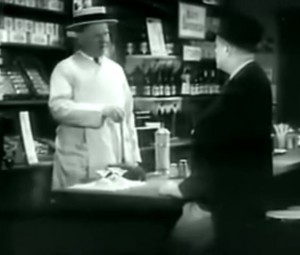
W.C. Fields - The Pharmacist (1933)
Objectives…To determine the percentage of pharmacists portrayed in a positive, negative, or neutral light in films and television shows available in the United States from January 1970 to July 2013. Secondary objectives were to evaluate pharmacist characters as heroes, villains, or victims; assess pharmacist characters’ demographics...Results…In the films and television shows reviewed, there were 231 pharmacist portrayals, with 160 unique pharmacist characters…145 (63%) were negative, 30 (13%) were positive, and 56 (24%) were neutral. Of the 160 unique characters, 121 (76%) were male, 120 (75%) were Caucasian, and 86 (54%) were younger than 50 years old…Conclusion…The portrayal of pharmacists in U.S. film and television is primarily negative. Pharmacists and pharmacy organizations are encouraged to be vocal proponents of the profession and educate trainees on the importance of an enhanced public perception. (membership or payment for full access)
- 6 Must-Know Facts About Cryotherapy (pharmacytimes.com)

Touted as a way to reduce pain, speed injury recovery, and improve mood, cryotherapy involves exposing the body to temperatures up to minus 300 degrees Fahrenheit…Celebrities and some athletes…are proponents of this treatment. However, a recent death has called the safety and efficacy of cryotherapy into question…Chelsea Ake-Salvacion who worked at a Las Vegas cryotherapy center called Rejuvenice died during an after-hours session in a tank, where she was alone...found “rock-hard solid.”…The coroner’s office determined that Ake-Salvacion died from asphyxia from an oxygen-poor environment…Cryotherapy environments can have oxygen levels around 5%—so low that someone can fall unconscious and die…Here are 6 must-know facts about cryotherapy:
- There are 2 ways to experience whole-body cryotherapy.
- One study did find some evidence that whole-body cryotherapy can reduce inflammation.
- Another study shot down cryotherapy as a successful treatment for repairing muscle damage or reducing soreness.
- Cold baths and packs may be the way to go until further research is completed.
- Cryotherapy is not regulated.
- Ake-Salvacion is not the only one harmed by cryotherapy.
- The Future Of Medicine Might Be 3D-Printed Pills (itechpost.com)
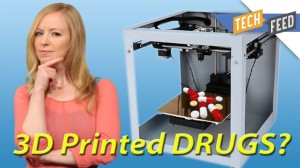
Researchers from the University of Columbia, University of North Carolina, and Wake Forest University presented a 3D printer software that creates pills for patients. The software calculates the medicine's dosage based on the patient's medical and biological data…a prototype software that creates customized pills for patients. The software uses algorithms that enables it to adjust medical dosages based on patient information like weight, race, liver and kidney functions…In a trial run, the researchers created patient profiles that resulted in different dosages of 80 total pills printed. The pills ranged from 124 mg to 373 mg, which were dosages with high accuracy with little inconsistency.
- Pharmacy Podcast – American Pharmacy Purchasing Alliance (APPA) (pharmacypodcast.com)
We interview Kim Kersten – Board of Director member of the American Pharmacy Purchasing Alliance (APPA). (podcast 20:56)
- Drug makers beat diabetes lawsuits with an unusual ruling (pharmalot.com)

Several drug makers were handed an unexpected victory this week when a federal judge ruled they weren’t required to update product labels to warn about risks of pancreatic cancer with their diabetes medicines…District Court Judge…explained the labeling changes were not required because the Food and Drug Administration would not have approved those changes. As a result, approximately 750 cases are being tossed…“Right now, it’s a ruling by one district judge in California. So at this point, it doesn’t have huge implications. But there is, potentially, a lot at stake here for the plaintiffs and similar cases,” he tells us. “If the companies were to prevail, it could become an important precedent for companies in similar cases, because it could clarify what a manufacturer has to show to avoid liability.”
- U.S. drug benefit managers clamp down on specialty pharmacies (reuters.com)
...the largest U.S. managers of private prescription drug benefits have cut off at least eight pharmacies that work closely with drugmakers, intensifying scrutiny of a system that helps inflate drug prices…The terminations come from payers who together manage drug benefits for more than 100 million Americans…Express Scripts, the nation's largest pharmacy benefits manager, has changed the algorithms it uses in its audits to find pharmacies focused heavily on one drug manufacturer and has cut ties with half a dozen such pharmacies...Independent pharmacies and their drugmaker partners counter that Express Scripts, CVS and OptumRx together control more than two-thirds of the market through their own mail-order operations. The specialty pharmacies say that the benefit managers are trying to curb the explosive growth of smaller, independent players.
- FDA Amends Liver Warning Labeling Guidance for Some OTC Drugs Containing Acetaminophen (raps.org)Acetaminophen Guidance for Industry (fda.gov)
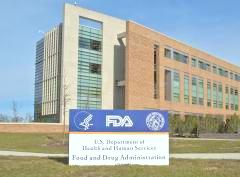
Food and Drug Administration…unveiled amended guidance on the liver warnings that must be contained in labels of some over-the-counter drugs containing acetaminophen, saying it will allow manufacturers in some cases to warn patients against taking more than 4,000 mg of acetaminophen in 24 hours… helps to clarify certain cases where manufacturers of internal analgesic, antipyretic and antirheumatic OTC drugs would be able to change liver warnings when the product’s directions for use result in a maximum daily dose of acetaminophen that is less than 4,000 mg for adults… FDA says that the optional statement, “for this product,” from the original warning is intended to help consumers understand that the maximum number of daily dosage units for a product might not reflect the maximum daily dose of acetaminophen… in certain circumstances, despite this optional statement, the wording might be interpreted as indicating that severe liver damage is associated with a total daily dose of acetaminophen that is less than 4,000 mg, which “is not the intent of the regulation.”
- Challenges Pharmacists Need to Overcome as Health Care Models Shift (pharmacytimes.com)
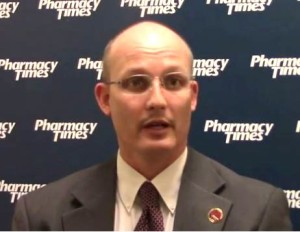
Bryan Ziegler, PharmD, executive director of Kennedy Pharmacy Innovation Center, discusses challenges pharmacists need to overcome as health care models shift to pay-for-performance reimbursement models.