
- 7 ways hospitals can rebuild community trust (fiercehealthcare.com)Community perception: How does a hospital regain trust? (beckershospitalreview.com)
Transparency is key, expert says…Any number of incidents can erode a community's trust in a hospital, from a nasty disease outbreak to a slow corrosion of the hospital-community relationship over time. But both types of lost trust can be repaired…suggestions for rebuilding community trust, including:
- Be transparent and communicate to show hospital leaders take the situation seriously when incidents such as infectious-disease outbreaks occur
- Acknowledge mistakes and show strong support for staff while correcting those errors
- Share stories of the good work the hospital is doing
- Engage and partner with community groups to host events such as safety fairs and community walks/runs
- Encourage hospital leaders to blog to engage the community with health-oriented information
- Listen to what community members say in informal settings and be willing to respond
- Research community needs, such as access to dental care, and work to serve those needs
- End of the road for Off-Patent Drugs Bill (pharmatimes.com)

Houses of Parliament
A bill under which the government would have gained responsibility for repurposing off-patent medicines showing promise in unlicensed indications has failed to make it past its second reading in parliament…The …is seeking to make the Secretary of State for Health responsible for securing new licences for unprotected medicines where there is evidence of their effectiveness in new indications…the Bill…could, over time, “revolutionise access to treatments across a whole range of medical conditions”, as currently, there is no incentive for pharmaceutical companies to seek new licenses for old drugs that are no longer patent protected, meaning that in cases where they could be effective against other diseases patients would only get access through off-label prescriptions…the government is instead pursuing a non-legislative solution to the issue of off-patent drugs…
- Humana Will Yank Obamacare Plans Serving 100,000 Patients (forbes.com)

Humana said it will discontinue several products offered on government-run exchanges under the Affordable Care Act, impacting about 100,000 individuals currently covered by the insurer’s plans across the country…The move, disclosed this morning in the company’s third-quarter earnings report, comes due to higher-than expected medical costs from sick newly insured patients covered under the health law…“Operating results for the company’s individual commercial medical business continue to be challenged primarily due to the volatility related to the start of the healthcare exchange program created under the Affordable Care Act as well as the morbidity of membership served under this relatively new program,”…The plans Humana will discontinue had “product designs which attracted a higher-utilizing member base than was assumed when the 2015 plan offerings were priced,” the company said but didn’t specify the kind of plans that will be pulled. “The transitory nature of the population served has also contributed to use of emergency room services and non-participating providers above priced-for levels.”
- Drug approval pilot plan formally launched in China (fiercepharmaasia.com)

Following on from a presentation to the State Council earlier this week, China announced…it will launch a three-year pilot plan to speed up approvals for new drugs…China's Food and Drug Administration said...that the pilot plan will take place in 10 regions and will allow research organizations and researchers themselves to seek approval for new drugs rather than forcing them to transfer their findings to drug manufacturers who then would be allowed to produce the drugs and reap most of the benefits…Officials hope the change will spur innovation in pharmaceutical development...The move is also part of China's plans to reform its entire health care sector to ease crowded hospitals, souring relations between doctors and patients, corruption and high patient costs...
- VA adds extra staff but still can’t keep up with demand (fiercehealthcare.com)
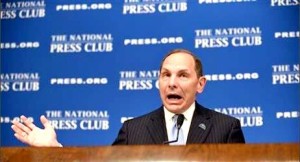
VA hired thousands of new staff but can't see all patients within 30 days…Despite the addition of thousands of new doctors and nurses, Department of Veterans Affairs Secretary Robert McDonald says the number of appointments not completed in 30 days within the VA system has grown from 300,000 to nearly 500,000…McDonald told the National Press Club that the VA is addressing the problems that led to delays in care and has completed 3.1 million more appointments in the latest fiscal year than the previous one. He said more veterans seek care at the VA because it is more convenient, effective and cheaper than other settings.
- Supreme Court asked to review Namenda product switching case (pharmalot.com)

…Supreme Court is weighing a request from Allergan to rule on whether drug companies can pull a medication from the market as generic competition looms in order to force patients to switch to new versions of the drug…The move, which may hinge on antitrust laws, will be closely watched by the pharmaceutical industry…. Allergan signaled plans to end sales of its twice-a-day Namenda IR tablet for Alzheimer’s disease. The drug maker wanted to pull its drug from the market several months before the patent on the medication was set to expire— and before it faced any competition from generics…plan was to push its newer, once-daily Namenda XR, which has patent protection until 2025.
- FDA sends warning letter to DNA4Life over consumer gene tests (reuters.com)Direct-to-consumer company tests FDA's resolve on gene testing (reuters.com)

Food and Drug Administration sent a warning letter to…gene testing company DNA4Life over its sale of an unapproved direct-to-consumer gene test to predict drug response…the agency said it was unable to identify any FDA clearance for the company's test. The letter follows 23andMe's limited relaunch last month of a series of direct-to-consumer tests after the agency ordered the tests off the market...
- Ohio MAC transparency law now in effect! Now what? (ohiopharmacists.org)Ohio Revised Code 3959.01, 3959.111, and 3959.12 (codes.ohio.gov)

Governor John Kasich signed OPA-backed maximum allowable cost pricing and pharmacy benefit manager reforms into law. These reforms will better enable pharmacies to be kept whole on the medications they purchase and dispense to patients…While the law is now in effect, we expected the rollout to bring many questions and perhaps some foot-dragging by a few in the PBM industry, and as expected, it appears we're getting some of both. See below for a complete guide on the new law, implementation of the law, and what to do if you are working with a PBM who is failing to comply with the law.
- What are the new laws?
- How will the new laws be enforced?
- How do pharmacies register complaints if the law is not being followed?
We are pleased to report that it seems several PBMs seem to be embracing the spirit of the law so far, however we are hearing that not all PBMs are in compliance.
- After big spending and hard lobbying, Pfizer eyes new tax home (finance.yahoo.com)Pfizer-Allergan deal would set up U.S. company for a split (finance.yahoo.com)

Pfizer Chief Executive Ian Read, who has been lobbying Congress regularly for a corporate tax cut, is trying for the second time in as many years to do a deal with a foreign company that could produce the savings he has been unable to extract from Washington…Pfizer Inc, which is pursuing a deal for Dublin-based Allergan Plc, was one of the top spenders among pharmaceutical companies lobbying the…government…Pfizer spent $9.49 million on lobbying in 2014 and $10.1 million on lobbying in 2013…Pfizer appears to have stopped waiting for Congress to act."I don't think they are giving up, I think they are just dealing with the world as it is...Investment in cures and patients don't follow a political calendar, they follow a scientific calendar,"…
- Final text of TPP fails to allay critics of drug agreement (fiercepharmaasia.com)The Trans-Pacific Partnership (text) (ustr.gov)
Thousands of pages of the final text of the 12-nation Trans-Pacific Partnership trade deal were released by the White House…in hopes of persuading critics to come out in favor of it. But those hopes were dashed when critics from all walks of the economy in the U.S. and elsewhere criticized the provisions…critics ranged from Ford to environmental groups to U.S. nurses and Malaysian officials concerned about potential cost increases on lifesaving drugs that will affect patients who could suffer when lower-cost generics take years longer to come on to the market…National Nurses United union said in a statement that the TPP "is even worse than prior reports had predicted" and said monopoly pricing protections for pharmaceutical companies "could be a death sentence for countless patients in need of affordable medications around the world."...