
- China State Council briefing outlines multilevel system for medical treatment (fiercepharmaasia.com)
Chinese health officials shed some additional light on the country's plans to reform its healthcare system by saying they plan to implement a "multilevel" system for medical treatment, according to a press briefing…The plan for the new system is designed to relieve some of the stress that larger hospitals face from "too many patients seeking treatment in big hospitals,"…the new system would provide a tiered level where patients first go to "nearby community-level hospitals" which can then transfer patients to a higher-level hospital "depending on the severity of the situation."...The multilevel system is at odds with the "superhospitals" trend in China in which facilities feel the need to expand their services in the face of reforms that could cut their revenues, especially the recently enacted cut of the 15% markup in drug prices that hospitals were once allowed to charge.
- Challenges of Pain: Part 2 – Pharmacies in the crosshairs: Prescription drug crime and law enforcement (pharmacist.com) Pharmacy Crime: A Look at Pharmacy Burglary and Robbery in the United States and the Strategies and Tactics Needed to Manage the Problem (apps.phmic.com)Challenges of Pain: Part 1: Impact of government responses on frontline pharmacists and patients (pharmacist.com)
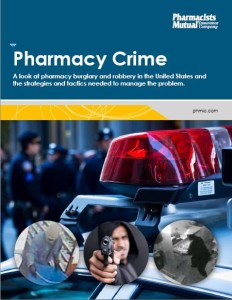
…law enforcement side of prescription drug abuse—including the rise in pharmacy crime, such as robberies, and second in Pharmacy Today’s “Challenges of Pain” series. The series shows how pharmacists and their patients with legitimate pain needs are affected by issues and efforts around prescription drug abuse.
- Concern for pharmacists’ safety
- Preventing robberies: Start with the basics
- DEA adds to its focus
- GAO report: Questions raised about DEA’s approach
- GAO surveys of DEA registrants
- DEA: Patient access not affected
- Be aware and prepared
- Direct-to-consumer company tests FDA’s resolve on gene testing (reuters.com)

Just as 23andMe has made peace with the...Food and Drug Administration, another direct-to-consumer genetics company is testing the regulatory waters with the launch of a $249 DNA test designed to predict drug response…The test, from tiny startup DNA4Life...comes in the wake of 23andMe's two-year tussle with the FDA over its direct-to-consumer personal DNA testing service, which the FDA ordered off the market in 2013…But the agency has yet to approve direct-to-consumer tests for pharmacogenetics, a field experts believe could be much riskier in the hands of consumers, who might use the information to make decisions about the drugs they are taking…"We would be delighted to have a conversation with the FDA," but added that it is not under the agency's purview. "Of course, the government can do what it likes."…The problem…is that patients, and even doctors, struggle to understand what to do with the results.
- Pharmacies Face Financial Hardship with Rising DIR Fees (specialtypharmacytimes.com)
Direct and indirect remuneration fees rise from preferred network drug plans offered by insurers and pharmacy benefit managers…fees…are causing financial hardship for many pharmacies…These fees may encompass “pay-to-play” fees for network participation, periodic reimbursement reconciliations, or non-compliance with quality measures…Many pharmacists feel that there is a lack of transparency regarding how DIR fees are calculated…the fees are retroactive, which can make it hard for pharmacy owners to run a business…Originally, DIRs were established to allow PBMs and Medicare to share in rebates that the insurers received from drug manufacturers under Medicare Part D coverage…cost imposed by the PBM on pharmacies that is not necessarily disclosed to Medicare officials…the financial realities associated with very high DIR may force many pharmacies to withdraw from networks…CMS has said in the past that the fees distort the real price of prescription drugs in the market.
- Myths And Facts About Specialty Drugs (forbes.com)
The ongoing debate over specialty drugs — reflecting conflicting motives of buyers and sellers — neglects important insights about the impact of these new technologies, their value to society, and the economics of medical R&D. We here disentangle the facts from the myths surrounding these products…“Specialty drugs” is a term that has entered common vocabulary to categorize a class of drugs that are clinically unrelated, but are increasingly grouped together due to their high cost. They have come under scrutiny lately from payers, policymakers, and physicians and exemplify the most significant, recurring challenge in modern health care: how to balance effective innovation with fiscally viable pricing. Unfortunately, solutions are elusive because of pervasive myths about these products...Below we debunk the most serious myths impeding an effective policy response..
- Myth: Growth in Specialty Drug Spending Will Bankrupt Health Care
- Myth: Specialty Drugs Offer Only Incremental Value
- Myth: Profits from Specialty Drugs Sales are Excessive
- Myth: The U.S. Would Benefit from European-style Price Controls
- Myth: High Prices are the Sole Source of Financial Hardship on Patients
- What’s the Bottom Line?
- DEA chief says smoking marijuana as medicine “is a joke” (cbsnews.com)
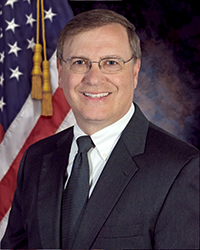
DEA chief Chuck Rosenberg on Wednesday rejected the notion that smoking marijuana is "medicine," calling the premise a "joke."…"What really bothers me is the notion that marijuana is also medicinal -- because it's not," Rosenberg said in a briefing to reporters. "We can have an intellectually honest debate about whether we should legalize something that is bad and dangerous, but don't call it medicine -- that is a joke."…Rosenberg said that people shouldn't conflate the issue of legalizing recreational marijuana with medicinal marijuana…"There are pieces of marijuana -- extracts or constituents or component parts -- that have great promise" medicinally, he said. "But if you talk about smoking the leaf of marijuana -- which is what people are talking about when they talk about medicinal marijuana -- it has never been shown to be safe or effective as a medicine."
- Drug Disposal Data Raises Questions Over Mail-Order Pharmacies (specialtypharmacytimes.com)
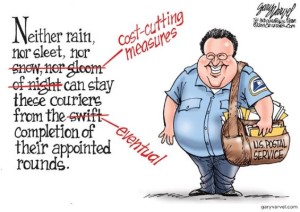
Mail-order disposals involve more expensive brand-name medications than retail disposals…Medication waste may be more likely among patients who use mail-order pharmacies, rather than retail pharmacies…also…mail-order disposals tend to involve more expensive brand-name medications than retail disposals…disposals that had more than 80% of the medication remaining were more likely to be from mail-order pharmacies than retail pharmacies...which raises questions about nonadherence among mail-order patients…patients who disposed 100% of their medication were more likely to have received their medication via mail-order pharmacies…the patient did not take any of it and, likely, the medication was not needed in the first place and should not have been shipped…medication…returned for disposal was more likely to be brand-name medication when it came from mail-order refill patients. Since brand-name medication is typically more expensive, it was money down the drain…
- Pharmacy staffing levels can threaten patient lives (drugtopics.modernmedicine.com)
The pharmacy profession is in jeopardy if it does not respond to the immediate crisis of the understaffing of pharmacies, especially those affiliated with chain stores. This understaffing has become increasingly apparent with the recent injunction and monetary fine of $502,000 given to Walgreens for not providing consultation services…A leading cause of mortality is medication errors, 21% of which result from dispensing errors…reasons for errors…too many telephone calls, overload, too many patients, no one available to double-check, illegible/misinterpreted prescription, and staff shortage…Non-provision of consulting services also contributes to the issue of medication non-adherence. Only half of the 3.2 billion prescriptions dispensed in the United States are taken as prescribed. Approximately 125,000 deaths are linked to medication non-adherence annually…Despite multiple citations and fines imposed on chain pharmacies, and lawsuits brought on behalf of the general public, chain corporations still fail to counsel patients, and the result is a steady stream of medication errors.
- The Impact of Primary Medication Nonadherence in Specialty Pharmacy (specialtypharmacytimes.com)
Nonadherence carries significant implications for stakeholders throughout the specialty space…There is not a lot of information about primary medication nonadherence, but it could have a huge impact on patients…if the patient doesn’t start on medication … well, the outcome is going to be very poor in those circumstances…reasons for PMN:
- Cost of the drug
- Concern for side effects
- Treatment change
- Perceived need
- Patient forgot or didn’t know
There are also issues that are specific to specialty pharmacy…why patients might delay treatment:
- Cost and copay/co-insurance
- Patient perceptions: they don’t believe the disease is severe enough or they don’t believe in the efficacy of the drug
- Fear of side effects or a fear of injections
- Pharmacy Podcast – The Changing Landscape of Retail Pharmacy (pharmacypodcast.com)
We interview the Vice President of Sales with H. D. Smith – Rob Meriweather about the impact of drug wholesale on the future of our pharmacy industry. (podcast 24:29)