
- Pharmacy Week in Review: August 19, 2016 (pharmacytimes.com)

Kelly Walsh, PTNN. This weekly video program provides our readers with an in-depth review of the latest news, product approvals, FDA rulings and more.
- This Week in Managed Care: August 13, 2016 (ajmc.com)

Justin Gallagher, associate publisher of The American Journal of Managed Care. Welcome to This Week in Managed Care, From the Managed Markets News Network.
- Analysis-Future of Drug Pricing: Paying for Benefits Not Per Pill (nytimes.com)

Global pressure on health spending is forcing the $1 trillion-a-year pharmaceutical industry to look for new ways to price its products: charging based on how much they improve patients' health, rather than how many pills or vials are sold...In the United States, both parties are promising fresh action on drug prices whoever wins the White House. In Europe, economies are stalled, squeezing state health budgets. And in China and other Asian markets, governments are getting tougher with suppliers...Pricing drugs based on clinical outcomes is one way to ensure that limited funds bring the most benefits to patients now and pay for the most promising medical advances in future. Some experiments in pricing have already been made...shifting the overall industry to a new model requires improvements in data collection and a change in thinking...The aim is a flexible pricing system that rebates healthcare providers when a drug doesn’t work as planned and charges more when it works well...
- Pharmacy Business Transition Strategies – Being Prepared (pharmacypodcast.com)

Jimmy Neil talks with Dave Ellis VP – Pharmacy Transition Services at Cardinal Health...Pharmacy Transition Services is a full spectrum, consultative approach to the revolving world of pharmacy ownership for both buyers and sellers. We collaborate with pharmacy owners to develop a complete and actionable strategy, helping them to develop an exit plan that meets their financial goals, while preserving their legacy within the community...Assistance is also provided to those interested in acquiring pharmacies, but who may not understand the capital requirements or other requirements to achieve their goals. (podcast 25:54 min)
- Bringing More Veterinary Pharmacy into the Pharmacy Curriculum (ajpe.org)

...Relative to other types of pharmacist-prescriber interactions, pharmacist-veterinarian exchanges in the community pharmacy setting have received relatively little attention. Yet, trends in prescription filling indicate that companion animal medications are increasingly sought in community pharmacies. In recognition of this trend, the American Veterinary Medical Association now encourages veterinary pharmacology education for pharmacists through professional pharmacy curricula and continuing education...On the pharmacy side, the National Association of Boards of Pharmacy concluded that pharmacists dispensing medications for veterinary patients should possess competence and have access to resources necessary for appropriate dispensing and care...We believe pharmacy schools with a substantial proportion of graduates who enter community-based retail practices need to provide graduates with knowledge regarding veterinary diseases and therapies that pharmacists most commonly receive veterinary prescriptions to treat...Of central importance is the development of interprofessional coordination between the pharmacy and veterinary communities...
- Pharmacy Week in Review: August 12, 2016 (pharmacytimes.com)
Cate Douglass, PTNN. This weekly video program provides our readers with an in-depth review of the latest news, product approvals, FDA rulings and more.
- Six Retail Chains Now Dominate the Still-Booming 340B Contract Pharmacy Business (drugchannels.net)
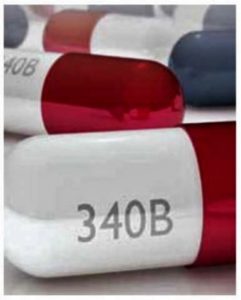
The pharmacy industry’s role in the 340B Drug Pricing Program continues to expand...latest analysis finds that nearly 18,000 pharmacy locations contract with 340B-eligible covered entities. That accounts for more than one in four U.S. retail, mail, and specialty pharmacy locations...Walgreens remains the biggest player, with about the same number of locations as those of Walmart, CVS, Rite Aid, Kroger, and Albertsons combined...Amidst the contract pharmacy boom...what’s really going on. How many prescriptions do contract pharmacies provide at discounted prices to uninsured, underinsured, and low-income patients? Who is really benefiting from the contract pharmacy business?…a 340B contract pharmacy doesn’t earn traditional spreads and dispensing fees. They instead profit from fees paid by the 340B entity. Given providers’ substantial profit opportunities, a 340B entity can afford fees that often far exceed a pharmacy’s typical profits from dispensing a third-party-paid prescription...There are many other profit opportunities...The extensive use of 340B contract pharmacies allows hospitals and other providers to benefit from 340B drug discounts earned from commercially paid prescriptions dispensed by contract pharmacies...Do needy patients benefit? No one knows. Covered entities are not specifically obligated to share any 340B savings with financially needy or uninsured patents, nor are they required to disclose how they use profits from the 340B program...
- Nonprofit seeks to dispel ‘myths’ about how it assesses drug values (statnews.com)

In the face of growing criticism over its efforts to place a value on new medicines, the Institute for Clinical and Economic Review is trying to strike back. Recently, the nonprofit took a conciliatory approach by soliciting suggestions for improving its methods, but this week it became more aggressive by trying to dispel what it calls the “myths” about its operations and motives...The controversial organization released a manifesto...that attempts to rebut its many critics, who have chastised ICER for purportedly having cozy relationships with insurers; failing to sufficiently take into account the views of patients; and not providing enough time for drug makers to respond to assessments...The move comes as ICER has played a behind-the-scenes, but increasingly significant, role in the US health care system over the past two years. In the absence of an official entity to determine the extent to which medicines are cost effective — a function that is played by government agencies in some other countries — ICER has managed to fill the void with its reports...To what extent its attempt to dispel the “myths” will be effective remains to be seen...
- EPA pharmaceutical waste rule examined (chaindrugreview.com)

The Environmental Protection Agency recently proposed steps to streamline the process surrounding the disposal and handling of hazardous pharmaceutical waste for all health care facilities that dispense pharmaceuticals as set forth by the Resource Conservation and Recovery Act...While the intent of the proposed rule is fundamentally solid, it raises several red flags with serious implications for the pharmaceutical supply chain and the patients it serves that must be addressed before EPA finalizes the rule...many organizations indicated during the comment period...the rule potentially may lead to unintended and extreme consequences for pharmacies, such as increasing costs, limiting inventories, possible product shortages and the need for pharmacists to take on additional back-office services...What are the red flags?
First...Excluding wholesale distributors from the requirements...means that distributors will no longer be allowed to send pharmaceuticals to reverse distributors to determine whether they are eligible for a credit from the product's manufacturer. Second...EPA has introduced a new provision that all pharmaceuticals including unopened, unused and those that have not yet expired will now be considered waste when sent to a reverse distributor.
- Pharmacy groups advocate USP standards for biologics (chaindrugreview.com)

A coalition of pharmacy industry organizations has asked congressional leaders to weigh proposals that would free certain biologic drugs from adherence to U.S. Pharmacopeia standards...the American Pharmacists Association and eight other groups sent a letter to the chairman and ranking members of key House and Senate committees expressing concern about proposals by the Food and Drug Administration and a provision in Section 11 of the FDA and NIH Workforce Authorities Modernization Act that would exempt certain biologics — including biosimilars — from USP public standards for quality, including the naming of biologic and biosimilar medicines...USP’s work provides a uniform quality standard, clarity for health care practitioners and confidence for patients...Pharmacists rely on USP quality standards. Removing requirements to adhere to these standards will raise additional questions and concerns about the safety of these emerging products...Our organizations share a commitment to patient safety and, as such, we believe that biologics and biosimilars should be required to have the same nonproprietary names based on existing standards and mechanisms...the pharmacy industry groups said in the letter. "Given the broad and negative implications of such potential naming proposals, as well as their controversial nature, we are requesting that FDA not finalize current guidance and proposals and that legislation not include these provisions."