
- What Types of ADEs Should Pharmacists Report to MedWatch? (pharmacytimes.com)
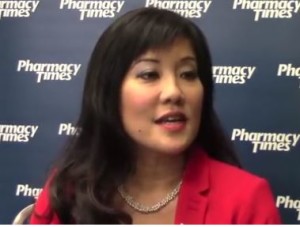
Teresa Rubio, PharmD of the FDA Office on Health and Constituents Affairs describes the types of adverse drug events that pharmacists should report to MedWatch.
- Inside the Impossibly Byzantine World of Prescription Drug Prices (realclearhealth.com)

Even for people whose job requires them to know this stuff, drug pricing is hopelessly complex. That helps explain why, for all the debate over drug costs these days, there’s surprisingly little detail about what anybody actually is paying for prescription medicines..."We have list prices, wholesale prices, average wholesale prices, rebates, supplemental rebates, mark-ups, outpatient vs. inpatient, formularies, patent expirations,"..."Most of that information is not available or well understood by the public."...This all raises the question: Just what the heck is the point of the list price anyway?...The short answer is that the list price is a drug company’s opening bid in negotiations with the insurance plans, government programs, and health care providers that purchase its medicines...The list price helps establish that initial starting point...In other words, the list price is not dissimilar from sticker prices on new cars...
- Payment for Community Pharmacy Services – Video from the FIP (International Pharmaceutical Federation) Congress (quadia.webtvframework.com)
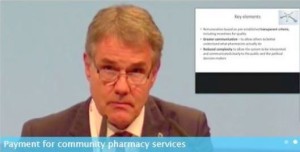
Key Elements
- Remuneration based on pre-established transparent criteria including incentives for quality
- Greater communication – to allow others to better understand what pharmacists actually do
- Reduced complexity to allow the system to be interpreted and communicated clearly to the public and the political decision makers
- 2015: The Year in Specialty Drugs (specialtypharmacytimes.com)
SPECIALTY PHARMACEUTICALS featured prominently in the FDA’s new drug approval and expanded indications list once again in 2015. Below is the first of a 2-part summary of specialty pharmacy–related FDA approvals and expanded indications that took place this year...Part 2, which will be featured in the next issue of Specialty Pharmacy Times, will include oncology drugs and late-breaking FDA actions...
Bleeding Disorders
- Ixinity (coagulation factor IX (recombinant), Emergent BioSolutions Inc)
- Nuwiq (coagulation factor VIII (recombinant), Octapharma)
- Coagadex (coagulation factor X (human), Bio Products Laboratory Ltd)
- Adynovate (antihemophilic factor [recombinant] pegylated, Baxalta Inc)
Inflammatory Conditions
- Cosentyx (secukinumab, Novartis Pharmaceutical Corp.)
- Humira (adalimumab, AbbVie)
Cystic Fibrosis
- Kalydeco (ivacaftor, Vertex Pharmaceuticals)
- Orkambi (lumacaftor/ivacaftor, Vertex Pharmaceuticals )
HIV
- Evotaz (atazanvir/cobicistat, Bristol-Myers Squibb Co)
- Prezcobix (darunavir/cobicistat, Janssen Therapeutics)
- Genvoya (cobicistat/elvitegravir/emtricitabine/tenofovir alafenamide, Gilead Sciences, Inc)
Hepatitis C
- Technivie (ombitasvir/paritaprevir/ritonavir, AbbVie Inc)
- Daklinza (daclatasvir, Bristol-Myers Squibb)
- Harvoni (ledipasvir/sofosbuvir, Gilead Sciences, Inc.)
Multiple Sclerosis- Glatopa (glatiramer acetate injection, Sandoz, Inc.)
- Betaconnect (Bayer HealthCare’s electronic auto injector - Betaseron (interferon beta-1b)
Specialty Ophthalmics
- Lucentis (ranibizumab, Genentech)
- Eylea (aflibercept, Regeneron Pharm)
Hypercholesterolemia
- Praluent (alirocumab, Sanofi-Aventis)
- Repatha (evolocumab, Amgen Inc)
Miscellaneous Specialty Approvals
- Natpara (parathyroid hormone, NPS Pharmaceuticals, Inc)
- Cresemba (isavuconazonium sulfate, Astellas Pharma US, Inc)
- Cholbam (cholic acid, Asklepion Pharmaceuticals LLC)
- Jadenu (deferasirox, Novartis Pharmaceuticals)
- Anthrasil (anthrax immune globulin intravenous [Human], Cangene Corp)
- Rapamune (sirolimus, Wyeth Pharmaceuticals)
- Promacta (eltrombopag, GlaxoSmithKline and Novartis Pharmaceuticals)
- Envarsus XR (tacrolimus extended-release tablets, Veloxis Pharmaceuticals A/S)
- Dysport (abobotulinumtoxinA, Medicis and Ipsen)
- Keveyis (dichlorphenamide, Taro Pharmaceutical Industries Ltd)
- Procysbi (cysteamine bitartrate, Raptor Pharmaceutical)
- Xuriden (uridine triacetate, Wellstat Therapeutics Corporation)
- As Haggen exits, other businesses also suffer (reviewjournal.com)Haggen files for Chapter 11 bankruptcy (reviewjournal.com)Haggen plans to close seven Las Vegas stores by Thanksgiving (reviewjournal.com)

Haggen Food & Pharmacy at 1940 Village Center Circle in Las Vegas
The beauty boutique at 1946 Village Center Circle, inside Summerlin's Trails Village Center, has seen walk-in traffic tumble as much as 75 percent since the closure of grocer Haggen (Haggen Food & Pharmacy) next door, said owner Donna Catalfamo...Catalfamo's story illustrates how the closure of an anchor tenant in a neighborhood shopping center ripples down to small companies nearby. And a number of smaller businesses are feeling that effect today: Three of Haggen's seven Southern Nevada stores — locations at 1940 Village Center Circle, 820 S. Rampart Blvd. and 1031 Nevada Highway in Boulder City — remain empty, with few suitors in sight..."Traffic was down the minute the Haggen sign went up (in June)," Catalfamo said. "We started to feel the effects after the first week."...litigation can complicate leasing. Haggen is in Chapter 11 bankruptcy, and in August, it sued Albertsons, which sold Haggen 146 stores across the West for $300 million, alleging that Albertsons sabotaged its market debuts.
- Independent group says new Glaxo asthma drug far too expensive (reuters.com)ICER Draft Reports on Nucala® (Mepolizumab) for Asthma and Tresiba® (Insulin Degludec) for Diabetes Posted for Public Comment (icer-review.org)
An independent nonprofit organization (Institute for Clinical and Economic Review) that evaluates clinical and cost effectiveness of new medicines found the price of GlaxoSmithKline's new drug for severe asthma should be as much as 76 percent lower to justify its value, according to the group's latest draft report... analysis indicated that Glaxo's Nucala (mepolizumab) should be priced at $7,800 to about $12,000 a year, far below the drug's list price of $32,500 a year...once-monthly injectable Nucala...significantly reduces asthma attacks and symptoms and decreases the need for oral steroids. However, it found that the price was not cost-effective, and that there is uncertainty about whether the benefits will persist over the long term because of the short duration of clinical trials...ICER President Steven Pearson, in a statement, said its analyses aim "to help the health care community determine what should be used, which patients benefit most, and at what price innovative treatments represent a reasonable value."
- How Pharmacists Can Help in Cardiopulmonary Resuscitation Efforts (pharmacytimes.com)How Can Pharmacists Get More Involved Before, During, and After Codes? (pharmacytimes.com)

Aaron Steffenhagen, PharmD, BCPS, clinical pharmacy manager at University of Wisconsin Hospital and Clinics, discusses some ways pharmacists have helped in cardiopulmonary resuscitation efforts.
- Coverage for Medical-Benefit Drugs a Source of Consumer Confusion (realclearhealth.com)
Patients getting chemotherapy or other complex medications may have a sudden panic when shopping for health insurance: Their drugs often don’t appear to be covered...Despite advice to shop around before selecting a plan, consumers may find that getting answers about drug coverage can be an exercise in frustration, despite a federal health law requirement that insurers provide lists of the prescription medications included in their plans...That’s because many treatments — particularly intravenous treatments like those used in cancer, hemophilia or multiple sclerosis — are covered under a separate part of an insurance plan, not the pharmacy benefit. And details of that medical-benefit drug coverage can be hard or impossible to find online. But the information is important to know because the drugs tend to be costly, so if they’re not covered, patients might have to pay out of pocket, switch to different treatments or appeal to the plan...
- How MTM Is Disrupting Pharmacy Care (pharmacytimes.com)

All MTM (medication therapy management) services may be billed for, but the question remains: which insurance companies will reimburse them? Many studies have validated the value of the pharmacist in providing MTM services solely as a cost-avoidance model for any specific medical group. Ideally, MTM services would be billed and reimbursed while cost-avoidance would be documented through an increasingly positive outcome of care for these specific patients...MTM services may be focused on specific situations such as a targeted medication review or discharge education, or they may be provided as complete comprehensive medication reviews...The following are general descriptions of the different forms of MTM services:
- Comprehensive Medication Review
- Target Medication Review
- Bedside MTM
- As Time Permits
- Inpatient MTM Program
- Outpatient MTM Program
- Complete MTM Program
- Billing for MTM Services
- MTM Implementation
- Conclusion
- Ethical Dilemmas for Health-System Pharmacists Projected to Intensify (pharmacytimes.com)

Health-system pharmacists will inevitably face growing ethical challenges as their roles in patient care continue to evolve...ethical dilemmas embedded in health-system pharmacists’ everyday practice include competing interests, limited resources due to drug shortages, and an evolving health care delivery system that has shifted their role from dispensing medications to actively participating in direct patient care...One of the hot-button ethics issues in pharmacy currently is the trend of skyrocketing prescription costs and the lack of transparency in drug pricing decisions. Extremely high prices and lagging reimbursement may preclude health-systems from providing necessary medications to all patients who would otherwise benefit..."Patient welfare is at risk when the ethical perspective in health care is smothered by business and financial perspectives,"..."Patient well-being often hinges on the ability of health professionals to heed the ethical precepts of their calling."...Pharmacists are currently vying to gain support for an expanded role in patient care in the form of provider status, which will likely be more easily garnered if they are perceived as being on the side of patient care rather than the side of business interests.