
- How Practice Settings Will Be Affected by Changing Pharmacy Trends (pharmacytimes.com)
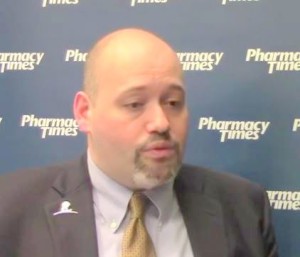
James Hoffman, PharmD, MS, FASHP, explains how pharmacy practice settings may change going forward.
- Under pressure, CDC delays release of opioid prescribing guidelines (statnews.com)Draft CDC Guideline for Prescribing Opioids for Chronic Pain, 2016: Summary of Constituent Comments and CDC Response (freepdfhosting.com)Painkiller politics: Effort to curb prescribing under fire (hosted.ap.org)
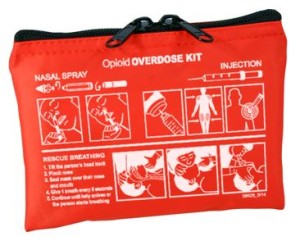
Under mounting criticism, the Centers for Disease Control and Prevention has delayed plans to...release controversial opioid prescribing guidelines for primary care physicians. Instead, the guidelines will now be issued sometime later in the year...The delay was first signaled yesterday when the CDC unexpectedly disclosed that public comments on its proposal would be accepted through Jan. 13. However, the agency will also tap the National Center for Injury Prevention and Control’s Board of Scientific Counselors, a federal advisory committee, to review the guidelines and public comments...The postponement follows complaints from representatives of other federal agencies and consumer advocacy groups that the CDC guidelines were based on weak evidence and would unfairly restrict some patients from obtaining needed pain relief. The agency was also chastised for using a “secretive” process to formulate the guidelines, which some critics argued had violated federal law...the CDC delay apparently reflects a desire to comply with the Federal Advisory Committee Act, which governs how expert groups are formed to provide official advice.
- Survey: Employers taking action to cut specialty drug coverage (drugstorenews.com)
Employers are taking significant action to reduce their exposure to rising costs associated with specialty medicines...Although pharmacy represents approximately 20% of employer-sponsored medical benefits costs, it is increasing at a rate that accounts for roughly half of medical cost inflation and should be a top priority for employers...The price, utilization and delivery of specialty prescription drugs, many of which require special handling or delivery, are a top pain point for employers...employers are beginning to consider new aggressive approaches... employers have added new coverage and utilization restrictions for specialty pharmacy, such as requiring prior authorization or limiting quantities based on clinical evidence... employers plan to exclude compounds from their benefit coverage...the compounding process results in higher cost and their use may not be FDA-approved in compound form, health insurers increasingly will not cover them...
- Hospitals launch specialty pharmacies to curb drug costs (modernhealthcare.com)
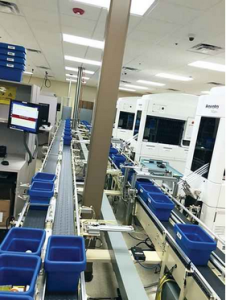
Banner Health spent $1 million on a drug-dispensing robot for its specialty pharmacy's home-delivery service.
With specialty drug spending soaring 60% in the past five years, large health systems have jumped into the specialty pharmacy business to assert some control over those costs by dispensing the drugs to their patients and covered employees...Health systems say those pharmacies help them better manage outpatient drug costs. A growing number of insurance contracts and Medicare initiatives tie payments to quality metrics that reach beyond hospital stays to hold providers accountable for patients' total medical costs, including drugs...Phoenix-based Banner Health started its own specialty pharmacy last year...hired three clinical pharmacists, three patient advocates and three staff members to support operations. The system also spent $1 million on a drug-dispensing robot for the specialty pharmacy's new home-delivery service...In the first year, Banner shaved about 1% off its specialty drug spending for about 1,200 workers and their families covered by the system's employee health plan...Health systems that own specialty pharmacies argue they can do a better job overseeing the use of the drugs they dispense. That's because their pharmacies can easily access medical records, laboratory results and physician notes, allowing pharmacists to closely monitor the effectiveness of the drugs prescribed and react quickly when something goes wrong or patients need help...They know if the patient is getting the value for the high-cost drug...Launching a specialty pharmacy does not require significant capital investment, and the high prices of the drugs—even sold at slim margins—make it possible to quickly see a return on that investment.
- 5 Must-Know Facts About Chikungunya (pharmacytimes.com)

Chikungunya (chik-ən-ˈgu̇n-yə) was rarely seen in US travelers before 2006, but the virus has grown more prevalent. Now, almost all states have seen at least one case of the disease in US travelers this year...Chikungunya virus is transmitted primarily through mosquito bites...Reports of infection tend to come from US travelers who visited Puerto Rico, American Samoa, and the US Virgin Islands...Since there is no antiviral therapy specifically for chikungunya viral disease, patients diagnosed with it may be treated with corticosteroids or physiotherapy for joint pain. They may take nonsteroidal anti-inflammatory drugs for pain and fever...Health care professionals should stress plenty of fluids and rest for infected patients...Here are 5 must-know facts pharmacists should know about chikungunya:
- Look out for symptoms such as fever and polyarthralgia among travelers.
- Chikungunya may cause central nervous system disease such as encephalitis.
- More than 2811 chikungunya cases were reported among US citizens in 2014.
- So far, 623 cases of chikungunya have been reported among Americans in 2015.
- Researchers have made strides in developing a chikungunya vaccine.
- NOAC Dosing for Obese Patients vs. Non-Obese Patients (pharmacytimes.com)

Katie Greenlee, PharmD, BCPS-AQ Cardiology, of the Cleveland Clinic discusses how NOAC (novel oral anticoagulants) dosing for obese patients differs from NOAC dosing for non-obese patients.
- Marsh Drugs extends free diabetes medicine program through 2016 (drugstorenews.com)

Marsh Drugs last week extended their Diabetes Care Program throughout 2016...Marsh Diabetes Care supplies seven different diabetes medications for free to any Marsh Drugs patients in Indiana...There is no limit on the number of prescriptions that can be filled and the program covers new prescriptions and refills...The free diabetes medications include:
Glipizide - Glipizide ER - Metformin - Metformin ER - Glimepiride - Glyburide - Glyburide Micronized
As part of the program, Marsh Drugs also provides a free 100-count box of universal lancets with a prescription.
- Pharmacist Discusses Drug Abuse in HBO Documentary (pharmacytimes.com)
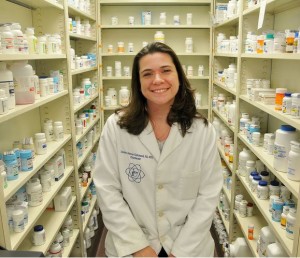
Lauren Heroux-Camirand, RPh, Country Square Pharmacy in Attleboro, Massachusetts
A Massachusetts pharmacist is speaking out about prescription drug abuse and heroin addiction in a new HBO documentary...Lauren Heroux-Camirand, RPh, conducted 2 interviews with the filmmakers of "Heroin: Cape Cod USA" at Country Square Pharmacy in Attleboro, Massachusetts...she thought it was important to talk openly about illicit drug use... “We are here, as pharmacists and humans, to be compassionate and help in any way we can,”...“That is why I agreed to participate and speak up.”...In her interviews with the filmmakers, Heroux-Camirand discussed both facts about drug abuse and her experiences seeing people struggle with addiction...The movie will premiere in Massachusetts before debuting on HBO on December 28, 2015
- Prevention Strategies Pharmacists Can Use to Reduce Errors (pharmacytimes.com)
Natasha Nicol, PharmD, FASHP, director of Global Patient Safety Affairs at Cardinal Health, provides prevention strategies to reduce medication errors.
- What’s next for Valeant? (video.cnbc.com)Valeant in new distribution deal with Walgreens (modernhealthcare.com)Walgreens and Valeant Devise a New Twist on Preferred Pharmacy Networks (drugchannels.net)
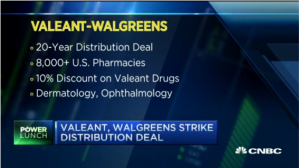
CNBC's Meg Tirrell talks to Valeant CEO J. Michael Pearson about the company's new distribution deal with Walgreens...