
- FDA approves first blood test to help diagnose concussions (statnews.com)

The Food and Drug Administration gave a green light...for the first time to a blood test that doctors can use to help rule out concussions...The Brain Trauma Indicator, marketed by Banyan Biomarkers Inc., measures the levels of two proteins — called UCH-L1 and GFAP — whose elevated presence suggests a certain type of brain damage normally only visible on a CT scan. The test takes three to four hours, and doctors could use it to determine which patients need a CT scan to confirm the damage and which patients can rest easy...FDA Commissioner Scott Gottlieb said that this product could save the health care system money by preventing unnecessary neuroimaging tests. Additionally, by sparing some patients CT scans, it would reduce the radiation exposure associated with those scans.
- This Week in Managed Care: February 23, 2018 (ajmc.com)
Laura Joszt, Managing Editor at The American Journal of Managed Care. Welcome to This Week in Managed Care from the Managed Markets News Network
- Pharmacy Week in Review: February 16, 2018 (pharmacytimes.com)
Nicole Crisano, PTNN. This weekly video program provides our readers with an in-depth review of the latest news, product approvals, FDA rulings and more.
- Nordic project takes ‘manufacturing-on-demand’ approach to future drugs (in-pharmatechnologist.com)

Nordic Universities will investigate 3D printing, electrospraying, and microfluidics in an industry supported collaboration aimed at revolutionising production in an age of personalised medicine.
The collaboration, known as Nordic POP (Patient-Oriented Products), will use 35m DKK ($6m) of funding from NordForsk...to create flexible and translational approaches to personalised medicine manufacturing…Jukka Rantanen...University of Copenhagen...said that new patient-oriented and personalised drug products require a “totally new mindset” in the drug development process...“The project team is aiming to create new innovative drug products, where the dose, release mechanism, and size/shape of the product could be easily personalised based on the patient needs...“Instead of one-size-fits-all medication, the potential of new patient oriented products considering gender, age, lifestyle, genetic profile, metabolic capacity, and microbiota will be explored,”...
- Benzodiazepines: our other prescription drug epidemic (statnews.com)Perspective: Our Other Prescription Drug Problem (nejm.org)
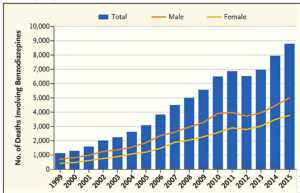
“Benzos” is shorthand for benzodiazepines, a class of drugs often used to treat anxiety and insomnia. The dozen or so different types include Ativan, Klonopin, Valium, and Xanax...More people than you might think are taking them (three benzodiazepines are in the top 10 most commonly prescribed psychotropic medications in the United States). Yet few people realize how many people get addicted to and die from them...Between 1996 and 2013, the number of adults who filled a benzodiazepine prescription increased by 67 percent, from 8.1 million to 13.5 million. Unlike opioid prescribing, which peaked in 2012 and has decreased nearly 20 percent since then, benzodiazepine prescribing continues to rise. The risk of overdose death goes up nearly fourfold when benzodiazepines are combined with opioids, yet rates of co-prescribing benzodiazepines and opioids nearly doubled between 2001 and 2013. Overdose deaths involving benzodiazepines increased more than sevenfold between 1999 and 2015...
- Grocery chain Albertsons to acquire Rite Aid (cnbc.com)

Grocery chain Albertsons announced plans...to acquire Rite Aid, as the traditional grocery industry continues to look for growth by broadening offerings, not just store base...A combined Albertsons and Rite Aid would have a value of roughly $24 billion, including debt. When the deal closes, Albertsons shares will trade on the New York Stock Exchange...Rite Aid will own a 28 percent to 29.6 percent stake in the combined company and current Albertsons shareholders will own a 70.4 percent to 72.0 percent, on a fully diluted basis...The two will have about 4,900 locations, 4,350 pharmacy counters and 320 clinics...Most Albertsons' pharmacies will be rebranded as Rite Aid, and the company will continue to operate Rite Aid's stand-alone stores...The deal with Albertsons underlines the change in course that retailers are taking, no longer looking to expand only by real estate footprint, but also by capability. Increasingly, retailers are looking to pharmacies for this expansion, which can take advantage of the frequency with which people buy prescription drugs. There is also the opportunity to use store footprints as a base for drug delivery and pick up...
- What Gilead taught pharma about pricing a cure (biopharmadive.com)
Debate over about 'how to price a cure' entered the pharma industry lexicon when Gilead Sciences Inc. priced its highly effective hepatitis C drug Sovaldi (sofosbuvir) at $84,000 per treatment course...The uproar has died down a bit and there's now much less debate about whether Sovaldi was actually cost effective. It has since been shown the drug could save the health system millions by helping to prevent hepatitis C patients from progressing to liver failure...“Gilead bought a launch-ready drug ... and so they launched very quietly,"..."But any analysis that you run shows it's very cost-effective. And I don't think they had to do any discount scheme until after other competitors launched. So one could say that they had a good product and a good story, but they did not tell it."...Gilead...has tried to squeeze every dollar out of the franchise before falling new patient starts and competition erodes away its market. All told, the four antiretrovirals Gilead developed on the sofosbuvir backbone have earned the company roughly $55 billion since Sovaldi's approval in 2013...
- Pharmacy Week in Review: February 23, 2018 (pharmacytimes.com)
Nicole Crisano, PTNN. This weekly video program provides our readers with an in-depth review of the latest news, product approvals, FDA rulings and more.
- This Week in Managed Care: February 16, 2018 (ajmc.com)
Laura Joszt, assistant managing editor at The American Journal of Managed Care. Welcome to This Week in Managed Care from the Managed Markets News Network
- Report: Opioid Manufacturers Gave Millions to Advocacy Groups (ptcommunity.com)
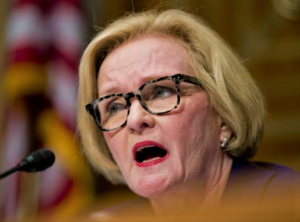
Senator’s investigation found a “lack of transparency” surrounding the donations...A new report from Senator Claire McCaskill found that five opioid manufacturers paid nearly $9 million to 14 outside groups between 2012 and 2017, alleging that the advocacy groups often “amplified messages favorable to increased opioid use.”...The groups—many of which work on chronic pain and other opioid-related issues—lobbied to defeat prescriber limits on opioids...and many criticized facets of 2016 guidelines from the Centers for Disease Control and Prevention that limited the prescribing of painkillers...“The financial relationships between these groups and opioid manufacturers should be clear to the general public,” McCaskill said. “We passed a law ensuring the public had information on payments to doctors by pharmaceutical companies, and I can’t imagine why the same shouldn’t be done in this space.”...