
- Purdue Pharma to stop promoting oxycodone to U.S. doctors (pharmacist.com)
Purdue Pharma says it will stop promoting oxycodone (OxyContin) and other opioids to U.S. doctors. The company will continue selling the products, but Purdue's sales force "will no longer be visiting offices to engage in discussions about opioid products," the company says. Doctors and other prescribers who have questions about the drugs will have to contact Purdue's medical affairs department, the company says. Purdue is also cutting its U.S. sales force by more than 50%, to about 200 people. The remaining sales representatives will market non-opioid products. Purdue's halting of its opioid marketing comes as the company faces growing legal scrutiny. More than a dozen states and about 400 cities and counties in the U.S. have sued Purdue or other opioid analgesic makers, accusing them of fueling addiction by misrepresenting the risks of their drugs. In response to the suits, Purdue has said it is "dedicated to being part of the solution" to the opioid crisis.
- Pharmacy Week in Review: February 9, 2018 (pharmacytimes.com)

Nicole Crisano, PTNN. This weekly video program provides our readers with an in-depth review of the latest news, product approvals, FDA rulings and more.
- Pharmacist tied to U.S. meningitis outbreak gets eight years in prison (reuters.com)

A Massachusetts pharmacist was sentenced...to eight years in prison after being convicted on racketeering and fraud charges stemming from his role in a 2012 fungal meningitis outbreak that killed 76 people and sickened hundreds more...Glenn Chin, the former supervisory pharmacist at New England Compounding Center, was convicted by a federal jury in Boston in October but was cleared of second-degree murder charges, which would have exposed him to a maximum prison sentence of life...Prosecutors had asked U.S. District Judge Richard Stearns to sentence Chin...to 35 years in prison for overseeing the dispensing of substandard drugs made in filthy conditions at the now-defunct...NECC...Prosecutors said those drugs included mold-tainted steroids...that were then injected into patients, harming at least 793 people in 20 different states...
- Pharmacy Week in Review: February 2, 2018 (pharmacytimes.com)

Nicole Crisano, PTNN. This weekly video program provides our readers with an in-depth review of the latest news, product approvals, FDA rulings and more.
- US OKs medical isotope system that isn’t based on bomb-grade uranium (cnbc.com)

The federal government...approved a device made by a private company...that will allow the first domestic production of a medical imaging isotope...a move the government said would enhance national security by reducing the need to transport weapons-grade uranium...The Food and Drug Administration granted the approval to NorthStar Medical Radioisotopes, which said it would begin delivering systems to make technetium-99...the most common isotope in medicine and is used in 40,000 procedures a day in the United States...consumers have long had to depend on a complicated and risky supply chain for the materials...The current process involves shipping weapons-grade, or highly enriched, uranium from the United States to research reactors in Australia, South Africa and Europe where it is irradiated to make molybdenum-99, which decays into technetium-99..."This is a win for our national security," said Peter Hanlon, an official with the National Nuclear Security Administration office of material management and minimization...
- This Week in Managed Care: February 9, 2018 (ajmc.com)
Laura Joszt, assistant managing editor at The American Journal of Managed Care. Welcome to This Week in Managed Care from the Managed Markets News Network
- Long-Dreaded Amazon Threat to Drug Middlemen Draws Closer (bloomberg.com)
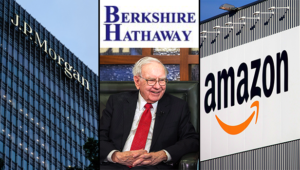
The industry awoke to the news Tuesday that Amazon.com Inc. was joining with Berkshire Hathaway Inc. and JPMorgan Chase & Co. to form a new health-care business, in an attempt by three of the world’s best-known companies to contain the spiraling cost of keeping their U.S. workers healthy...Other groups of big employers have tried to improve worker health care in the past, but none have dethroned the pharmacy-benefit managers who drug companies and some lawmakers claim aren’t transparent about the pricing deals they strike on behalf of health plans, and about how much money they keep for themselves...“They could completely cut out the middlemen here,” said Pratap Khedkar...at...ZS Associates. By doing so, Amazon, Berkshire and JPMorgan could gain more control over their spending and save money pharmacy-benefit managers currently consume...
- Pharmacists Remain Among Most Trusted and Ethical Professionals (pharmacytimes.com)
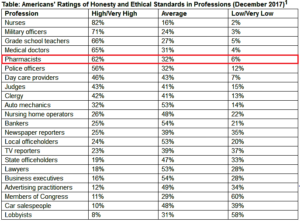
Pharmacists have once again been ranked among the most honest and ethical professionals in the United States, according to the results of the latest Gallup poll on the topic...Of the survey’s 1049 respondents, 62% rated the honesty and ethical standards of pharmacists as “high” or “very high.” This percentage of favorable responses was the fifth highest of the survey, with nurses (82%) taking the top spot for the 16th year in a row...Pharmacists performed slightly better on the survey last year, earning favorable scores from 67% of participants in 2016...Other highly rated professionals included in the survey were military officers (71%), grade school teachers (66%), and medical doctors (65%). Lobbyists received the lowest score, with only 8% of survey respondents giving them a favorable rating and 58% considering their ethical and honesty standards to be “low” or “very low.”1
- Rite Aid Says It’s Halfway Home On Store Transfers To Walgreens (forbes.com)

Rite Aid...has now transferred 1,114 stores to Walgreens Boots Alliance as part of a larger deal with the nation’s largest pharmacy chain...In all, Walgreens will over the next few weeks buy 1,932 stores and three distribution centers from Rite Aid for nearly $4.4 billion in cash. Rite Aid...has received “cash proceeds of $2.424 billion, which the company continues to use to reduce debt.”...Before agreeing in September to buy 1,932 Rite Aids, Walgreens had been trying to buy all of Rite Aid before antitrust scrutiny from the Federal Trade Commission that ultimately led to the deal’s undoing...As a smaller pharmacy chain, Rite Aid is focusing on eight states largely on the East and West Coats with plans to invest heavily in its pharmacy benefit manager EnvisionRx, which works with employers and government health programs like Medicare to better control drug costs. PBMs are the middlemen between drug makers and patients when it comes to buying prescription drugs and getting discounts for their customers.
- This Week in Managed Care: February 2, 2018 (ajmc.com)
Laura Joszt, assistant managing editor at The American Journal of Managed Care. Welcome to This Week in Managed Care from the Managed Markets News Network