
- Telepharmacy at rural hospitals provides big savings, quality improvements (healthcareitnews.com)

Grand River Hospital and Medical Center, a 13-bed critical access hospital in Western Colorado which sees an average of seven patients a day, has saved about $300,000 in staffing costs by using telehealth tools to establish a round-the-clock pharmacy...Telehealth products and services is on the rise among small and rural hospitals...for instance, NewYork-Presbyterian forged a pact to provide emergency physicians via Walgreens in-store kiosks...Cleveland Clinic inked an arrangement with CVS to use American Well’s telemedicine platform to make clinicians accessible for visits from CVS Minute Clinics in Ohio...Telepharmacy has become its own specialty among tech vendors, including CPS TELEpharmacy, eVisit, PipelineRx, ScriptPro Telepharmacy and TelePharm...Nancy McClew, PharmD, director of pharmacy at Grand River Hospital and Medical Center, said the investment in the telemedicine technology is well worth it compared with the cost of staffing the pharmacy 24/7...“Grand River also has generated savings through tele-pharmacist interventions, the majority of which are safety related – clarifications, QI, prevention, renal assessment, therapeutic,” McClew said. “In Q3 2017, pharmacists documented more than 350 interventions, representing more than $50,000 in cost savings.”
- Pharma, under attack for drug prices, started an industry war (washingtonpost.com)
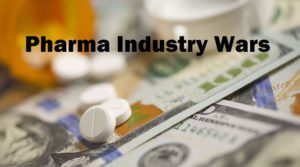
It’s not easy to get Americans mad at a behind-the-scenes industry they’ve barely even heard of, but pharmaceutical companies have spent most of this year trying...With national and state advertising campaigns, white papers and cartoon infographics, the powerful and well-funded drug-industry lobby spent 2017 working to redirect public anger about drug prices to pharmacy benefits managers: links in the supply chain that sits invisibly between the patient and the drugmaker — in the process bringing a long-simmering feud between two big health-industry players into the open...the drug companies’ fight with PBMs and insurers has helped thwart any real action — splintering the problem into a multi-industry echo chamber of accusations that’s hard to comprehend, much less solve...“This has been a year of finger-pointing,”...“They’re flooding the zone — with ‘they’ being pharma — with efforts to diffuse and deflect the focus on their role in drug pricing. Part of the policy challenge is they have a point.”
- This Week in Managed Care: December 29, 2017 (ajmc.com)
Laura Joszt, assistant managing editor at The American Journal of Managed Care. Welcome to This Week in Managed Care from the Managed Markets News Network
- The next big thing in pharmacy supply chain: Blockchain (healthcareitnews.com)

With $200 billion lost to counterfeit drugs annually and patient safety issues, a chain-of-custody log that blockchain could enable holds promise...Blockchain has the potential to transform healthcare in general and the pharmacy supply chain in particular...The distributed ledger technology could offer legislative, logistical and patient safety benefits for pharmaceutical supply chain management. From a regulatory perspective in the United States, blockchain technological and structural capabilities, in fact, extraordinarily map to the key requirements of the Drug Supply Chain Security Act...The DSCSA outlines a 10-year timeframe that will require elements including medication track-and-trace, product verification and notification of stakeholders about illegitimate drugs. A shared ledger of information to enable each of these steps is a foundational aspect of blockchain technology...“Logistically, blockchain aligns well with federal efforts like the National Strategy for Global Chain Security,”...“One of the most promising benefits of blockchain from a patient safety perspective is to help stem the tide of the so-called SSFFC medicines – substandard, spurious, falsely labeled, falsified and counterfeit – that continue to plague the pharmaceutical supply chain.”
- Laughter: The Medicine That Has a ‘$0 Copay and Unlimited Refills’ at This Funny Man’s Pharmacy (pharmacytimes.com)What its like to be a pharmacist in a bad neighborhood (youtube.com)

Maurice Shaw is a pharmacist/comedian who sees the funny side of pharmacy life. A pharmacy manager, he attended Chicago State University College of Pharmacy, and completed a Community Pharmacy PGY1 residency with the University of Iowa Hospitals and Clinics. He also makes hilarious videos portraying what pharmacists go through every day, from complaining customers to disorderly technicians. Maurice was happy to talk to Pharmacy Times about his videos
- New drug approvals hit 21-year high in 2017 (reuters.com)
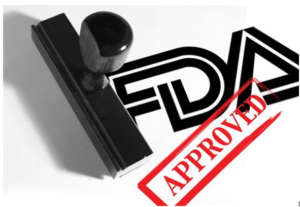
U.S. drug approvals hit a 21-year high in 2017, with 46 novel medicines winning a green light -- more than double the previous year -- while the figure also rose...in the European Union...recommended 92 new drugs including generics, up from 81...Yet the world’s biggest drugmakers saw average returns on their research and development spending fall, reflecting more competitive pressures and the growing share of new products now coming from younger biotech companies...projected returns at 12 of the world’s top drugmakers were at an eight-year low of only 3.2 percent...
- Pharmacy Week in Review: December 29, 2017 (pharmacytimes.com)
Nicole Crisano, PTNN. This weekly video program provides our readers with an in-depth review of the latest news, product approvals, FDA rulings and more.
- Pharmacy Week in Review: January 5, 2018 (pharmacytimes.com)
Nicole Crisano, PTNN. This weekly video program provides our readers with an in-depth review of the latest news, product approvals, FDA rulings and more.
- New Nevada law aims to tackle opioid epidemic (reviewjournal.com)

Doctors have additional protocols to consider when writing and maintaining opioid prescriptions under a new law that took effect on New Year’s Day...The Prescription Drug Abuse Prevention Act, passed by the 2017 Legislature, outlines safeguards for doctors before they prescribe controlled substances to treat pain and increases requirements necessary to continue a prescription after one month, three months and a year...The additional paperwork is meant to curb the state’s opioid overdose problem and track down doctors who overprescribe...“It just provides a platform by which the provider can really have an in-depth discussion with the patient as to whether the use of a controlled substance is truly necessary, or whether there are alternatives, ” said Daniel Burkhead, a pain management specialist in Las Vegas...The guidelines require every doctor to perform a patient risk assessment before prescribing a controlled substance to treat pain...Nevada is among 17 states that have enacted legislation limiting the number of days of an initial opioid prescription or capping prescription strength...
- FDA Proposes Crackdown on Risky Homeopathic Drugs (ptcommunity.com)

The FDA is proposing a new risk-based enforcement approach to homeopathic drug products. Among the targets: products marketed for serious diseases without showing clinical benefits, products that contain potentially harmful ingredients, and products that don’t meet current good manufacturing practices...homeopathic drug products are subject to the same requirements related to approval, adulteration, and misbranding as any other drug product. However, prescription and nonprescription drug products labeled as homeopathic have been manufactured and distributed without FDA approval under the agency’s enforcement policies since 1988...“In recent years, we’ve seen a large uptick in products labeled as homeopathic that are being marketed for a wide array of diseases and conditions, from the common cold to cancer,” said FDA Commissioner Scott Gottlieb...“In many cases, people may be placing their trust and money in therapies that may bring little to no benefit in combating serious ailments, or worse—that may cause significant and even irreparable harm because the products are poorly manufactured, or contain active ingredients that aren’t adequately tested or disclosed to patients...The FDA intends to focus its enforcement authorities on the following kinds of products:
- Products with reported safety concerns
- Products that contain or claim to contain ingredients associated with potentially significant safety concerns
- Products for routes of administration other than oral and topical
- Products intended to be used for the prevention or treatment of serious and/or life-threatening diseases and conditions
- Products for vulnerable populations
- Products that do not meet standards of quality, strength, or purity as required under the law