- Allergan recruits Deion Sanders to get men to use Botox (mmm-online.com)
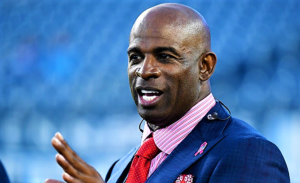
Allergan has enlisted football legend Deion Sanders to encourage men to use Botox. The drugmaker announced...that Sanders would be the brand ambassador for the wrinkle-erasing injection, specifically targeting men with moderate-to-severe frown lines and crow's feet...Allergan developed two videos with Sanders, one in which he discusses how turning 50 prompted him to seek a cosmetic answer to the crow's feet forming around his eyes. In the other, two men at a bar see Sanders sitting behind them and attempt to take a selfie with Sanders in the background. After looking at the picture they've taken, one man notices the crow's feet forming around his eyes. Deion then approaches them and tells them he has used Botox...Allergan has not shied away from using high-profile celebrities to promote its products in the in the past. In the last two years alone, the company developed partnerships with actors Lea Michele and Kate Bosworth, and reality-TV personality Khloé Kardashian. Michele worked with Allergan on its women's health campaign Actually She Can, while Kardashian kicked off the Live Chin Up campaign for Kybella, a chin-fat injection. Bosworth helped promote acne treatment Aczone.
- 7 Medical Conditions That Will Be Lining Big Pharma’s Pockets by 2020 (fool.com)

Big pharma stands to make hundreds of billions of dollars from a handful of medical conditions.
- No. 7: Viral hepatitis - $45 billion and $55 billion will be spent globally on drugs that treat viral hepatitis by 2022...around 257 million have chronic hepatitis B virus infection and 71 million people have chronic hepatitis C virus infection.
- No. 6: Respiratory diseases - treating respiratory diseases are expected to generate between $53 billion and $56 billion in sales by 2020. The most common respiratory diseases include asthma, allergies, and chronic obstructive pulmonary disease.
- No. 5: Autoimmune diseases - Autoimmune disease medications could make big pharma companies between $55 billion and $65 billion by 2020
- No. 4: Cardiovascular diseases - cardiovascular disease drugs will rack up sales between $73 billion and $76 billion by 2020...Cardiovascular drugs include treatments for hypertension, heart disease, and cholesterol.
- No. 3: Pain - Pain medications are projected to be the third-biggest moneymaker by 2020, with sales of $82 billion to $85 billion...drugs includes treatments for musculoskeletal pain, arthritis, anesthesia, analgesics (both narcotic and non-narcotic), and migraine.
- No. 2: Diabetes - diabetes drugs are expected to be near the top in spending, with projected global sales between $107 billion and $113 billion by 2020
- No. 1: Cancer - The top medical condition that will likely line big pharma's pockets by 2020 is cancer…sales of cancer drugs will be between $100 billion and $120 billion
- The Provider Status Impact – Cardinal Health RBC 2017 – Pharmacy Podcast Episode 464 (pharmacypodcast.com)
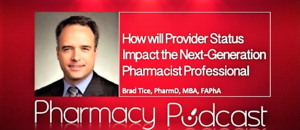
Pharmacists in Washington State got SB 5557 passed in early 2015—a bill requiring commercial or private health care plans regulated by Washington State to enroll pharmacists into their provider networks, and it mandates that these plans pay pharmacists for services provided if they are within a pharmacist’s scope of practice...With more than 10,000 active collaborative practice agreements in existence for pharmacists in Washington State, Rochon said they wanted to “push the bar” even further and make sure pharmacists were compensated for their services. The process was long and involved and passage of the bill was achieved largely through several partnerships with stakeholders ranging from legislators to patient advocacy groups. Part of the process also involved legal maneuvering with an existing Washington State law having to do with providers and health care plans...Brad Tice, PharmD, MBA, FAPhA, Director, Product Strategy & Commercialization at Cardinal Health (22:11)
- IBM pitched its Watson supercomputer as a revolution in cancer care. It’s nowhere close (statnews.com)

It was an audacious undertaking, even for one of the most storied American companies: With a single machine, IBM would tackle humanity’s most vexing diseases and revolutionize medicine...promoting its signature brand — Watson — IBM sought to capture the world’s imagination, and it quickly zeroed in on a high-profile target: cancer...But three years after IBM began selling Watson to recommend the best cancer treatments to doctors around the world, a STAT investigation has found that the supercomputer isn’t living up to the lofty expectations IBM created for it. It is still struggling with the basic step of learning about different forms of cancer. Only a few dozen hospitals have adopted the system, which is a long way from IBM’s goal of establishing dominance in a multibillion-dollar market...While it has emphatically marketed Watson for cancer care, IBM hasn’t published any scientific papers demonstrating how the technology affects physicians and patients. As a result, its flaws are getting exposed on the front lines of care by doctors and researchers who say that the system, while promising in some respects, remains undeveloped...
- How to Protect a Drug Patent? Give it to a Native American Tribe (nytimes.com)Allergan and Saint Regis Mohawk Tribe Announce Agreements Regarding RESTASIS® Patents (srmt-nsn.gov)Mylan says Allergan misusing tribal sovereignty in patent dispute (reuters.com)Prevnar 13 among blockbusters industry watchers peg as tribal licensing candidates (fiercepharma.com)

Saint Regis Mohawk Tribe
The drugmaker Allergan announced...that it had transferred its patents on a best-selling eye drug to the Saint Regis Mohawk Tribe in upstate New York — an unusual gambit to protect the drug from a patent dispute...Under the deal, which involves the dry-eye drug Restasis, Allergan will pay the tribe $13.75 million. In exchange, the tribe will claim sovereign immunity as grounds to dismiss a patent challenge through a unit of the United States Patent and Trademark Office. The tribe will lease the patents back to Allergan, and will receive $15 million in annual royalties as long as the patents remain valid...The surprising legal move rippled quickly through the pharmaceutical world...setting off speculation about whether other drug companies would soon follow suit in order to protect their patents from challenges through a patent-review process that the industry despises...If Allergan succeeds in holding onto its patents, “we will probably see multiple branded companies housing their patents with Indian tribes...
- Half of Americans Tested Misused Prescription Medications, Lab Tests Show (ptcommunity.com)

Quest Analysis of 3.4 million tests shows evidence of dangerous drug combinations...A majority of test results from patients taking prescription medications show signs of drug misuse—including potentially dangerous drug combinations...The Quest Diagnostics Health Trends study is based on analysis of the company's de-identified laboratory data, believed to be one of the largest nationally representative datasets of objective laboratory information of patients prescribed opioids and other commonly abused medications. Physicians order laboratory services to aid their ability to monitor patients for signs of prescription or illicit drug misuse or abuse...(The report, "Prescription Drug Misuse in America: Diagnostic Insights in the Growing Drug Epidemic")
- evidence of misuse has declined in recent years, 52% of test results showed evidence of potential misuse in 2016, suggesting a majority of patients took their prescribed drugs in ways that were inconsistent with their physician's instruction...
- disturbing patterns of concurrent drug use. Among more than 33,000 specimens tested for opioids, benzodiazepines, and alcohol in 2016, more than 20% were positive for both opioids and benzodiazepines, more than 10% were positive for both opioids and alcohol, and 3% were positive for all three...
- 19% of specimens positive for heroin in 2016 were also positive for nonprescribed fentanyl...
- drug misuse rates were high among most age groups and both genders. However, adolescents (10 to 17 years of age) showed a striking improvement, with the rate dropping from 70% to 29% between 2011 and 2016...
- Misuse rates were higher for men and women of reproductive age (58%) than in the general study population (52%)
- F.D.A. Accuses EpiPen Maker of Failing to Investigate Malfunctions (nytimes.com)
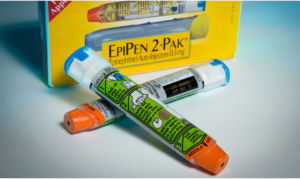
The Food and Drug Administration...accused the drugmaker Pfizer of failing to properly investigate reports of malfunctioning EpiPens, including incidents when patients died or became severely ill after the device failed to work. Pfizer manufactures the EpiPen, which treats allergic reactions, for the drugmaker Mylan...In a warning letter...the agency said Meridian Medical Technologies, which is a unit of Pfizer, did not adequately look into problems with a crucial component of the EpiPen — the mechanism on the device that insures that it fires and delivers the proper dose of epinephrine, which stops an allergic reaction... the company failed to conduct a proper investigation even though it received numerous complaints about problems with activating the device. "Our own data show that you received hundreds of complaints that your EpiPen products failed to operate during life-threatening emergencies, including some situations in which patients subsequently died...
- Gottlieb vows to shake up the FDA, backing a trend toward faster drug development (endpts.com)
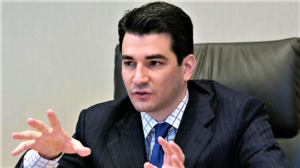
FDA commissioner Scott Gottlieb has sounded a crystal clear warning over the high — and growing — cost of drug development. And in a speech to regulatory execs...Gottlieb committed the FDA to backing up more efficient drug development programs with new measures to clear the regulatory path for developers barreling ahead to relatively swift pivotal data in search of an accelerated OK...Gottlieb started by outlining a bleak picture in drug R&D, noting that the economic model for drug development is broken. It costs too much to develop a drug so it can be approved for marketing. And costs are swelling fast at the discovery end of the business, which will help swamp a system that already doesn’t work particularly well...Gottlieb held up some of the rapid-fire clinical trials we’ve been seeing in the cancer field as a model for what can work, paving the way to the accelerated approval pathway at the FDA. And he believes...that moving drug development into the fast lane can reduce R&D costs and thereby allow biopharma companies to pass on savings to patients through lower costs.
- Pharmacies front and center as Florida preps for Hurricane Irma (pharmacist.com)

The pharmacy community is working to make sure Florida residents are prepared as Hurricane Irma bears down on the state. Gov. Rick Scott authorized pharmacies to dispense up to 30-day emergency prescription refills to patients...In addition, CVS Pharmacy and Walgreens are emphasizing the importance being prepared by keeping prescriptions stocked, or at least on-hand. "Prescription preparedness is one of the most important steps individuals and families can take in the lead up to potentially severe weather, and CVS Pharmacy is working to ensure that our patients have the medications they need in advance of the storm," says CVS Health EVP retail pharmacy and supply chain Kevin Hourican. Walgreens is reminding patients to follow evacuation orders and get to a safe location before refilling their prescriptions, noting that all locations can access a patient's records and that the Walgreens app can be used to refill prescriptions and pick them up nearby.
- Novartis charged much more in the U.S. for some drugs than in other countries (statnews.com)

An axiom in the overheated debate about prescription drug pricing is that Americans are often charged more than what is paid by people in other countries...the pharmaceutical industry argues that prices are set to fund research for discovering and developing new medicines. This makes sense, of course. But as Americans increasingly complain about rising prices, there has been accompanying angst about the extent to which higher prices in the U.S. are used to essentially subsidize what people pay elsewhere...the U.S. has a hodgepodge of government agencies and private insurers negotiating for medicines, and government health care systems are required to cover so many drugs. In most other countries, the central government is the primary gatekeeper for cost-conscious coverage decisions, which concentrates purchasing and often forces drug makers to lower prices...higher prices may not necessarily reflect higher costs...A higher price doesn’t mean the company had more expenses in the U.S. It will be the rationale they give, but it doesn’t mean they have the cost accounting to back it up."..."Their internal transfer prices are same as the wholesale acquisition cost, or list price, and are based on the amount of revenue they expect to get in each country. These prices tell me that this is what they’re using internally to charge (country) units, but the price isn’t driven by cost to make it in the factory. It’s what they know they can get in that market…This just reflects the U.S. does not have an effective market for evaluating and buying drugs, because when you have a drug that is required to be covered, you don’t have leverage to negotiate."...