
- Dignity Health plans four neighborhood hospitals (reviewjournal.com)
A new hospital model is coming to the Las Vegas Valley...Dignity Health...plans four smaller neighborhood hospitals across the Las Vegas Valley in the next two years...The medical centers will have six to eight inpatient beds each, compared with the 120 to 330 beds inside Dignity's existing local campuses. They'll also house primary-care offices, full emergency departments, diagnostic imaging services and lab services. They'll cost about $25 million each to build...The idea is to shift less critically ill patients away from Dignity Health's regional acute-care centers...Dignity Health officials also hope to bring more primary care into underserved neighborhoods..."We want to focus our existing hospitals on much more complex care, and giving that care in an excellent way,"..."We're going to reach a point where our larger hospital platforms are going to be where you have people with catastrophic or major illnesses. A lot of people come to emergency departments with problems that may not meet the pure, clinical definition of life-threatening injury. We want to create a more streamlined way of giving them care."...Each hospital will create more than 100 permanent jobs. They're scheduled to open by summer 2017.
- Here’s what you need to know about Zika virus (cnbc.com)Zika Virus (cdc.gov)U.S. researchers call for WHO to take rapid action on Zika (reuters.com)Four Zika cases found in New York among returning travelers (reuters.com)Zika virus: US scientists say vaccine '10 years away' (bbc.com)
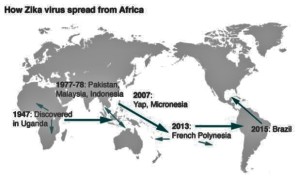
A new mosquito-borne virus is fast spreading across the Americas and the Caribbean, with cases reported among travelers returning to the U.S...Zika virus outbreaks are proliferating across multiple countries and territories in the region, such as Puerto Rico, Mexico, Brazil, Panama and Venezuela. They have been associated with increased reports of birth defects, including babies with very small heads, and of paralysis in adults...There is no vaccine or specific drug to treat the virus.
- How is Zika transmitted?
- Birth defects, paralysis?
- How the outbreak started
- Could it reach the US?
- Prevention
- Ed Markey blocks vote on FDA chief over opiate approvals (bostonglobe.com)Three senators now holding up FDA nominee — for three different reasons (washingtonpost.com)

Dr. Robert Califf
Senator Edward Markey is using Senate rules to block the nomination of a proposed new leader of the Food and Drug Administration in an attempt to force the agency to rescind its approval of a prescription opioid for children and change its regulatory practices...Using parliamentary procedures, the Massachusetts Democrat has put a "hold" on the nomination of Dr. Robert Califf, which prevents the Senate taking a confirmation vote...Markey, who has made the growing wave of opioid addiction one of his legislative priorities, is demanding that the FDA agree to reverse its 2015 decision allowing the pediatric use of the prescription painkiller OxyContin. He also wants the agency to commit to convening expert advisory panels to provide advice whenever considering the approval of an opioid drug, and to ensure that the risks of drug addiction and abuse are taken into account whenever the agency considers approving a prescription opioid...
- Deficiencies Found at Theranos Lab (wsj.com)

Federal inspectors will soon release details on problems at blood-testing facility...U.S. health inspectors have found serious deficiencies at Theranos Inc.’s laboratory in Northern California...The problems were found during an inspection by the Centers for Medicare and Medicaid Services, the chief federal regulator of clinical labs, at the blood-testing company’s facility in Newark, Calif. Failing to fix the problems could put the Theranos lab at risk of suspension from the Medicare program...inspection results are expected to be publicly released soon...
- Walmart bottled water convoy heading to Flint (drugstorenews.com)
Walmart and three of the nation’s largest bottled water suppliers are coming to the aid of Flint, Michigan, residents who lack access to safe drinking water after the municipal water supply became tainted with lead...Walmart, Coca-Cola, Nestlé and PepsiCo are sending 176 truckloads of water to Flint – roughly 6.5 million bottles – which is an amount estimated to meet the daily needs of more than 10,000 children for the rest of the year..."At Walmart, we take pride in using our strengths to help communities like Flint during times of crisis, as we’ve done around the world in times of need,"..."We’re working to ensure that the children of Flint, the city’s most vulnerable citizens, have access to safe water."...Walmart has already donated 14 trucks of water, or 504,000 bottles, and 1,792 water filters to the Flint community since July 2015...In addition to the water donation, the companies are encouraging others to support the Flint community by working with Good360 where nonprofits operating in Flint are listing their needs online.
- Biosimilar drugs get boost as UK cost agency backs their use (reuters.com)

Cheaper "biosimilar" copies of expensive biotech drugs received a boost in Britain...when the country's health cost-effectiveness agency NICE (National Institute for Health and Care Excellence) said patients needing such medicines "should be started with the least expensive drug"...So-called biosimilars are gaining ground in Europe, which has been faster to adopt their use than the United States, offering savings to healthcare systems and threatening sales of companies making original products...The latest ruling by the National Institute for Health and Care Excellence is a further victory for the biosimilar lobby and may help two cheaper copies win market share from five other original brands...The potential for biosimilars to win business from pricey original brands is not only a focus for healthcare providers but also a growing concern for investors, worried about the impact on large drug company earnings...A growing number of biosimilar versions of top-selling biotech medicines are set to reach the market in the next few years, although the scale of their impact is unclear...
- The biggest implications of ICJME’s new clinical trial data sharing proposal (biopharmadive.com)Sharing Clinical Trial Data — A Proposal from the International Committee of Medical Journal Editors (nejm.org)Chasing transparency in the pharmaceutical industry: How much is enough? (biopharmadive.com)

Editors, who wrote an editorial discussing the issue in last week’s New England Journal of Medicine, “many funders around the world—foundations, government agencies, and industry—now mandate data sharing. “...Things have evolved a great deal since November 2014, when the National Institutes of Health proposed forcing pharma companies to put all data from clinical trials—successful and otherwise—online. This so-called “transparency initiative” was supported by more than 80,000 individuals and 500 organizations with a vested interest in clinical trial data transparency. Even earlier, in 2007, a U.S. law came into effect making failure to register clinical trials illegal.
- Fast-forward to January 2016
- ICJME: “Data-sharing guidelines are needed”
- The power of individual de-identified patient data
- No data-sharing plan, no publication
- Concerns about research parasites
- Dialing back the paranoia
- Steps to reduce pharma influence over Canadian docs criticized (statnews.com)

In effort to provide greater transparency in the relationships between physicians and the pharmaceutical industry has taken a controversial turn in Canada, where a leading medical society is being criticized for a new report on the topic...The College of Family Physicians of Canada, which represents more than 35,000 doctors, earlier this month released a report featuring 21 recommendations that address conflicts of interest and continuing medical education, among other things...The report emerges amid ongoing debate over the extent to which companies unduly influence medical research and practice. The CFPC, which itself does not accept industry funding, portrayed its effort as a forward-looking statement that will evolve in order to bolster trust and transparency among patients.
- Big Pharma’s bet on Big Data creates opportunities and risks (reuters.com)

Novartis wants every puff of its emphysema drug Onbrez to go into the cloud...The Swiss drugmaker has teamed up with U.S. technology firm Qualcomm to develop an internet-connected inhaler that can send information about how often it is used to remote computer servers known as the cloud...This kind of new medical technology is designed to allow patients to keep track of their drug usage on their smartphones or tablets and for their doctors to instantly access the data over the web to monitor their condition...It also creates a host of "Big Data" opportunities for the companies involved - with huge amounts of information about a medical condition and the efficacy of a drug or device being wirelessly transmitted to a database from potentially thousands, even millions, of patients...Wireless interfaces are a great benefit to certain patient groups...But...connectivity also means vulnerability...
- Feds tell judge Martin Shkreli can go to Washington to testify before Congress (statnews.com)
Martin Shkreli appears to be a big step closer to testifying before a congressional committee...US Department of Justice wrote a letter Sunday to a federal judge overseeing a securities fraud case against Shkreli to say “the government does not object to (Shkreli) traveling to Washington, D.C., to comply with the House Committee’s subpoena” to testify at a hearing on prescription drug pricing. As part of his $5 million bail order, Shkreli is prevented from traveling outside parts of New York City and nearby Long Island...The letter paves the way for Shkreli to appear before the House Oversight and Government Reform Committee, which wants to explore the rising cost of medicines. A hearing had been scheduled for Tuesday, but it has been postponed to Feb. 4 due to the recent blizzard.