
- Novo aims to be ahead of pharma pack with Iran investment (tehrantimes.com)
Novo Nordisk, the world’s top insulin supplier, expects to be ahead of the pack now nuclear sanctions are lifted in Iran, thanks to a continuous presence and a pre-emptive investment plan...(Iran) is an attractive target for Big Pharma seeking to sell new medicines to its large and growing population, but going in at ground level and securing good relations with authorities will be key, industry executives say...Medicines were an exception in the nuclear sanctions imposed on Iran, thanks to exemptions for essential drugs and other humanitarian goods. Yet shipping drugs into the country was far from trouble-free, due to tight curbs on financial transactions and restrictions on technology reaching the Islamic republic...“With the sanctions being lifted, we can operate more freely,” Jakob Riis, Novo’s head of marketing told Reuters at the World Economic Forum in Davos, Switzerland...The Danish company has maintained a staff of around 130 in Iran through the sanctions era and it now plans to more than double that, adding 160 additional staff, following a decision in September to invest 70 million euros ($76 million) on a factory...
- 2015: A banner year for personalized medicine (catalyst.phrma.org)
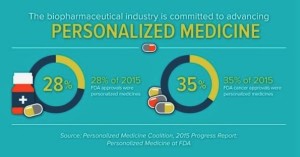
2015 was a record year for personalized medicine approvals, according to a new analysis from the Personalized Medicine Coalition. This news confirms the growing role of personalized medicine as an approach to treatment that can improve outcomes for patients and also create important efficiencies in the health care system. Personalized medicine is an emerging field of medicine that uses diagnostic tools to identify specific biological markers to help assess which medical treatments and procedures will be best for each patient. Personalized medicine also takes into account patients’ medical history, circumstances and values in developing targeted treatment and prevention plans...45 novel new drugs approved in 2015, the new analysis indicates that 28 percent of novel new drugs approved by the Food and Drug Administration...were personalized, or precision, medicines...Some of the personalized medicine highlights from 2015 include:
- Two new medicines for patients with different forms of non-small cell lung cancer;
- A new combination therapy for patients with cystic fibrosis;
- Two new medicines to help patients with a difficult-to-treat form of high cholesterol; and
- A new targeted therapy for melanoma.
- Pharmapreneurs – the Pharmacist Entrepreneur – Pharmacy Podcast (pharmacypodcast.com)

Dr. Blair Thielemier interviews pharmacist & entrepreneur – Simone Sloan about what drives entrepreneurship, leadership, and transforming our pharmacy industry. (23:19 min)
- China ingredient maker’s plant found in ‘devastated state’ by authorities (fiercepharmamanufacturing.com)

China, which manufactures most of the ingredients for Western products, has a reputation for having some pretty questionable manufacturing operations. Czech inspectors got a firsthand look at one plant that they said posed "extreme risks" to consumers...According to two reports on the plant posted by the European Medicines Agency, authorities dropped by the Huanggang City facility of Hubei Hongyuan Pharmaceutical in October after the plant had been mentioned as an intermediate manufacturing site for the antibiotic metronidazole. The company acknowledged in its introduction that the site didn't follow EU GMP standards, the report says. During a walk-through, inspectors confirmed that...They said they found a plant in a devastated state, with "huge layers of dust and product" that indicated that neither the plant nor the equipment was being cleaned or that equipment was being maintained. It was noted the situation posed "an extreme risk of cross-contamination." Additionally, almost none of the products that they saw had been labeled and there was no batch manufacturing documentation...Western authorities have stepped up inspections of Chinese plants, both of those owned by Chinese companies and those owned by Western drugmakers, and found problems in both cases.
- Global Fund rushes HIV drugs to Uganda amid shortage (reuters.com)

The Global Fund, a partnership that sends HIV drugs to poor countries, says it plans to send an advance supply of antiretroviral therapy to Uganda, after the East African country ran out three months before the end of last year...Health activists say the shortage, which began last September, hit about 240,000 patients on publicly funded treatment programs, forcing them to modify their treatment or stop altogether. Private-sector clinics were not affected...The government said a weak currency and insufficient foreign exchange had hampered its ability to finance drug imports...Some activists said they suspected runaway election spending was behind the shortfall, but officials denied the charge...The government needs to mobilize resources to fill the gaps and find a long-term solution...
- Late Change in Insurance Plan Leaves 700 Without Health Care (kolotv.com)
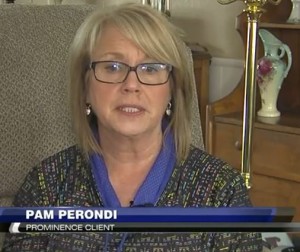
Pam Perondi feels she's been blindsided by her health insurance provider, Prominence Health Plan..."It feels like bait and switch."...She says her open enrollment period was closing in mid-December. At the same time, Prominence was informing the Carson Medical Group, which includes the lion's share of the Carson medical community, it was cutting its compensation to them by a third....That was more than the medical group could absorb...Administrator Michael Lollich says the group held off for a week, hoping for reconsideration. Then on the 28th, they notified their patients they were no longer accepting Prominence insurance...The news came after the deadline for Pam Perondi and 700 others to make their decision...Carson Medical Group says it feels for its former patients...the group had no choice and the late notification left them with no time to work on a solution...Perondi isn't sure what she'll do now..."I'm just angry," she says, "and I feel sorry for all the others this has happened to."
- Up to 3,000 pharmacies could close after government cuts, MPs warn (pharmaceutical-journal.com)PSNC Update: Further details and PSNC’s response to the Government plans for community pharmacy (psnc.org.uk)New briefing document about ‘efficiencies’ in community pharmacy (npa.co.uk)Statement on the meeting with Rt Hon Alistair Burt MP, Minister of State for Community & Social Care (appg.org.uk)

All Party Pharmacy Group has warned...Between 1,000 and 3,000 pharmacies — as many as one in four — could close in England as a result of government cuts to funding for pharmacy...A letter to the Pharmaceutical Services Negotiating Committee in December 2015 announced a 6% funding cut from £2.8bn ($4bn) to £2.63bn ($3.7bn)...there would be further reductions in future years...there is also much more to this picture than a cut in funding. There is a clear intention to reduce the number of pharmacies...In some parts of the country there are more pharmacies than are necessary to maintain good access. 40% of pharmacies are in a cluster where there are three or more pharmacies within ten minutes’ walk...The Department will separately consult on changing the Human Medicines Regulations 2012 to allow all pharmacies to access the efficiency created by ‘hub-and-spoke’ dispensing...This could help pharmacies to lower their operating costs and free up pharmacists to provide more clinical services and public health services...the government would not decide which pharmacies should close. Pharmacies would need to decide whether they were "viable" in light of the change to the funding level. He admitted that independents will be "squeezed" and that this is a matter of concern for the government to look at...Warehouse dispensing, or ‘hub and spoke’, raises questions around safety, quality and access...The supply of prescription medicines cannot be treated like buying clothes and DVDs. High quality, safe dispensing depends on the opportunity for a face-to-face discussion between the pharmacist and the patient. I don’t see how that can be done in a warehouse.
- CMS final rule addresses decades-long Medicaid reimbursement issue (drugstorenews.com)

The end of what has become a decades long battle around fair reimbursement for Medicaid programs and pharmacy appears to be in sight...the Centers for Medicare & Medicaid Services issued the Covered Outpatient Drugs final rule with comment that addresses key areas of Medicaid drug reimbursement and changes made to the Medicaid Drug Rebate Program by the Affordable Care Act. According to a fact sheet published by CMS, this final rule assists states and the federal government in managing drug costs, establishes the long term framework for implementation of the Medicaid drug rebate program and creates a more fair reimbursement system for Medicaid programs and pharmacies...the final rule is designed to ensure that pharmacy reimbursement is aligned with the acquisition cost of drugs and that the states pay an appropriate professional dispensing fee. The final rule:
- Creates an exception to the FUL calculation, which allows for the use of a higher multiplier than 175% to calculate the FUL based on acquisition costs for certain multiple source drugs;
- Establishes actual acquisition cost as the basis by which states should determine their ingredient cost reimbursement so payments are based on a more accurate estimate of the prices available in the marketplace, while still ensuring sufficient beneficiary access;
- Implements the use of the term professional dispensing fee to ensure that the dispensing fee paid to pharmacies reflect the cost of the pharmacist’s professional services and cost to dispense the drug product to a Medicaid beneficiary;
- Clarifies that states are required to evaluate the sufficiency of both the ingredient cost reimbursement and the professional dispensing fee reimbursement when proposing changes to either of these components; and
- Requires states to specify in the Medicaid state plan that reimbursement methodology to pharmacies that purchase drugs through the Federal Supply Schedule and the 340B Drug Pricing Program is consistent with overall AAC requirements.
- New York Governor Andrew Cuomo seeks to cap some drug prices (statnews.com)2016 -17 NEW YORK STATE EXECUTIVE BUDGET HEALTH AND MENTAL HYGIENE ARTICLE VII LEGISLATION (budget.ny.gov)Pharmacies say access to specialty drugs could be diminished if measure passes (crainsnewyork.com)

New York Governor Andrew Cuomo has become the latest entrant in the escalating war over rising drug prices with a budget provision that would effectively cap prices and require drug makers to provide a raft of information about their costs...proposal marks yet another high-profile attempt to force the pharmaceutical industry to respond to the intensifying clamor over the cost of medicines...Under the proposal...the state health department would "develop a list of critical prescription drugs for which there is a significant public interest in ensuring rational pricing." The department would then assess the value of the drugs in order to set a "ceiling price" and could require a minimum rebate to the state Medicaid program...the administration wants companies to provide data about development, manufacturing, and marketing costs for drugs on this list...also require drug makers to submit information about the prices charged other purchasers in the state and outside the United States, any rebates offered customers, and profit margins...the Pharmaceutical Research and Manufacturers of America...have "significant concerns" with the proposal..."Not only will implementing price controls have a very negative impact on innovation and send a signal that risk taking will not be rewarded, but also the so-called ‘transparency’ information called for in the proposals would be virtually impossible to achieve because it does not include the cost of failures inherent in the search for new treatments and cures.
- Licorice Coughing Liquid Recall, Presence of Morphine (infozine.com)Master Herbs, Inc. Issues Voluntary Nationwide Recall of All Lots of Licorice Coughing Liquid Due to the Presence of Morphine (fda.gov)

Master Herbs, Inc. (Ma Ying Long Pharmaceutical Group) is voluntarily recalling ALL LOTS of Licorice Coughing Liquid, cough syrup in 100 ml bottles to the consumer level. This product has been found to contain morphine, which is an opioid, and it is not declared on the label. Opioid is an ingredient of Compound Camphor. Compound Camphor is declared on the label of the product, but not its ingredients...The product is used for the temporary relief of cough due to cold, minor throat and bronchial irritations...identified by the Chinese Product Name: Licorice Coughing Liquid The product was distributed to Chinese grocery stores in various cities in California, New Jersey, Hawaii, Illinois, Ohio and Nevada.