
- Most drug makers report incomplete side effects to the FDA (statnews.com)
The regulatory system for reporting side effects caused by prescription drugs is producing its own kind of side effect — incomplete information about injuries that patients may have suffered. And the reason for the lack of data is that many drug makers are filing patchy reports...At issue is the Adverse Event Reporting System...The database is the key method for collecting side effect data. Both doctors and consumers can voluntarily report problems to the agency or a drug maker. But drug companies are also required to investigate and report side effects that may be attributable to their products...drug makers generally fail to include key data that the FDA might use to assess future warnings. For this reason...there are still wider implications...With increasing pressure for the FDA to approve drugs fast but with less clinical testing, it is a major concern that postmarket surveillance has major problems that are not being addressed…It is time for the FDA, the medical community, and industry to start work on a badly needed modernization" of this "critical tool" for monitoring safety…reports involving patient deaths offered the least amount of complete information for all of the key data points...the reporting system has not kept pace with changes in pharmaceutical marketing...interactions between patients and physicians, and patients and drug companies, have evolved, partly thanks to the Internet. This means a report may not be based on spontaneous information.
- China research highlights country’s excess use of antibiotics (reuters.com)
Children in China's eastern Jiangsu province are being widely exposed to antibiotics from tainted food and drinking water, potentially harming long-term health, local media reported...citing research from Shanghai's Fudan University...which tested for 21 common antibiotics, including those used for animals, found traces of at least one type in 80 percent of a pool of 505 schoolchildren in Shanghai, China's modern business hub with a population over 20 million...China suffers from serious overuse of antibiotics, with doctors prescribing them to half of all outpatients, far above recommended levels...nearly two-thirds of Chinese believed antibiotics should be used to treat colds and flu, while one-third thought antibiotics were effective against headaches...Misuse of antibiotics is becoming a global risk, making the drugs much less effective at treating common infections...
- How drug ad narrators take the scariness out of side effects (statnews.com)
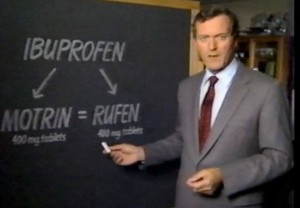
TV’s first prescription drug ad for Rufen
Drug makers are legally required to spend money telling you their products might lead to a series of horrifying side effects, up to and including death...Needless to say, for the pharmaceutical industry, this presents a communications challenge...But nearly two decades after television ads for prescription drugs began flooding American homes, drug makers have also perfected their delivery — allowing them to include the information they are obligated to provide while minimizing how scary it might sound... there’s an art to it...We use the same approach medical professionals do, telling a patient calmly: ‘We’re going to perform this surgery and there’s a 60 percent chance you won’t live,"...consumers absorb the most information when they can see people speaking rather than just hearing them. But "sometimes all the positives are said by someone you can see and all the negative things and risks are said by voiceover,"...Striking the right tone isn’t the only challenge for voice actors. Just think about making your living by rattling off phrases like "sphenopalatine ganglioneuralgia" or "vascular ischemia caused by thrombosis."..."You have to look up words a lot,"...
- Dartmouth launches Wanda, ‘magic’ tool to protect health data, devices (healthcareitnews.com)

Dartmouth College researchers claim to have developed a "magic wand" they say will prevent hackers from stealing personal data. They've named the digital tool Wanda...The focus of the work is to secure data at home on patients' computers, laptops, tablets, mobile phones and medical devices...Wireless and mobile health technologies have great potential to improve quality and access to care, reduce costs and improve health...But these new technologies, whether in the form of software for smartphones or specialized devices to be worn, carried or applied as needed, also pose risks if they're not designed or configured with security and privacy in mind...one of the main challenges is that most people don't know how to set up and maintain a secure network in their home. That...can lead to compromised or stolen data or potentially allow hackers access to devices such as heart rate monitors or dialysis machines. That's where Wanda comes in...A small device that has two antennas separated by one-half wavelength and uses radio strength as a communication channel...The digital tool makes it easy for people to add a new device to their home – or clinic – Wi-Fi network...Users need only pull the wand from a USB port on the Wi-Fi access point, carry it close to the new device and point it at the device, like a magic wand. The wand securely beams the Wi-Fi network information to the device while preventing anyone nearby from capturing or tampering with the information...
- Q&A: CVS says this is how it’s lowering drug costs to consumers (statnews.com)

CVS Chief Medical Officer Troyen Brennan
Rising prices for prescription medicines have become an increasingly contentious issue and cast a harsh spotlight on the pharmaceutical industry. As a result, a growing number of state and federal lawmakers are proposing legislation to somehow halt the trend. Drug makers maintain their prices fuel needed innovation and blame insurers for forcing consumers to pay higher costs. But Troy Brennan, the chief medical officer and executive vice president at CVS Health, argues differently. CVS runs the nation’s second-largest pharmacy benefits manager, which negotiates drug prices for companies and government agencies, among others. He maintains CVS is cutting costs to clients. Here is an excerpt of our conversation...
- Ibuprofen patch heralds side effect free drug future (reuters.com)
An ibuprofen patch that delivers the painkiller directly through the skin to the site of pain, at a consistent dose for up to 24 hours, has been developed by UK researchers...Scientists at the University of Warwick and spin-off company Medherant say their TEPI patch could revolutionize the transdermal drug delivery market...the polymer matrix in the patch acts as a reservoir for the drug, capable of releasing between five and ten times the amount of drugs used in gels and patches currently on the market, for periods of six hours, 12 hours, and even 24 hours...The patches could help treat conditions like chronic back pain, neuralgia and arthritis without the need to take potentially damaging doses of the drug orally... the technology has exciting potential for other medications, such as opioid painkillers. What's important is to be able to extend the range of drugs that are available by patches because at the moment we're limited to about 20 different drugs, and there are thousands of drugs out there...which is limited by the technology of the adhesive...The TEPI patch incorporates new adhesive technology developed by...Bostik...Nutrition companies have also shown an interest in adapting Medherant's technology for transmitting minerals and vitamins through the skin.
- Insurers, drugmakers wrestle with how to build value-based contracts (modernhealthcare.com)
...outcry over drug pricing has forced healthinsurers and pharmaceutical companies to devise ways of expanding access to potentially life-saving drugs without breaking the bank...Value-basedcontracts, in which insurers pay for drugs based on their effectiveness, have begun to sprout, and more are expected to follow. But experts believe these types of deals, although potentially beneficial, are not a panacea for managing drug costs. Value-based contracts may also be hard to orchestrate since they require doctors, insurers, pharmacy benefit managers and drug companies, often rivals, to cooperate and share data...What you still don't know at the end of the day with these outcomes agreements is whether they save money…Paying for the efficacy of drugs is a logical extension of how the U.S. wants to finance healthcare. Medicare rewards hospitals that deliver good care and penalizes those with high levels of costly readmissions. Private insurers have created narrow networks with selected health systems and doctors presumably based on their low costs and superior quality...most difficult hurdle may come once insurers, PBMs and drug companies have agreed on measurable, clinically relevant metrics. Those groups then have to share their medical and pharmacy data to track outcomes, which requires a high level of cooperation from fierce, often unfriendly negotiators...
- Pharmacy-Themed Restaurant to Open in London (pharmacytimes.com)
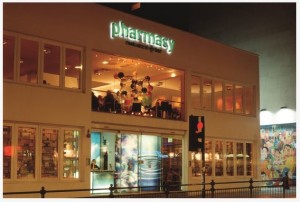
Artist Damien Hirst is opening a pharmacy-themed restaurant in a London neighborhood later this month...The Pharmacy 2 restaurant will be located at the Newport Street Gallery, so visitors will have both a chance to imbibe and view art at the same time...Pharmacy 2’s seats have pills emblazoned on the back cushions, and one side of the bar is made up of shelving units of pharmacy products. The bar also features a panel of rainbow-colored tablets, and above it is a neon sign that says "prescriptions."...there is also a cabinet full of products that Hirst has taken during his life, including Bonjela products, diazepam, mouthwash, and gastro-resistant tablets...Hirst collaborated with Mark Hix, a chef and restauranteur, on Pharmacy 2... it will serve classic British and European food...The first Pharmacy restaurant...opened in 1998...When it first opened, Pharmacy received the prize for best-designed restaurant from the Carlton London Restaurant Award...Its convincing pharmaceutical appearance led to threats of legal action by the Royal Pharmaceutical Society for misleading the public...The society argued that Pharmacy violated the Medicines Act 1968 by deceiving the public into believing the building was a pharmacy. Hirst claimed on his website that a woman asked him for an aspirin there once, but he told her they had a strict no-drug policy.
- Petition set up to target prime minister over pharmacy cuts, as PSNC warns against strikes (pharmaceutical-journal.com)Launch of new petition to the Prime Minister (npa.co.uk)
The National Pharmacy Association will be launching a petition for pharmacy contractors in an attempt to combat the government’s proposed 6% cuts to the community pharmacy contractual framework...This is going to be a petition aimed at the prime minister and this is going to be a petition where we mobilise contractors… and patients...The NPA wanted a paper petition so customers at pharmacies could sign it...It is to complement the parliamentary e-petition which has already gathered 42,000 signatures...Mike Smith...at Walgreen Boots Alliance, said he believed the cuts will go ahead regardless of efforts to counter them. "I personally think the £170m is gone, despite the consultation process, but we have to change and work with the Department of Health,"...It almost makes the Pharmaceutical Services Negotiating Committee’s job role defunct… because if [the Department of Health] is going to bulldoze what it wants onto us, there is no negotiating going on...Sharpe (chief executive of the PSNC) said: "Would I say to people at this stage to start investing to deliver more services from their pharmacies? No, I think that would be premature. We need to understand exactly what they want from us before we would responsibly tell people to start investing more."...She added that pharmacists should not stop delivering existing services until they "really have to", warning that if pharmacists withdraw services or go on strike, they may lose the support of their patients.
- Toward saner drug pricing (washingtontimes.com)
If the FDA acts more quickly, lower costs and better patient outcome will follow...In a January hearing, Sen. Hatch queried Dr. Janet Woodcock, director of the Food and Drug Administrations’s Center for Drug Evaluation and Research, whether the agency’s backlog of some 3,500 lower-cost generic drugs awaiting approval was contributing to the cost consumers pay for drugs...Dr. Woodcock conceded that...slow-paced drug approvals contribute to high costs...Eighty-eight percent of all prescriptions in the U.S. are generics. If the FDA acted more quickly with both generics and new drugs, overall health costs would go down and patient health outcomes would improve...By quickly approving generics, lower cost versions would be available without unfairly infringing on profits (and thus stifling innovation) that pharmaceutical companies need to recoup the high costs to bring new drugs to market...Ms. Warren (Sen. Warren, Mass, Democrat) said...She’d like us to believe that Mr. Shkreli is representative of the broader industry and only government price controls can protect consumers from what appear to be an ever-rising cost of drugs...Rep. Stephen Lynch, Mass. Democrat, proposed what he amusingly called a "poison-pill amendment," which would allow Congress to decide when drug prices are too high, and then just eliminate patent exclusivity and "contract with DARPA — our government research labs — to produce your drugs at no cost to the consumer. That’s what we can do."...The Lynch and Warren approach will do one thing for sure. It will have a chilling effect on much needed private-sector investment in pharmaceutical research...the "market-failure, price control" argument would translate to higher overall treatment costs...