
- Novartis offices in South Korea raided over bribery concerns (statnews.com)

In the latest sign that global drug makers remain under scrutiny for their dealings with health care providers, South Korean authorities raided Novartis offices in search of evidence the company provided bribes to local doctors…Seoul Western District Prosecutors’ Office confiscated various documents, including account books, in order to determine whether rebates the drug maker offered physicians may have actually been bribes...The probe appears to be at an early stage, but is likely to be closely watched for signs that global drug makers continue to stumble in their practices in various foreign markets…
- ACA ‘Savings’: Paying Doctors And Hospitals Bonuses To Deny Care To Patients (forbes.com)
...one of the lesser-known provisions of the ACA (Affordable Care Act) calls for the federal government to pay physicians and hospitals bonuses if they deny health care to seniors and the disabled...Section 3022 of the ACA establishes the Medicare Shared Savings Program. The MSSP establishes the notion of Accountable Care Organizations. These are groups of health care providers (hospitals, physicians, other providers) who join together for purposes of a obtaining bonus payments based on their participation in the MSSP and Medicare fee-for-service incentive program...ACOs are paid to "reduce costs" for treating their patients...For patients assigned to ACOs, the ACO receives bonus payments based on the total amount Medicare pays for care of those patients. That total includes all care those patients receive from all providers – specifically, including providers who are not members of the ACO. Bonuses are based on reducing total costs relative to what would be expected risk-adjusted cost based on each patient’s health status...Because this program is part of Medicare’s fee-for-service system, "reduce costs" means "reduce services" – that is, "give patients less health care."...the ACO program encourages hospitals and physicians...to encourage patients to use less health care...It is highly ironic that a law proposed, in part, because of the allegation health insurance companies were increasing their profits by denying care to patients – is now the means by which the federal government pays physicians and hospitals bonuses to, in effect, deny care to patients...
- 4 Reasons Medications May Not Work Properly (pharmacytimes.com)
Your patients may not realize that the effectiveness of their medications is largely within their control...According to the Institute of Medicine, nearly 50% of US adults have trouble understanding their medications’ instructions, so pharmacists should engage patients in interactive conversations in order to ensure that they do not stop taking them...Here are some common reasons why a patient’s medications may not be working properly:
- Patients are not taking medications exactly as directed.
- A patient’s diet may be interfering with medications.
- A patient’s lifestyle habits may be interfering with medications.
- A patient may have comorbid conditions.
- Tips – How to Pronounce a Difficult Drug Name Without Choking, Aspirating, Dying (gomerblog.com)

Last month, the U.S. Food and Drug Administration ("The" FDA) approved the efficacious and unpronounceable idarucizumab (also known, thankfully, as Praxbind) to reverse the anticoagulant effects of Pradaxa in emergencies. That got us to thinking: Sure, Praxbind is catchy and all, but how does one pronounce its generic name, or any other complicated drug name for that matter, without choking, aspirating, and dying?...Pronouncing these new drug names is no easy feat. In the same way airplanes always go through safety protocols prior to departure, so too must you review your code status before pronouncing any new drug. Before you know it, an unexpected "dazole" or "fenac" could lead to an aspiration event, hypoxemic respiratory failure, and, ultimately, death. Be smart. Be safe. Determine that code status before you start.
- Have an endotracheal tube ready.
- Hire a vocal coach.
- Do your tongue and throat exercises.
- Practice your high-value Scrabble letter sounds.
- Practice making sounds no human has ever made before.
- Wear a diaper.
- FDA should warn of risks of opioid, benzo combo, say public health experts (statnews.com)CITIZEN PETITION (health.baltimorecity.gov)Benzodiazepine prescribing patterns and deaths from drug overdose among US veterans receiving opioid analgesics: case-cohort study (bmj.com)
Public health officials around the country want the Food and Drug Administration to warn people about the risks of taking opioids along with common anti-anxiety drugs...Forty-one public health officials and researchers signed a petition, which will be submitted to the FDA... It calls for so-called black box warnings on both opioids and benzodiazepines, indicating that their concurrent use "contributes to the risk of fatal overdose." Opioids are intended primarily for pain relief; benzodiazepines, like Valium and Xanax, are tranquilizers that can treat anxiety...A 2015 study in the British Medical Journal found that US veterans taking opioids who took more benzodiazepines were more likely to die than those who took fewer benzodiazepines...Deaths from both opioids and benzodiazepines have been on the rise...
- One-Third of Clinical Trial Results Never Disclosed, Study Finds (bloomberg.com)
One-third of clinical trials conducted at 51 major U.S. universities and academic hospitals were never published in a peer-reviewed journal or in a government registry online, according to a new study...The researchers looked at 4,347 trials that were completed between October 2007 and September 2010. Of those, only 29 percent had results published within two years of finishing data collection, and 13 percent were posted on the government database ClinicalTrials.gov within the same period...about 67 percent of the studies disclosed their results by...2014...You’d like to think that academic institutions are role models for science...The truth is we’re not doing very well...University of Florida and Ohio State University joined Yale with some of the highest rates of publication in peer-reviewed journals...Boston University, Cornell and Oregon Health and Science University...had among the lowest rates...Pharmaceutical companies, the government and foundations invest a lot of money in clinical trials...If the results aren’t made public, that’s wasted money...Disclosure of results is critically important to advance science...Whether those results are positive or negative, and are important as a part of our agreements with funders as well as the participants in clinical trials...Beyond creating a data void that makes future research more difficult, unpublished results also may represent an ethical issue. Patients in clinical trials undergo experimental treatments with the understanding that doing so will advance medical knowledge, which can’t happen if the results aren’t published...
- University of South Florida Health College of Pharmacy (Q&A) (pharmacytimes.com)
Pharmacy students at the University of South Florida Health College of Pharmacy will see a great emphasis placed on 4 main pillars: 1. Geriatric pharmacotherapy 2. Translational pharmacogenomics 3. Health informatics 4. Leadership/management...Dean and professor Kevin Sneed, PharmD, spoke with Pharmacy Times about the importance of these pillars—namely that no matter how the health care arena transforms in the future, these pillars will continue to evolve and remain relevant….Dr. Sneed provided more insight into what a student can expect to experience at USF College of Pharmacy.
- Q: What is unique about your school/program?
- Q: What is the teaching style or philosophy at your college?
- Q: What are some community outreach activities or programs that your college participates in? What volunteer opportunities are available to students?
- Q: What opportunities do students have for internships or co-ops?
- Q: What advice do you have for students who will graduate this year?
- Senate vote on Robert Califf may put him back on track for top FDA job (statnews.com)FDA to overhaul opioid policies. Will it ease concerns over Califf? (statnews.com)UPDATE: FDA chief nominee Califf likely to be confirmed after clearing key Senate vote (biopharmadive.com)How the opioid crisis convinced these senators to oppose advancing Califf nom, in charts (biopharmadive.com)
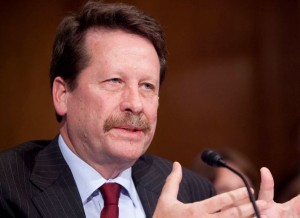
Dr. Robert Califf
...Dr. Robert Califf...Obama’s choice to head the Food and Drug Administration, may be getting back on track to win final approval from the Senate...In a move designed to circumvent opposition to Califf, who was nominated in September, Senate Majority Leader Mitch McConnell has scheduled a procedural vote for Monday afternoon. If Califf wins the support of at least 60 senators in that vote, he would move on to a final confirmation vote — likely Tuesday — and his Senate opponents would lose their leverage to stop him...The move will likely vanquish the remaining senators — led by Democrats Bernie Sanders of Vermont, Edward Markey of Massachusetts, and Joe Manchin of West Virginia — who disapprove of Califf because of his close ties to industry and what they consider a poor FDA response to the opioid epidemic...
- Collaborative Practice Agreements Open Opportunities, Liabilities for Pharmacists (pharmacytimes.com)AMCP - Where We Stand - Collaborative Drug Therapy Management (amcp.org)
...48 states and the District of Columbia, pharmacists’ scope of practice allows for collaborative practice agreements with prescribers—although each state has its own rules and nuances about what, where, and with whom pharmacists can collaborate... Antonio Ciaccia...Ohio Pharmacists Association... the state’s new collaborative practice agreement laws will have a major impact on all pharmacy practice settings, including compounding, long-term care, hospital, ambulatory, community, and consulting. While he believes that pharmacists have "more than adequate training" to perform the services permitted under the new law... Because of the variations in state pharmacy practice acts, pharmacists can best defend themselves against such liability claims by taking the time to familiarize themselves with the authority granted to them under their collaborative practice agreement to ensure that they do not exceed that authority. Pharmacists may also check with their malpractice insurance carrier...Despite the increased potential for malpractice and liability issues...expanded collaborative practice agreement law as a victory for prescribers, pharmacists, and patients...engagement of the pharmacist on the health care team is a great driver for improving outcomes...
- Alibaba pilot promises seamless online doctor to prescription service in China (fiercepharmaasia.com)

Alibaba's Jack Ma
...online market giant Alibaba Group launched a pilot medical service last month in China that promises a patient can visit a doctor online and get his prescription filled the same way with home delivery and payment to boot...part of Alibaba's health business, aims to tap into a market that iResearch said had an estimated revenue stream of 16 billion yuan ($2.4 billion) last year…We want to build a health care product sales platform that links manufacturers, wholesalers and retailers to offer various medical products and services to customers…The pilot saw patient Hu Tianshun enter medical data via an online form and then a video chat with a doctor in another city was held…adding the doctor made a diagnosis and places a online prescription order with an Alibaba's online shops...Hu got his drugs the next day, and completed the transaction by paying the deliveryman…