
- Hospital Impact: Drug companies win, patient safety loses with 21st Century Cures Act (fiercehealthcare.com)
The 21st Century Cures Act passed the House and Senate with overwhelming bipartisan support and has now been signed into law...On its surface, there seems to be little controversy in supporting more funding to the National Institutes of Health for innovative research, more expeditious approval of promising drugs by the Federal Drug Administration, and better approaches to combat the opioid abuse epidemic...However, there are a number of troubling provisions in this potential law of which the public should be aware...To outline the advantages and concerns, I created a series of winners and losers from which readers can draw their own conclusions:
- Winners
Drug companies: It shouldn’t surprise anyone that the pharmaceutical industry is ecstatic over the law, as the bar for approval of drugs under development is made significantly lower by reducing the rigor required for approval of new drugs by the FDA. Traditionally, rigorous double-blinded peer review studies are required prior to consideration and approval. - Losers
The FDA: Already stymied with deteriorating labs, under staffing and somewhat compromised approval processes for new drugs and medical devices, the FDA is not expected to fare better under the new law...Lowering the bar for the rapid and expeditious approval of pharmaceutical and medical device products with expansion of off label uses will only further undermine the FDA’s ability to protect the public from potential harm...Evidence-based medicine: The law allows for the use of “real-world evidence”—which may include anecdotal studies or observations, patient or professional opinion, as well as non-validated or scientifically measured outcomes—to justify the approval of a new treatment product...pharmaceutical companies will only be required to submit a “data summary” for new pharmacological agents or new indications to existing products, which will make the introduction of new products far easier.
- Winners
- Pharmacy Week in Review: December 16, 2016 (pharmacytimes.com)
Kelly Walsh, PTNN. This weekly video program provides our readers with an in-depth review of the latest news, product approvals, FDA rulings and more.
- CRISPR Patent Outcome Won’t Slow Innovation (technologyreview.com)

The legal battle over who invented the powerful gene-editing tool isn’t likely to dim hopes for better crops and powerful new medical treatments...a panel of judges at the Patent and Trademark Office...heard arguments as to who should own the rights to the century’s biggest biotechnology invention to date, a precise gene-editing system called CRISPR-Cas9 that has the potential to treat serious human genetic disorders and create designer crops that resist drought and pathogens...Embroiled in the dispute are the Broad Institute of MIT and Harvard...and the University of California...Groups at the two universities are fighting for ownership of CRISPR gene editing in eukaryotic cells (those of humans, plants, and animals), which represents the most lucrative uses of the technology...At stake are billions of dollars tied up in numerous commercial agreements with biomedical and agricultural companies. The outcome of the so-called patent interference could render some of those contracts invalid...But the patent judges’ decision...is not likely to put any CRISPR companies out of business or even slow the lightning pace of research and development in commercial laboratories…
- Report: London Drugs could be first to market with medical marijuana (tricitynews.com)

A B.C. (British Columbia)-based pharmacy chain is itching to be the first in Canada to sell medical marijuana...London Drugs vice-president John Tse says that the pharmacy has already begun training to pharmacists to dispense marijuana as soon as regulations are in place. The federal government is expected to introduce legislation on both medical and recreational marijuana in the spring...London Drugs is only interested in the medical side – foresees a longer wait time than that before it comes to pharmacy shelves...After the legislation comes out there’s still the regulation…. and then there’s provincial governments and each of our colleges of pharmacists need to write regulations to operationalize it...We’ll be as fast as the laws allow… but it could happen overnight, we’re that ready…London Drugs will purchase marijuana only from federally licensed cannibis producers and that the pharmacy chain will only purchase if conditions are right...It’s not overly difficult to grow but what are the growing conditions like? Is there mold or pesticides… chemical compounds can be varied by different strains...They’ve already begun discussions with pot producers to lay the groundwork of setting up a supply chain...
- Merck wins $2.54 billion in hepatitis C drug trial against Gilead (reuters.com)

Merck & Co...was awarded $2.54 billion in royalties by a federal jury in a patent lawsuit against Gilead Sciences Inc over Gilead's blockbuster hepatitis C drugs Sovaldi and Harvoni...The jury in Delaware reached the verdict following a nearly two-week trial, finding that a patent acquired by Merck in 2014 on hepatitis C treatments was valid...Harvoni and Sovaldi have drawn attention for their breakthrough success in curing hepatitis C in more than 90 percent of patients, and for their high cost...Harvoni's list price is $1,125 per pill and $94,500 for a 12-week regimen. Foster City, California-based Gilead, one of the world's largest biotechnology companies, made nearly $20 billion on the two drugs in 2015.
- FDA Says Real-World Evidence Could Generate ‘Incorrect or Unreliable Conclusions’ (raps.org)
...top Food and Drug Administration officials published an article in the New England Journal of Medicine (Real-World Evidence — What Is It and What Can It Tell Us? )...calling into question some of the potential uses of real-world evidence but also acknowledging that real world research and the concepts of a planned intervention and randomization “are entirely compatible."...while acknowledging that such (real-world) evidence “can inform therapeutic development, outcomes research, patient care, research on health care systems, quality improvement, safety surveillance, and well-controlled effectiveness studies,” the authors caution that “the confluence of large data sets of uncertain quality and provenance, the facile analytic tools that can be used by nonexperts, and a shortage of researchers with adequate methodologic savvy could result in poorly conceived study and analytic designs that generate incorrect or unreliable conclusions...“Accordingly, if we are to realize the full promise of such evidence, we must be clear about what it is and how it can be used most effectively, and we must have appropriate expectations about what it can tell us,”...
- Naloxone now available without a prescription at all CVS Pharmacy locations in Nevada (drugstorenews.com)
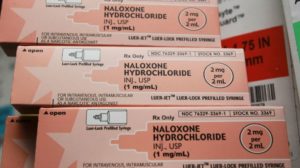
Naloxone is now available without a prescription at all CVS Pharmacy locations in Nevada...(CVS) stated it established a standing order with physicians in the Sliver State that allows CVS Pharmacy to expand access to the medication across the state...Naloxone is a safe and effective antidote to opioid overdoses and by expanding access to this medication in our Nevada pharmacies by the use of a physician's standing order for patients without a prescription…We are dedicated to helping the communities we serve address and prevent drug abuse and we are expanding access to naloxone to give more people a chance to get the help they need for recovery...CVS Health now dispenses naloxone in 37 states.
- This Week in Managed Care: December 16, 2016 (ajmc.com)
Laura Joszt with The American Journal of Managed Care. Welcome to This Week in Managed Care, from the Managed Markets News Network.
- As drug approvals dive in 2016, returns on R&D deteriorate (reuters.com)

The global pharmaceuticals industry is set to win the lowest annual number of new drug approvals this year since 2010...drugmakers' returns on research investment are deteriorating...Only 19 new drugs have been approved in the key U.S. market so far in 2016 and, with less than three weeks to go, it is clear the full-year tally will be well down on 2015 and 2014's bumper haul of 45 and 41 new products respectively...At the same time the profitability of drug research is being squeezed by steadily rising costs and increasing political pressure over the high prices of many modern medicines...As a result projected returns on investment in research and development for the top 12 pharmaceutical companies have fallen to just 3.7 percent this year from a high of 10.1 percent in 2010…
- U.S. Files First Charges in Generic Drug Price-Fixing Probe (bloomberg.com)Two former pharma execs first to be charged in generic price-fixing probe (statnews.com)

The Justice Department accused two executives of colluding with other generic pharmaceutical companies to fix prices, the first criminal charges stemming from a sweeping two-year investigation...Jeffrey Glazer, a former chief executive officer of Heritage Pharmaceuticals Inc., and Jason Malek, an ex-president...Each were charged in a criminal information with two counts of conspiring with other drug makers to fix the prices of an antibiotic and a drug used to treat diabetes (doxycycline and glyburide) . An information is often used as part of a plea agreement with prosecutors...Glazer and Malek accomplished this brazen theft by creating at least five dummy corporations, which they used to siphon off Heritage’s profits through numerous racketeering schemes," Heritage alleges. "Through one particularly audacious scheme...secretly arranged deeply discounted sales of Heritage products to their dummy corporations or through complicit third parties willing to act as straw buyers in return for bribes...Glazer and Malek then illicitly pocketed the profit that resulted when Heritage customers paid the market price for the drugs...The U.S. antitrust investigation spans more than a dozen companies and about two dozen drugs...