
- Document Claims Drug Makers Deceived a Top Medical Journal (nytimes.com)

It is a startling accusation...Did two major pharmaceutical companies, in an effort to protect their blockbuster drug, mislead editors at one of the world’s most prestigious medical journals?...Lawyers for patients suing Johnson & Johnson and Bayer over the safety of the anticlotting drug Xarelto (rivaroxaban) say the answer is yes, claiming that a letter published in The New England Journal of Medicine and written...researchers at Duke University left out critical laboratory data. They claim the companies were complicit by staying silent, helping deceive the editors while the companies were in the midst of providing the very same data to regulators in the United States and Europe...The trial compared the number of strokes and bleeding events experienced by patients taking Xarelto with those of patients using warfarin. The concern is that the faulty results may have led doctors to give patients the wrong dose of warfarin, which could have favored Xarelto...Some experts say this case is reminiscent of other instances in which drug companies concealed or altered drug-trial data in medical journals...
- Endo to declare Opana ER addiction risks to settle opioid probe by NY (fiercepharma.com)

States across the country have been chasing painkiller makers, alleging all kinds of bad behavior in the sales and marketing of opioids. Now one of those cases has stuck, with Endo agreeing to not soft-pedal the risks of taking Opana ER (oxymorphone), or oversell its crush resistance as conditions of settling an investigation in New York...Endo Health Solutions also agreed to pay $200,000 and take a variety of steps to make sure doctors understand the addiction risks to their patients. The company will also stop marketing to and report any physicians they think might be improperly prescribing the opioid...the AG's (Attorney General Eric Schneiderman) investigation focused on Opana ER, which he said had become the drug of choice among many abusers...the investigation found that Endo "improperly marketed Opana ER as designed to be crush resistant," providing a "false sense of security to health care providers and their patients," even though Endo's own studies showed the drug could be crushed and ground up...
- Diplomat launches pharmacy tech certification program (drugstorenews.com)

Diplomat Pharmacy announced Thursday that the Michigan Board of Pharmacy approved the company to offer a pharmacy technician training program with on-site exams. The program, which is offered exclusively to Diplomat employees, allows employees who complete it and the exam to be considered for state licensure..."The need for licensed pharmacy technicians is growing tremendously in Michigan," Diplomat’s education and training manager, Stephanie LaPointe, said. “Having a program at Diplomat that focuses on specialty pharmacy helps to ensure that the individuals serving in technician roles are appropriately supporting the specialty patient experience.“...“Through this training program, Diplomat will continue to support its pharmacy staff professionally and provide the best customer care to our patients by becoming experts in their field,” LaPointe said.
- Endoscope maker Olympus will pay record $623 million to settle kickback allegations (modernhealthcare.com)
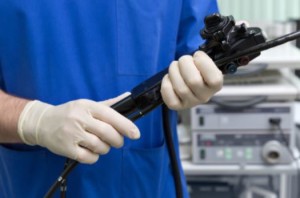
The nation's largest endoscope distributor will pay $623.2 million to resolve civil and criminal allegations that it paid kickbacks to hospitals and doctors in exchange for purchasing its devices, the Justice Department announced...Olympus Corporation of the Americas has agreed to pay a record-setting $310.8 million to settle civil claims that it violated the False Claims Act because its claims were tainted by illegal kickbacks. The sum is the largest ever paid by a medical-device company over violations related to the federal anti-kickback law...Olympus will also pay a $312.4 million criminal penalty over the allegations. The company admitted to paying doctors and hospitals in the form of consulting payments, travel, meals, grants and free endoscopes in exchange for their business...the kickbacks helped the company make more than $600 million in sales and gross profits of more than $230 million...The civil settlement resolves a lawsuit originally brought by whistle-blower John Slowik, a former chief compliance officer for the company. In successful False Claims Act cases, whistle-blowers are entitled to a portion of whatever money the government is able to recover. Slowik will receive $51 million...
- NHS to help design 10 ‘healthy new towns’ (pharmatimes.com)
NHS England is helping to design 10 ‘healthy new towns’ across the country alongside Public Health England, in the hope of developing new solutions to key healthcare challenges such as obesity and dementia...Under the plans, more than 76,000 new homes with potential capacity for around 170,000 residents will be built - with funding from local councils and the private sector - in environments specifically set up to address 21st century health needs...NHS England said it will bring together renowned clinicians, designers and technology experts to reimagine the delivery of healthcare in residential areas, "to showcase what’s possible by joining up design of the built environment with modern health and care services, and to deploy new models of technology-enabled primary care"...Ideas to be tested include fast food-free zones near schools, safe and appealing green spaces, dementia-friendly streets and digital access to GP services...The move comes as the number of working days lost in Britain due to ill health reaches 130 million, while physical inactivity is a direct factor in one in six deaths and has an overall economic impact of £7.4 billion ($10.5 billion)...
- Pharmacy Week in Review: March 4, 2016 (pharmacytimes.com)
Mike Glaicar, Business Development: Pharmacy Times...(PTNN) This weekly video program provides our readers with an in-depth review of the latest news, product approvals, FDA rulings and more.
- Another of AmerisourceBergen’s Pharmedium facilities cited by FDA (fiercepharmamanufacturing.com)Form FDA 483 Inspectional Observations (fda.gov)

Drug distributor AmerisourceBergen has pledged to set the bar high on quality at Pharmedium Healthcare Holdings, the compounding pharmacy company for which it laid out $2.6 billion. The challenges, however, keep mounting as FDA inspections continue to note issues at its manufacturing facilities...FDA posted another Form 483 for a Pharmedium compounding facility last week, this one at the company's headquarters in Lake Forest, IL. It followed an inspection in November that turned up half a dozen observations. In the past year, the FDA has issued Form 483 observations at Pharmedium facilities in Texas, Mississippi, New Jersey and Tennessee, as well as at its Illinois headquarters...inspectors noted...that the Chicago-area facility had released 16 lots of products that were out of spec for potency and purity. They also noted that results from stability testing were not used in determining expiration dates.
- FDA still struggling with backlog of generic drug applications (statnews.com)
Under pressure to speed approval of generic medicines, the Food and Drug Administration...released data to defend its progress...the statistics indicate the agency is making headway, there are also clear signs the FDA continues to struggle with the workload...the number of full and tentative drug approvals has been rising each month since last April and reached 99 this past December...the agency also appears to be doing a better job of communicating with generic drug makers about their applications...Generic drug approval is gaining more attention thanks to the intensifying national debate over the rising cost of prescription medicines. Although prices have also risen for some of these copycat medicines, generics remain...lower-cost alternatives to brand-name drugs. And generics now account for 88 percent of all prescriptions written...The FDA is being a little disingenuous saying its backlog is almost cleared...The FDA faces...the increasingly large number of applications that drug makers are submitting...more than 4,000 have been filed in the past four years...the FDA workload will not abate...The upshot is that the rate at which new generics will find their way to pharmacy shelves is unclear — and that adds further uncertainty for health care budgets...
- Shortages threaten patients in Libya’s Benghazi: minister (reuters.com)

Acute shortages of medicines, equipment and staff are putting patients at risk in Libya's battle-scarred eastern city of Benghazi...there was no money in Libya's health budget for 2016 and urged world powers to release funds frozen abroad, saying a fraction of that money could finance medical care "for years to come"...there was an urgent need for mobile clinics and trauma kits, as well as basic equipment such as gloves and gauze...A shortage of blood bags meant people trying to give blood had not been able to...Many foreign medical staff left more than a year ago, and there was a "desperate need for doctors and nurses," he said. The city has fewer than 700 hospital beds... the international community had been waiting for the long-delayed approval of a U.N.-backed unity government to release frozen funds...WHO representative Syed Jaffer Hussain said a U.N. appeal for $50 million for basic and emergency healthcare this year had generated pledges of just $2 million.
- New FDA guidelines aim to prevent Zika transmission via tissue, cell donation (reuters.com)FDA issues recommendations to reduce the risk of Zika virus transmission by human cell and tissue products (fda.gov)

Food and Drug Administration on Tuesday issued new recommendations aimed at reducing the risk of Zika virus transmission through donated human tissues and cells used in surgical or reproductive procedures, such as umbilical cord blood, corneas and heart valves...The guidance is part of the agency's ongoing efforts to protect human cellular, tissue and blood products from potential contamination with Zika virus..."Though there is more to be learned about the transmission of Zika virus, given what we know about the virus at this point, which also is informed by our understanding of similar viruses, we must address the potential risk of Zika virus transmission by human cells and tissues," Peter Marks, director of the FDA’s Center for Biologics Evaluation and Research, said in a statement...Under the new recommendations, donors should be considered ineligible if they were diagnosed with Zika virus infection or were in an area with active virus transmission, or had sex with a male with either of those risk factors, within the past six months...