
- Another Court Weighs In on Whether Off-Label Promotion is Per Se Illegal; Jury Finds Both Defendants Not Guilty on All Counts (fdalawblog.net)

On February 25...upon conclusion of the...criminal case...United States v. Vascular Solutions, Inc...Judge Lamberth charged the jury...The case involves allegations that...a medical device company and its president, engaged in an unlawful off-label marketing campaign. The government’s superseding indictment alleged that the defendants engaged in a criminal conspiracy to violate the Federal Food, Drug, and Cosmetic Act, and committed four counts of selling misbranded medical devices...After deliberating for one day, the jury came back with a verdict of "not guilty" on all counts for both the company and its CEO...FDA’s ability to restrict speech that is truthful and not misleading is limited...FDA has long stated that the dissemination of information about unapproved uses can be important for medical professionals, and so long as the information is distributed according to certain guidelines...promotional speech itself would not be evidence of misbranding so long as the speech was solely truthful and not misleading. This position is consistent with a growing trend among courts to find that truthful and not misleading promotional materials may be distributed by a company without violating the misbranding provisions of the FDC Act...given the growing willingness of companies to challenge FDA’s regulation of off-label promotion, their success in doing so, and court decisions indicating...an unapproved use does not violate the misbranding provisions...DOJ and FDA must carefully consider how to proceed in bringing charges of off-label promotion.
- State tax on medical devices under fire (kolotv.com)
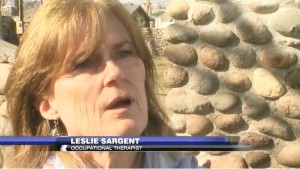
Leslie Sargent - occupational therapist
Devices like C-PAP machines or oxygen tanks are commonplace in some households. Often, patients leave the hospital and are told they need a medical device to help them throughout the home. That's where occupational therapist Leslie Sargent comes into play. She used to visit homes to make sure the patient was safe..."When I was working in home health, a lot of them couldn't afford the equipment at that time," says Sargent...Such practices...are only going to become more common in Nevada after a medical devices tax went into effect in January 2016. Essentially a sales tax, patients are now being taxed on devices that can be used on newborns all the way to hospice patients... Doug Bennett, Chair of the Board of Bennett Medical Services...along with 35 others statewide, is circulating a petition to have voters decide on the medical devices tax in November 2016. He says they are already halfway through getting the required signatures they need to get the measure on the ballot...If it ends up on the 2016 November ballot, and passes, voters will have to approve it again in 2018.
- Health Officials Urge FDA To Add Black Box Warning On Opioids, Benzos (forbes.com)

City and health directors from across the country are urging the Food and Drug Administration to adopt new labels to "explicitly warn about a dangerous combination of medications" that have been fueling the nation’s prescription drug overdose epidemic over the years...Available online, the petition, which has been signed by academics, researchers and physicians, requests that the FDA amend black box warnings on all opioid analgesic and benzodiazepine class medications...to require medication guides that specifically warn patients of concurrently using both drug classes...We believe that this black box warning is a critical first step in raising awareness around the danger of co-prescribing these medications…The warning educates doctors so that they can provide the highest quality of care to patients...
- Swedish industry wants European medicines agency if UK quits EU (reuters.com)EFPIA Statement on Brexit (efpia.eu)

Sweden should become the new home of the European Medicines Agency if Britons vote to leave the European Union in a June referendum, according to the head of the Swedish pharmaceutical association...The agency, which approves medicines for all EU countries, has been based in London since it started in 1995. However, a so-called Brexit would leave Europe's equivalent of the U.S. Food and Drug Administration outside the bloc and could force a move...Shifting to Sweden would make sense, given the country's scientific strength and the leading role Swedish experts already play in European drug regulation…If the referendum in the UK results in a 'no' to the EU, the government should immediately launch an intensive lobbying campaign to make Sweden the new host country for the EMA...Many pharmaceutical executives also see a move as inevitable and they fear that a British "Out" vote would disrupt healthcare regulation in the world's biggest trading bloc...
- Pharmacy Students Push for Provider Status on Capitol Hill (ashp.org)

Nearly 50 students visited 31 congressional offices on Capitol Hill earlier this month as part of ASHP’s Student Advocate Training & Legislative Day. The two-day conference, also known as SSHPTakesDC, gives student pharmacists hands-on experience in how to directly affect public policy...the students made the case for provider status legislation, the Pharmacy and Medically Underserved Areas Enhancement Act (H.R.592 and S.314), by emphasizing how the pharmacy school curriculum and postgraduate residency training prepare future practitioners to be patient care providers...“I feel like we had a good impact,” said Winston Johnson, a third-year student at Palm Beach Atlantic University in West Palm Beach...Conference attendees also met with Rep. Earl “Buddy” Carter, the only pharmacist serving in Congress. Carter praised the students for their foray into advocacy and encouraged them to stay engaged in the political process. “Politics are important to our profession,” he noted...It’s so inspiring to see these ASHP student leaders in action, and it is clear after seeing their poise, passion, and professionalism during their visit to Capitol Hill that the future of the profession of pharmacy is going to be in very good hands...
- Complaints warrant checkups on doctors (reviewjournal.com)

The Nevada Board of Medical Examiners had a backlog of 525 complaints at the start of 2015. An additional 1,078 complaints were filed last year...By the end of the year, 570 complaints were pending...only 19 medical doctors and physician assistants were publicly disciplined last year...How can a board that's falling behind ever erase that backlog and fulfill its duty to discipline bad medical doctors?...Executive Director Edward Cousineau said Wednesday that the office is making headway and that the situation not as bleak as the numbers suggest...
- Board says no to new trauma centers (reviewjournal.com)
A board composed partially of representatives from local trauma centers recommended not designating any of three new applicants as a Level 3 trauma center...The Regional Trauma Advisory Board, which makes a recommendation to the Southern Nevada Health District Board of Health on trauma center applications, voted to reject approval of authorization for the Level 3 trauma centers sought by Centennial Hills Hospital Medical Center, Southern Hills Hospital and Medical Center and Mountain View Hospital...The hospitals applied in the fall to receive Level 3 designation, the lowest trauma designation recognized by the Southern Nevada Trauma System. Level 3 centers provide "definitive care to the less severely injured patients" and work to support any Level 1 and 2 facilities in the trauma system, which can provide care to more severely injured patients...UMC Department of Trauma Services Medical Director John Fildes...suggested the formation of a needs-based assessment task force, which would review the community's trauma needs and assess the impact of adding new trauma centers in the future. He suggested all three applicants be invited to become part of the task force.
- The State of Provider Status: An Update for Pharmacy Students (pharmacytimes.com)
As the pharmacy landscape shifts and evolves, pharmacists across the country continue to work toward a common and crucial goal: gaining legislative recognition as health care providers...Gaining provider status is a complex and multifaceted objective, but at its heart is the exclusion of pharmacists from the Social Security Act. Exclusion of pharmacists from the SSA prevents many state and private health care plans from compensating pharmacists for patient care services...the omission of pharmacists from the SSA also creates barriers for Medicare beneficiaries who seek to utilize these services in outpatient settings...While provider status efforts are crucial to the pharmacy profession, they’re equally important to patients...Gaining ground in the states...a number of state laws passed in 2015 have given advocates much to celebrate.
- North Dakota Governor Jack Dalrymple signed into law 4 bills that expanded the role of pharmacists in the Peace Garden State and recognized them as health care providers...
- ...Washington Governor Jay Inslee’s signing of SB 5557...The first bill in the country to require the inclusion of pharmacists in health insurance provider networks...amends the state’s Every Category of Health Care Providers law, which obliges commercial health plans to include every category of health care provider within an individual’s participating provider network.
- ...Oregon governor Kate Brown signed HB 2028 into law...bill permits pharmacists to receive reimbursement for performing clinical pharmacy services, enabling them to more fully use their skills and knowledge to treat patients.
- ...the federal arena...federal recognition remains the primary goal for many proponents of provider status...a proposed bill has given advocates hope that such a victory is well within reach...the Pharmacy and Medically Underserved Areas Enhancement Act would amend the SSA to cover pharmacists’ services under Medicare Part B, but only if these services are provided in areas of the country that the Health Resources Services Administration defines as medically underserved areas...The bill is awaiting approval...
Pharmacy students are the future of the profession and...they will be the ones most impacted by provider status...Earning legislative recognition as health care providers will ensure that the next generation of pharmacists is able to treat patients to the full extent of their knowledge and abilities...
- State oversight of compounding pharmacies varies dramatically (statnews.com)

Amid ongoing safety concerns over compounding pharmacies, a new analysis finds state oversight is a spotty patchwork of regulations, raising questions about the ability to protect the public health.
- Only about half of the states require compounding pharmacies that make sterile medicines, which are injected or infused into the body, to fully comply with recognized quality standards.
- 60 percent of the states do not require compounding pharmacies to report serious adverse events and reactions related to sterile compounding...
- 16 states reported they do not track compounding pharmacy activity at all.
- 28 states allow traditional compounding pharmacies as opposed to those that make large amounts of medicines for hospitals to provide drugs without prescriptions for individual patients. This practice conflicts with??federal law.
- nine states do not plan on taking any action, such as requiring compounders to register with the FDA or disciplining these businesses.
- 53 percent of the states conduct annual routine inspections for in-state pharmacies that perform sterile compounding.
- any issues discovered during an inspection, 79 percent of the states requires a written response from the pharmacy describing how the issues were addressed,
- 67 percent also need an additional on-site inspection to verify compliance.
- one-third of the states do not perform on-site follow-up inspections to verify needed changes.
- Most of the states...have the authority to issue cease-and-desist orders, but 70 percent also said they were unable to mandate a recall of compounded drugs or were unsure of their explicit authority.
- NHS England approves Cancer Drugs Fund plans (pharmatimes.com)NHS plan to reassess value of cancer drugs alarms patient groups (theguardian.com)

The...controversial Cancer Drugs Fund will be replaced by a new fund controlled by the National Institute of Clinical Excellence from July this year... officials have now waved through proposals that will see the CDF switch to a ‘managed access’ fund...the current CDF list will be rolled over but will remain closed to new drugs pending the start of the new scheme in July...The operational detail of the new scheme will be developed over the coming months, but NHS England insists that it will help provide faster access to the most promising new cancer treatments for patients, drive stronger value for money for the taxpayer, and for drug companies willing to price their products "responsibly," offer a new fast-track route to NHS funding...Industry reaction... largely unchanged proposals that carry a very real risk of significantly setting back patient access to cancer medicines, now and for the foreseeable future...if cancer medicines go through more or less exactly the same NICE appraisal process that was in place five years ago - which necessitated the setting up of the CDF in the first place - we will largely get the same answers as before - the majority of medicines will be turned down...The Government needs to come clean about the impact of these proposals on cancer patients by publishing an assessment of their impact...