
- Investor group launches campaign to curb antibiotic use in food (reuters.com)

Fifty four large investors managing 1 trillion pounds ($1.41 trillion) in assets have launched a campaign to curb the use of antibiotics in the meat and poultry used by ten large U.S. and British restaurant groups...McDonalds and JD Wetherspoon were among those to receive a...letter from institutions including Aviva Investors asking them to set a timeline to stop the use of medically important antibiotics in their supply chains...The other eight approached were Domino's Pizza Group, Brinker International, Darden Restaurants, Mitchells & Butlers, Restaurant Brands International, Restaurant Group, The Wendy's Company and Yum! Brands...The move follows warnings from the World Health Organization that the world is moving towards a post-antibiotic era in which many infections would no longer be treatable because of the overuse of antibiotics...Drug-resistant infections could cost the world about $100 trillion in lost output by 2050...
- Valeant CEO Pearson May Be Held in Contempt by Senate Panel (bloomberg.com)Valeant asks CEO Pearson to cooperate with U.S. Senate committee (reuters.com)
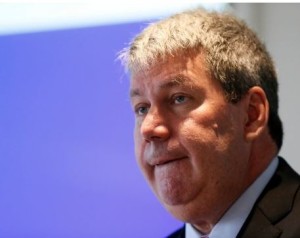
A Senate committee may start contempt proceedings against Michael Pearson, chief executive officer of Valeant Pharmaceuticals International Inc., for failing to appear to give testimony related to an investigation on drug pricing...Michael Pearson was under subpoena to appear for a deposition today related to the Senate Special Committee on Aging’s drug pricing investigation, and he did not comply with that subpoena...It is our intent to initiate contempt proceedings against Mr. Pearson...a lawyer representing Pearson said the executive will appear at the hearing but that the deposition subpoena was unfair in both timing and scope...Pearson shouldn’t be expected to give sworn testimony if the committee hasn’t been clear about what topics and documents he’ll be questioned about...Mr. Pearson looks forward to testifying publicly at the committee’s hearing on April 27, but has informed the company and the committee that he does not intend to also appear for private testimony in advance of the hearing...
- Abandoned Pfizer deal leaves all sides tainted (blogs.reuters.com)Investors stick with Pfizer CEO after Allergan deal scrapped (reuters.com)Treasury Is Wrong About Our Merger and Growth (wsj.com)
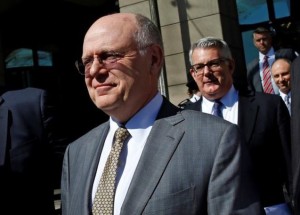
Pfizer Chief Executive Ian Read
Pfizer’s abandoned deal leaves all sides tainted. The U.S. Treasury looks bad for changing the rules on Monday to kill the $160 billion merger with Allergan. Lawmakers’ inaction encouraged such tax-driven transactions. But Pfizer and Chief Executive Ian Read bear the most responsibility for wasting time and resources pushing an overpriced, risky deal...Monday’s new standards directly target Pfizer’s deal, as they disregard U.S. assets acquired in the past three years. That eliminates Allergan and its low Irish tax rate as a target. It’s unclear if the Treasury Department has overstepped its authority. But purposefully and rapidly mutating laws, especially when applied retroactively, are bad for business and legal authority...Lawmakers emerge covered in tar, too. They could have stopped inversions cold by adopting a territorial tax system. This would have stopped U.S. companies having to pay an extra levy to Uncle Sam on cash earned overseas if local taxes are lower than the U.S. statutory rate. Their fecklessness encouraged Pfizer and other firms to pursue complicated deals where the main payoff is tax avoidance...
- Pfizer Vs. Obama: The Treasury Tries To Stop Pharma’s Tax Dodge (forbes.com)Allergan down over 20% after Treasury inversion rule (cnbc.com)Don’t Try to Leave (blogs.sciencemag.org)Would Pfizer And AstraZeneca Both Revisit That $100 Billion Deal? (forbes.com)
Most experts in corporate taxes thought there was little President Barack Obama could do to force Pfizer, the largest drug company in the U.S., from moving its corporate address to Dublin, Ireland, in order to escape paying American taxes...Yesterday evening, Jack Lew, Obama’s secretary of the treasury, called Pfizer’s bluff, instituting new rules to make the move as difficult as possible. The punch hit, and investors are reeling...Now the move could intensify an election-year battle over what it means for companies to be American, and the fairness of the U.S. corporate tax code...Lew is peeling the Allergan onion. Until last year, the company called Allergan...was based–and paid taxes–in Irvine, Calif. Then it was bought by Actavis , a Dublin, Ireland-based drug maker...But wait! Actavis itself was built by a rapid succession of deals, starting when Watson Pharmaceuticals...bought Actavis...partly in order to move its tax domicile to Dublin, Ireland. Now, for the purposes of laws related to the Pfizer deal, the Treasury says many of those other deals don’t count...the Treasury’s new rules reek of overreach. Really? We’re going to redefine what counts as a share of a company as a regulatory action, so that we can make the law mean what we want it to?...Pfizer is going to have to be just as clever as the Treasury is here, and then some...expect a fight: Pfizer versus the Obama administration.
- Drug price cuts in Japan sink in though details sparse (fiercepharmaasia.com)

Domestic and foreign drugmakers in Japan may cut spending on R&D as the scope of mandated price cuts for reimbursed products kicks in--suggesting that future investments are at stake...Pfizer and Eli Lilly have raised the issue as a combination of price reviews for pharmaceuticals hits in one of the top 5 reimbursement markets globally...Without stability and predictability in drug prices, investments will go elsewhere...cost cuts raise the risk of less investment in Japan...Reimbursement in Japan was a double-whammy this fiscal year that started April 1 for many drug firms, with price cuts for widely prescribed drugs by Japan's Central Social Insurance Medical Council, known as Chuikyo, reaching as much as 50 percent...Under the formula, drugs with annual Japan sales of more than ¥150 billion ($1.8 billion) and that see sharp sales gains can face cuts...On top of that, the every-other-year price-cut exercise by the government at the same time aims for savings of $1.5 billion. The exact revenue losses for companies won't likely be known until second-quarter results are released--although several companies flagged the issue in fourth-quarter earnings calls... Japan's Ministry of Finance has suggested the price cuts need to be every year as healthcare costs balloon along with a rapidly aging society that requires increasingly expensive care...
- Armada renames as Asembia, launches new brand identity (drugstorenews.com)
Armada Health Care announced...that it would be launching a new brand identity and company name change to Asembia. With the new name, Asembia plans to continue expanding on its specialty pharmaceutical offerings, including solutions for pharmacies, pharmaceutical and biotech companies and payers...We are a very different company from when we first started more than a decade ago. In this regard, we are excited to announce our new corporate identity which we feel better reflects our broad array of capabilities and service offerings, each of which are developed collaboratively with our member pharmacy and manufacturer...
- Pfizer, Allergan scrap $160 billion deal after U.S. tax rule change (reuters.com)Allergan CEO: Merger with Pfizer was targeted by US government (cnbc.com)After failed Allergan merger, Pfizer once again considers splitting up the company (statnews.com)The big winners and losers of the Pfizer-Allergan breakup (statnews.com)Don't worry, Pfizer and Allergan. Treasury just did you a favor (fiercepharma.com)
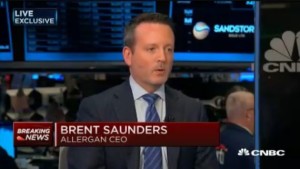
Pfizer Inc and Allergan Plc walked away from their $160 billion merger on Wednesday, a major win for President Barack Obama, who has been pushing to curb deals in which companies move overseas to cut taxes...Pfizer said the decision was driven by new U.S. Treasury rules aimed at such deals, called inversions. The merger would have allowed New York-based Pfizer to cut its tax bill by an estimated $1 billion annually by domiciling in Ireland, where tax rates are lower…Allergan Chief Executive Brent Saunders said...that the new Treasury rule would not stop the company from doing other stock-based acquisitions as soon as this fall...It really looked like they did a very fine job at constructing a temporary rule to stop this deal and obviously it was successful…
- Former Shkreli-led drug developer pledges responsible pricing (reuters.com)

A biotechnology company, previously led by controversial former drug executive Martin Shkreli, on Monday vowed not to engage in aggressive pricing and to develop a transparent and 'responsible' pricing model for its products...KaloBios Pharmaceuticals Inc, which fired chief executive Shkreli last December...is developing drugs to treat Chagas disease and cancer, said...that it intended to price its products at overall cost, plus a 'reasonable and transparent' profit margin, if and when they are ready for marketing...There exist no approved drugs for Chagas disease in the United States or Europe. However, benznidazole is cleared for use in Latin America, and is considered the standard-of-care treatment in the region...We are not conducting original research on benznidazole and therefore do not plan to incorporate an 'R&D premium' into the price...
- JAMA Forum: We Can’t All Have It All: The Economic Limits of Pharmaceutical Innovation (newsatjama.jama.com)

Even though US consumers spend 3 times more for hospital care than for medication, they are much angrier with pharmaceutical companies than hospitals for driving up the cost of health care. Drug companies raise this apparent inconsistency in an effort to defend their pricing practices. In so doing, however, they fail to appreciate why they’ve been targeted for so much opprobrium. Ironically, the industry’s biggest public relations problems may arise from its most effective and widely applicable innovations...Taking medications is the most common way US consumers use health care...patients are 8 times more likely take a prescription drug than to use hospital inpatient services...US patients are relatively underinsured for prescription drug expenses, further contributing to high out-of-pocket costs...The upward trajectory of cost sharing amplifies the effect of price increases on patients. As coverage erodes, the veil separating patients from drug prices lifts; fewer get such a clear view of hospital prices...The rate of increase in drug prices has outpaced that of overall medical care every year since 2008...Higher prices may help fuel drug innovation. Yet, at the current price trajectory, the rate of innovation will eventually exceed our ability to pay for it. Fostering valuable innovation with financial reward is the engine of much of American commerce, including in health care. It’s a fantastic model, responsible for tremendous gains in longevity, well-being, and satisfaction. We should keep that engine turning, but only as rapidly as we can afford.
- Drugmaker plans to relaunch Addyi sales later this year (bloomberg.com)

Valeant Pharmaceuticals International Inc. has terminated the sales force for the female libido pill that it acquired last year for $1 billion...after the drug, Addyi, failed to gain traction in its first six months on the market...Valeant plans to relaunch its sales effort for Addyi with an internal team it will build in the coming months...Along with the 140 contract workers that make up the Addyi sales force, Valeant is firing about 140 employees across its dermatology, gastrointestinal and women’s health divisions, with dermatology taking the biggest hit...The cuts to Addyi’s sales force come after a sluggish start for the drug, which is the first of its kind for women suffering from a low libido. Insurers have been denying or limiting coverage for the pill and many prescriptions written by doctors aren’t getting filled...Valeant...failed to successfully commercialize the treatment by setting the price too high and neglecting to market it...