- U.S. patent office rules against Amgen Humira challenge (reuters.com)
U.S. patent officials...denied petitions by Amgen to review two formulation patents on AbbVie's Humira, a potential setback in Amgen efforts to market a biosimilar version of the world's top-selling prescription medicine...In June, Amgen...asked the U.S. Patent and Trademark Office for the review, arguing that the patents in question should not have been granted in the first place for Humira, an injected rheumatoid arthritis treatment with annual sales approaching $14 billion...In declining to review the patents, the agency said "we determine, based on the petition and the accompanying evidence, that Amgen has not shown a reasonable likelihood of prevailing on any of its challenges."...Amgen said it still plans to challenge the legality of the patents.
- Solving the Mystery of Employer-PBM Rebate Pass-Through (drugchannels.net)
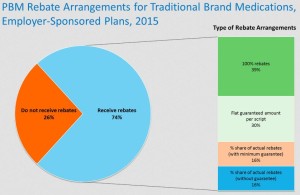
Manufacturers pay billions in rebates to pharmacy benefit managers (PBMs). How much of that money do PBMs share with their plan sponsor clients...As far as I know, the only public answer comes from the Pharmacy Benefit Management Institute’s new 2015-2016 Prescription Drug Benefit Cost and Plan Design Report (Free download with registration)...According to the PBMI’s survey data, only three-quarters of employers directly receive a piece of manufacturer rebates. Some employers get 100% of the rebates. Others get a portion, sometimes with a guaranteed minimum amount...I also highlight PBMI data about the prevalence of spread pricing (as opposed to pass-through pricing) as a means for employers to compensate PBMs. Despite what you may have heard, many employers still seem to prefer spread pricing models...
- Two drug makers engage in a murky battle over the use of the Merck name (statnews.com)
What’s in a name?...Plenty, especially if you happen to run a company called Merck. In fact, there are two drug makers with that moniker. One is based in the United States and the other is headquartered in Germany, but is formally known as Merck KGgA (Merck Kommanditgesellschaft auf Aktien). And not surprisingly, they are warring over use of the name — again...To be specific, the company in Germany has the rights to use the Merck name everywhere in the world, except in the US and Canada. However, the English High Court has just ruled that the other Merck — the drug maker that is based in the US — breached a 46-year-old agreement and infringed on a trademark by using the name ‘Merck’ alone in the United Kingdom...In the lawsuit filed today, the US Merck argues that its German rival is deliberately pursuing a confusing corporate branding campaign as part of a revamped US business to bolster its presence in oncology...why do both drug makers have the same name?...The original Merck was established as a drug manufacturer in Germany in the 1800’s, but a Merck descendant later immigrated to the US and created a unit known as Merck & Co., which is based in New Jersey. But the company was confiscated by the US government during World War I and later established as a separate drug maker...Perhaps all of this would make more sense if the companies were renamed ‘Murk.’
- Biotech leads Nasdaq lower (video.cnbc.com)Best names to buy after biotech sell-off: Pro (video.cnbc.com)Is it time to bet on biotech? (video.cnbc.com)
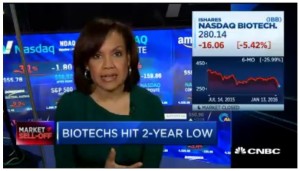
CNBC's Bertha Coombs highlights the big Nasdaq laggards as biotech concerns weigh.
- Patent Expirations Of Crestor And Zetia And The Impact On Other Cholesterol Drugs (forbes.com)
...2016 will see a number of drugs going off patent...most notable are the patent expiries for two major LDL-cholesterol lowering drugs: the statin, Crestor...and the cholesterol absorption inhibitor, Zetia...However, the availability of generic ezetimibe and rosuvastatin could have other impacts. There are a number of people who cannot tolerate statins because of side-effects such as muscle pain. Statin intolerance, in fact, is a driver for companies seeking novel LDL-c lowering drugs in order to provide patients with alternatives. But that road has gotten harder...the most compelling new LDL-c drugs are the PCSK-9 inhibitors...These medicines have the ability to lower LDL-c to levels unattainable by statins alone...PCSK-9 inhibitors are expensive drugs listing at more than $14,000/year/patient...There is no doubt that the loss of exclusivity for Crestor and Zetia will impact the bottom lines of AstraZeneca and Merck, respectively...the availability of the generic forms of these drugs will also have an impact on physician prescribing habits and even drugs not yet on the market. Containing prescription drug costs is a major priority these days, and the use of generics is a key lever in accomplishing this, particularly in the face of high costs alternatives...
- Fighting for Drug Pricing Transparency – Pharmacy Podcast (pharmacypodcast.com)
Ron Lanton – with True North Political Solutions brings another Health Policy Check-Up Segment with State Rep. Heidi Brooks with the state of Maine House of Representatives. They discuss MAC Drug Pricing Transparency and other pressing issues to our pharmacy industry. (podcast 23:19 minutes)
- Drug Price Hikes and Shortages Have Similar Roots, Experts Say (ashp.org)
Experts say that recent increases in the prices of off-patent generic drugs are closely tied to the drug shortages that have plagued hospitals for years...They have the same root cause: a lack of competition in certain parts of the generic market...The first indication we had of problems in the generic market were not prices; they were shortages. Hospitals were having serious problems filling prescriptions...The second manifestation we're getting now is the higher prices for certain generic drugs...without competition, drug companies can raise their prices several thousand percent simply overnight...arbitrary and unpredictable inflation is not sustainable for our hospitals, especially when we receive capitated payments for most of our patients...hospitals handle such high prices in the same way they do drug shortages: by rationing drugs, stocking smaller quantities, and devoting "huge hours of manpower" to managing the problem...the business strategy driving the price hikes affects a relatively small number of drugs but is destabilizing reimbursement practices surrounding those medications...compounding pharmacies could play a greater role in preventing price hikes affecting off-patent drugs...Other potential solutions...included speeding FDA's review of marketing applications for older generic drugs that have no competition in the marketplace and instituting price regulations for these drugs akin to the regulations that affect public utilities...
- JP Morgan 2016: Why the Anthem, Express Scripts kerfuffle could be massive headache for all PBMs (firstwordpharma.com)
Anthem CEO Joseph Swedish caused a bit of a stir at an otherwise tame JP Morgan Healthcare Conference this month when he essentially accused Express Scripts...of overcharging his managed care organisation by $3 billion per year...the public spat represents a serious headache for Express Scripts, and could result in an unexpected windfall for one of the company’s main competitors, but in a broader sense the episode highlights what one industry expert believes is an increasingly important market inefficiency that would – if exposed to and by payers – have massive implications for the PBM sector...Politicians (and plenty of others) have been raising hay lately about the need for...more transparency...this same thought process has not (yet) been extended into the PBM space, where companies’ primary role is that of a middleman...“I hope it erupts into more – this is serious and real. PBMs...make price transparency for pharmaceuticals impossible and it is the patient that suffers the most because of it,”...“The thing centres on the fact that the PBMs insist on large rebates from the manufacturers, and the amounts are ‘proprietary’ so they can conceal them from their clients. The discounts aren’t being passed along to their customer but the effect is to force list prices higher to maximise rebates,”...more transparency could be a big benefit for drugmakers, who are likely well aware of the situation but feel as though their hands are tied when it comes to fighting back. “I believe that the more this gets pushed, and the more others learn about it, they will have to have this extend further,”...“Pharma has to have this revealed by others – they can’t complain because the PBMs could retaliate” during the formulary negotiation process.
- Specialty pharmacy is a lucrative opportunity for community pharmacy (drugtopics.modernmedicine.com)
The traditional pharmacy business model is under siege as it faces challenges from healthcare reform and competition. As community pharmacies scramble to survive, the specialty pharmacy model offers a lucrative opportunity for growth...The key to success? You’ll need to understand and prepare for a wide variety of challenges on fronts ranging from accreditation to marketing. That’s the message from community pharmacists who are urging their colleagues to take advantage of the growth in specialty pharmacy.
- What is specialty pharmacy?....The definition is not clear cut...
- Here are common characteristics of specialty drugs: They’re pricey, sometimes even shockingly expensive...treat a rare and chronic illness...injectable or infused...Complex manufacturing is required...special requirements for storage and handling.
- Complex patient monitoring is required (eg, for compliance and side effects).
- Help available in specialty arena...a number of companies are working to give independent pharmacists a helping hand in the specialty pharmacy arena.
- Accreditation...It’s expensive, and it’s confusing...
- Marketing to physicians.
- Marketing to the public.
- Willingness to deal with issues like reimbursement rates and performance standards.
So why bother with all this? “There’s huge opportunity for growth,” Clark said, and a chance to provide high-quality care to patients who need it. “But we have growing pains,” he cautioned. “You’ve got to be patient.”
- Major drugmakers push back in U.S. price debate (reuters.com)

With a backlash brewing over the price of medicines in the United States, drugmakers are pushing back with a new message: Most people don't pay retail...Top executives from Eli Lilly and Co, Merck & Co and Biogen Inc said in interviews...this week that the media focus on retail, or "list prices," for branded medications is misplaced...They stressed that the actual prices paid by prescription benefit managers, insurers and other large purchasers are reduced through negotiated discounts...But the industry practice of raising prices each year for treatments used by millions of people is attracting new attention...the industry needs to better explain the value of drugs and how they can prevent healthcare costs down the line...We have to explain the difference between the list price and the net price…Drugmakers keep actual pricing details close to guard their position in negotiations with commercial insurers and government health plans like Medicaid. There is no centralized catalog of U.S. list prices or rebates for medicines...U.S. health insurers say that, even accounting for discounts, drug prices are rising at an unsustainable rate, and they are pressuring drugmakers for cuts.